

Battery Capacity vs. Battery Life: Why mAh Doesn’t Tell the Full Story
Milliampere hours measure storage, but processor efficiency, screen technology, and thermal conditions dictate actual device runtime.
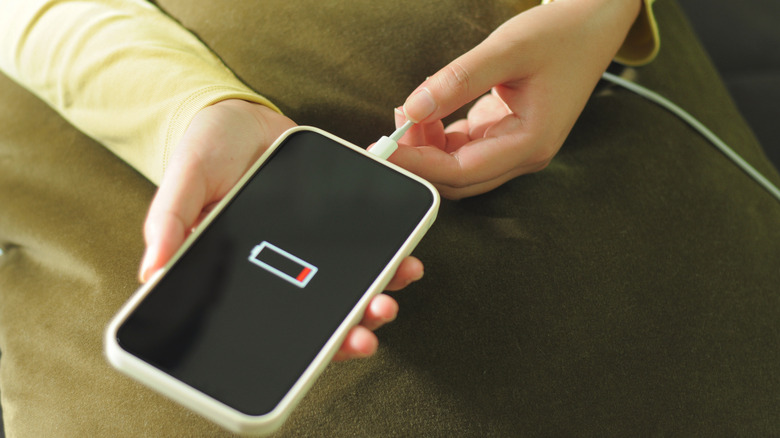
A 6,000mAh smartphone battery does not guarantee longer usage than a 4,500mAh competitor. Consumers routinely use milliampere hours as a universal yardstick for endurance, but that single number ignores the processor efficiency, display technology, and thermal dynamics that actually determine how long a device survives away from a wall outlet.
Understanding the gap between stored energy and real-world runtime requires separating three distinct metrics: capacity, life, and health. Confusing them leads to poor purchasing decisions and premature hardware replacements across smartphones, laptops, power banks, and electric vehicles.
Capacity defines the physical ceiling of energy storage. Manufacturers measure smaller lithium-ion cells in milliampere hours (mAh) and larger packs, such as those in laptops or EVs, in watt-hours (Wh). Watt-hours offer a more accurate cross-device comparison because they account for voltage differences that mAh ignores. A laptop with a 70Wh battery stores significantly more total energy than a phone with a 5,000mAh cell operating at 3.8 volts, which translates to roughly 19Wh.


Battery life measures the duration a device operates before requiring a recharge. This figure depends entirely on the rate of energy consumption. An Apple Silicon MacBook can outlast an older Intel-based model with identical watt-hour ratings because ARM-based architecture processes tasks using drastically less power. Similarly, running modern 3D games forces a graphics processing unit to draw maximum current, collapsing runtime regardless of the pack’s size.
Hardware variables compound these differences. OLED panels consume power dynamically based on pixel illumination; displaying dark interfaces physically turns off individual pixels, reducing draw. High refresh rate screens running at 120Hz demand more energy than standard 60Hz displays. Ambient temperature also alters chemical reaction rates inside lithium-ion cells. Extreme heat accelerates discharge, while freezing temperatures temporarily restrict the battery’s ability to deliver its rated capacity.
Because daily usage patterns vary unpredictably, manufacturers rely on standardized benchmarks to advertise battery life. The Mobile Mark test for Windows laptops and Apple’s metric of continuous local video playback provide controlled baselines, though neither replicates mixed productivity workloads involving constant Wi-Fi polling, background syncing, and variable screen brightness.
External power sources introduce further mathematical friction. Connecting a 10,000mAh power bank to an iPhone 18 Pro, which houses a 4,288mAh cell, will not yield two full charges. Energy transfer through USB-C cables incurs a 20 to 30 percent loss due to voltage conversion and electrical resistance. Wireless charging pads generate excess heat, pushing efficiency losses even higher. Fast-charging protocols exacerbate thermal waste by forcing maximum current into the cell rapidly.
Chemical degradation permanently shrinks available capacity over time. One charge cycle completes when a battery discharges a cumulative 100 percent of its capacity, whether in a single session or across multiple partial drains. Modern lithium-ion cells typically retain 80 percent of their original factory capacity after 500 to 1,000 cycles. Starting with the Pixel 8a, Google rates its devices for 1,000 cycles before hitting that 80 percent threshold. Heavy users adding a full 100 percent daily could require a replacement within roughly two and a half years.
Once health drops below 80 percent, the device’s battery management system struggles to maintain stable voltage under heavy loads, frequently triggering unexpected shutdowns even when the software indicator shows remaining charge. Both iOS and Android expose health percentages within their respective settings menus, allowing owners to track degradation before it causes critical failures.
Extending daily runtime without altering hardware involves targeting the largest power consumers. Restricting background app refresh, disabling unnecessary location services polling, and manually lowering display brightness immediately reduce current draw. For long-term chemical preservation, maintaining the charge state between 20 and 80 percent limits the mechanical stress on the battery’s internal electrodes, slowing permanent degradation compared to daily zero-to-full swings.
The industry is actively engineering around the physical limitations of traditional graphite-anode lithium-ion cells. Silicon-carbon composite batteries are beginning to appear in select flagship smartphones, primarily from Chinese manufacturers like Honor and Xiaomi. By replacing graphite with silicon-dominant anodes, these cells store substantially more energy per gram, enabling capacities exceeding 6,000mAh without increasing the chassis thickness or weight.









