

Goldman Sachs Prepares John Waldron to Succeed David Solomon as CEO Amid Record Profits
An $80 million retention bonus and a record-breaking M&A cycle set the stage for one of Wall Street's most anticipated leadership handoffs.
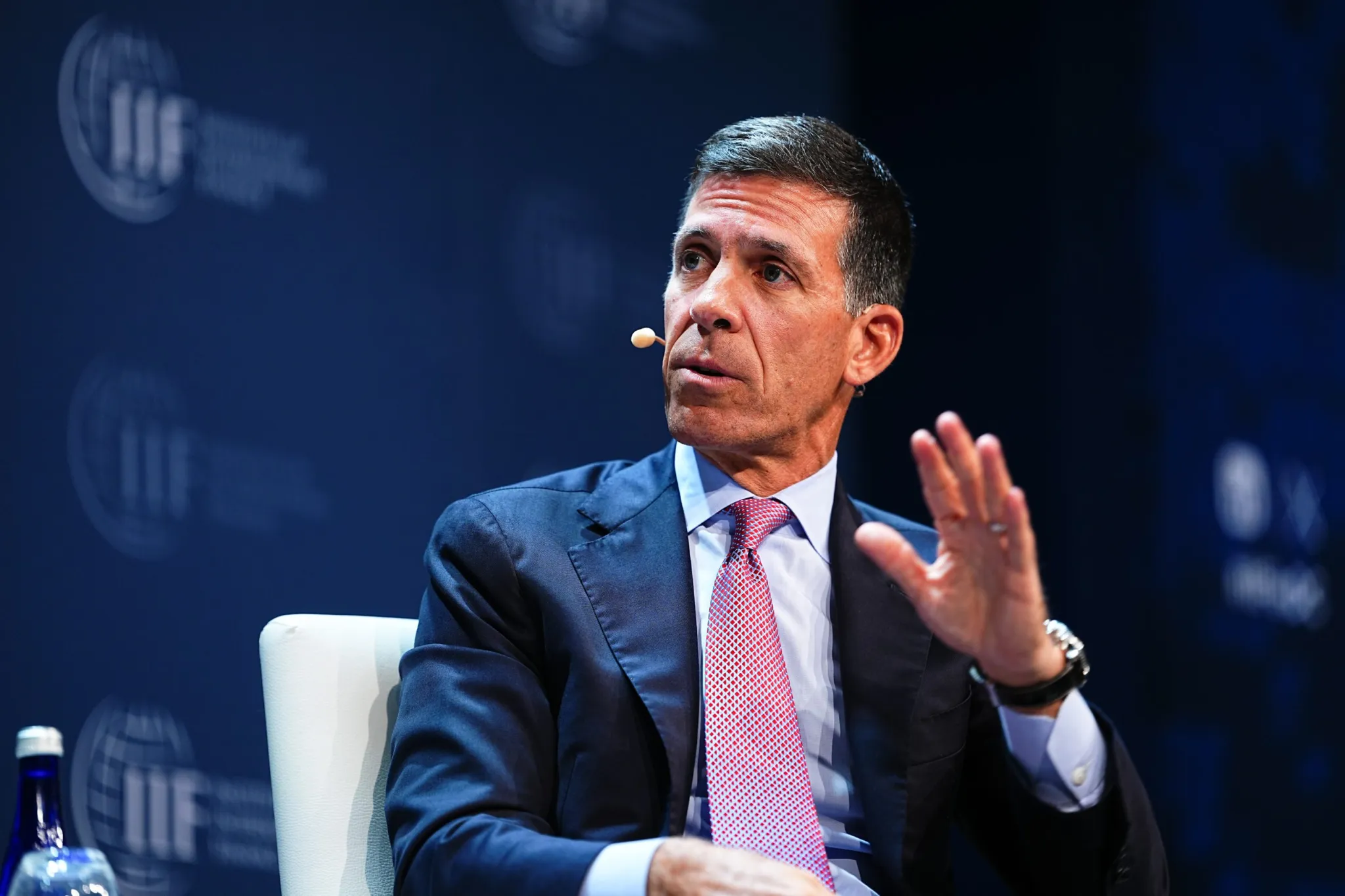
Goldman Sachs is moving toward the most anticipated leadership transition on Wall Street in nearly a decade, with President and Chief Operating Officer John Waldron positioned to replace David Solomon as chief executive. The board has discussed a succession plan that could elevate Waldron as early as next year, according to reports Monday from people familiar with the deliberations. A formal board vote has not yet occurred, though the outcome is widely viewed across the financial industry as a near certainty.
Waldron, 57, has spent 26 years at Goldman after beginning his career at Bear Stearns — the same starting point as Solomon. His trajectory through the firm included stints as co-head of leveraged finance, global co-head of the financial sponsors group, and global head of investment banking services before he was named co-head of the investment banking division in 2014. He assumed the COO and president titles in October 2018, coinciding precisely with Solomon’s elevation to CEO.
The bank has not confirmed any timeline. Spokesperson Tony Fratto said the board regularly reviews succession planning and characterized assertions about timing as speculation.


Wall Street analysts view the handoff as one of the most telegraphed executive changes in modern banking history. Mike Mayo, who leads large-cap bank research at Wells Fargo, noted that Waldron presents an unusual profile for the top job at a premier investment bank, describing his demeanor as closer to a Midwestern English literature professor than a traditional Wall Street operator. That stylistic contrast with Solomon, known for a more forceful corporate presence, has been apparent to outside observers for years.
Any lingering doubts about Waldron’s future were effectively erased in January 2025 when the board approved an $80 million retention bonus designed to keep him at the firm for five additional years. The package followed reporting that Waldron had engaged in serious discussions with private equity giants Apollo Global Management and Carlyle regarding senior leadership roles. Retention bonuses of that magnitude are rarely deployed unless a board intends to secure its designated successor against aggressive poaching attempts by buyout firms.
While Waldron’s ascension appears settled, the ripple effects across Goldman’s C-suite present immediate management challenges. Several senior executives who might have harbored ambitions for the top role now face decisions about their futures. Chief Financial Officer Denis Coleman, Marc Nachmann, who leads global asset and wealth management, and Ashok Varadhan and Dan Dees, the co-heads of global banking and markets, represent critical talent that rival banks and private equity firms will actively attempt to recruit if they feel sidelined.
Solomon is expected to remain involved as executive chairman, a governance structure that carries distinct risks. Margot McShane, co-leader of the Global Board and CEO Advisory Practice at Russell Reynolds Associates, cautioned that dual-leadership models require rigorous boundary-setting. Without clearly defined responsibilities and timelines separating the chairman’s external stakeholder duties from the CEO’s operational authority, the arrangement can undermine the new leader’s credibility. Succession experts note that outgoing CEOs must fully relinquish operational control for these transitions to function.
Waldron inherits a firm operating at peak capacity. Goldman advised on more than $1 trillion in mergers during the first half of 2026 alone and generated over $12 billion in equities revenue. The bank also secured underwriting mandates for high-profile initial public offerings, including SpaceX, while continuing to expand its asset and wealth management divisions. Goldman’s stock price has more than quadrupled since Solomon took the helm in 2018.
That performance marks a sharp recovery from Solomon’s costly missteps earlier in his tenure. Between 2019 and 2022, the bank aggressively expanded into consumer lending, launching credit card partnerships and deposit platforms that ultimately generated billions of dollars in pretax losses. Solomon acknowledged in early 2023 that the firm had moved too fast into unfamiliar territory. He also faced persistent media scrutiny over his side career as an electronic dance music DJ performing under the name D-Sol, a distraction he curtailed by stepping away from high-profile gigs.
Perhaps Solomon’s most durable contribution was dismantling the institutional opacity that historically frustrated investors. Morningstar director Sean Dunlop observed that prior administrations treated earnings calls as exercises in obfuscation. Under Solomon, shareholder communications became substantially more transparent, helping drive the valuation multiple expansion that benefited the stock.
Waldron’s immediate operational focus centers on artificial intelligence integration. Goldman’s 2026 proxy statement credited him with overseeing the deployment of internal AI assistants and automated coding tools designed to eliminate repetitive workflows. Waldron described the firm’s operations as a human assembly line poised for digitization, predicting that digital agents would function as the bank’s robots to improve scalability without necessarily dictating immediate headcount reductions.
Taking command at the apex of an investment banking cycle leaves little margin for error. With dealmaking volumes already stretched to historic highs and interest rate dynamics shifting globally, sustaining current profitability levels will demand different strategic muscles than those required to engineer a turnaround. Solomon departs having restored the franchise; Waldron’s mandate is to defend it against cyclical gravity.










One Comment