

Goldman Sachs CEO Succession Rumors Ignore Record Performance Under David Solomon
Routine board planning and record financial results contradict reports of imminent leadership change at the Wall Street firm
Reports identifying Goldman Sachs President John Waldron as the designated successor to CEO David Solomon have triggered speculation about an imminent leadership change, but current financial data and governance standards suggest these interpretations misread routine board oversight. Solomon, who marked his eighth anniversary as CEO this week, continues to lead a firm that has fundamentally altered its market positioning and valuation profile during his tenure.
The identification of a potential heir apparent is a standard fiduciary requirement for public company boards rather than evidence of executive instability. Governance best practices dictate that directors maintain updated succession plans for both emergency and planned transitions regardless of incumbent performance. Treating this mandatory diligence as breaking news creates false signals about corporate health and can inadvertently damage organizational stability by implying internal discord where none exists.
Historical precedents demonstrate how premature succession reporting can derail orderly transitions. In 1979, media coverage anointing Tom Vanderslice as General Electric’s next CEO ultimately derailed his candidacy and contributed to Jack Welch’s surprise selection. Similarly, erroneous reporting in 1983 regarding leadership dynamics at Corning Glass created family tensions that required external mediation. These cases illustrate how speculative coverage can transform routine planning into disruptive events.


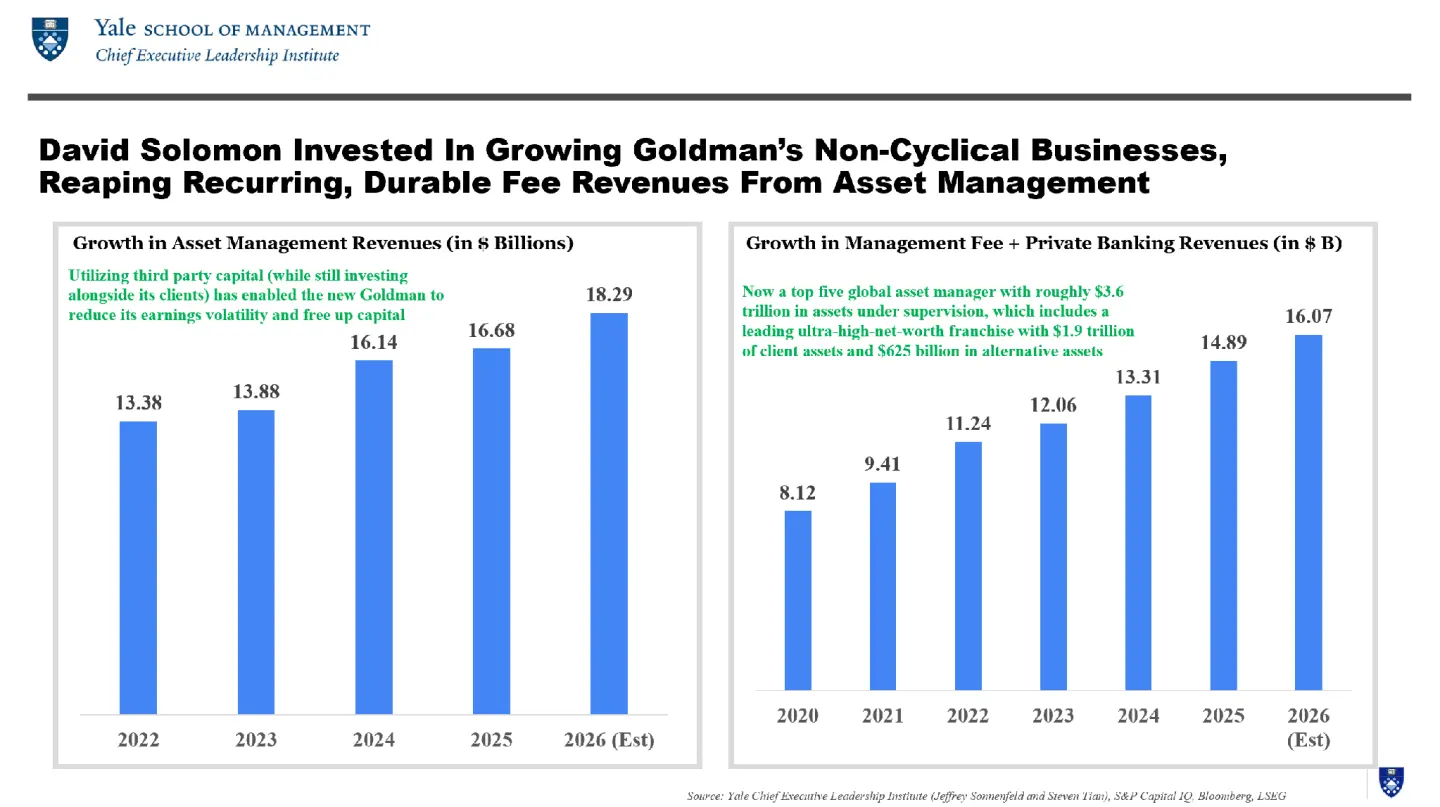
Beyond governance mechanics, the focus on personnel overlooks substantial operational shifts at Goldman Sachs. Since assuming the CEO role in 2018, Solomon has overseen a strategic pivot from a cyclical trading partnership model toward a diversified growth company with recurring revenue streams. This transformation has expanded the asset management franchise and reduced earnings volatility, addressing longstanding investor concerns about the firm’s business mix.
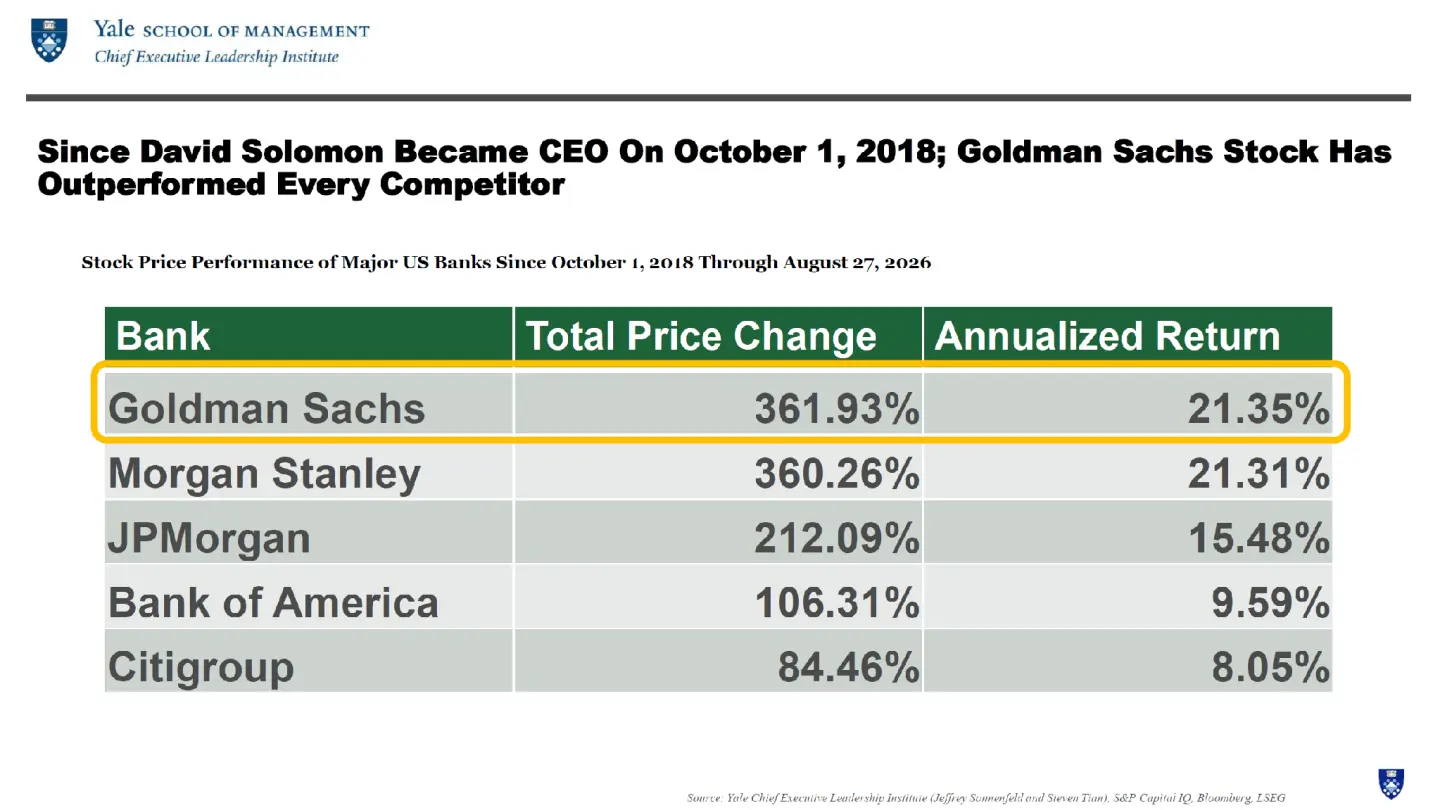
Financial metrics reflect this structural evolution. Goldman Sachs stock has outperformed major competitors including JPMorgan Chase, Morgan Stanley, Bank of America, and Citigroup since October 2018. The firm has also closed a historical valuation gap with JPMorgan; while JPMorgan previously traded at a significant premium due to superior return on equity, Goldman now commands a higher price-to-book multiple with comparable profitability ratios.
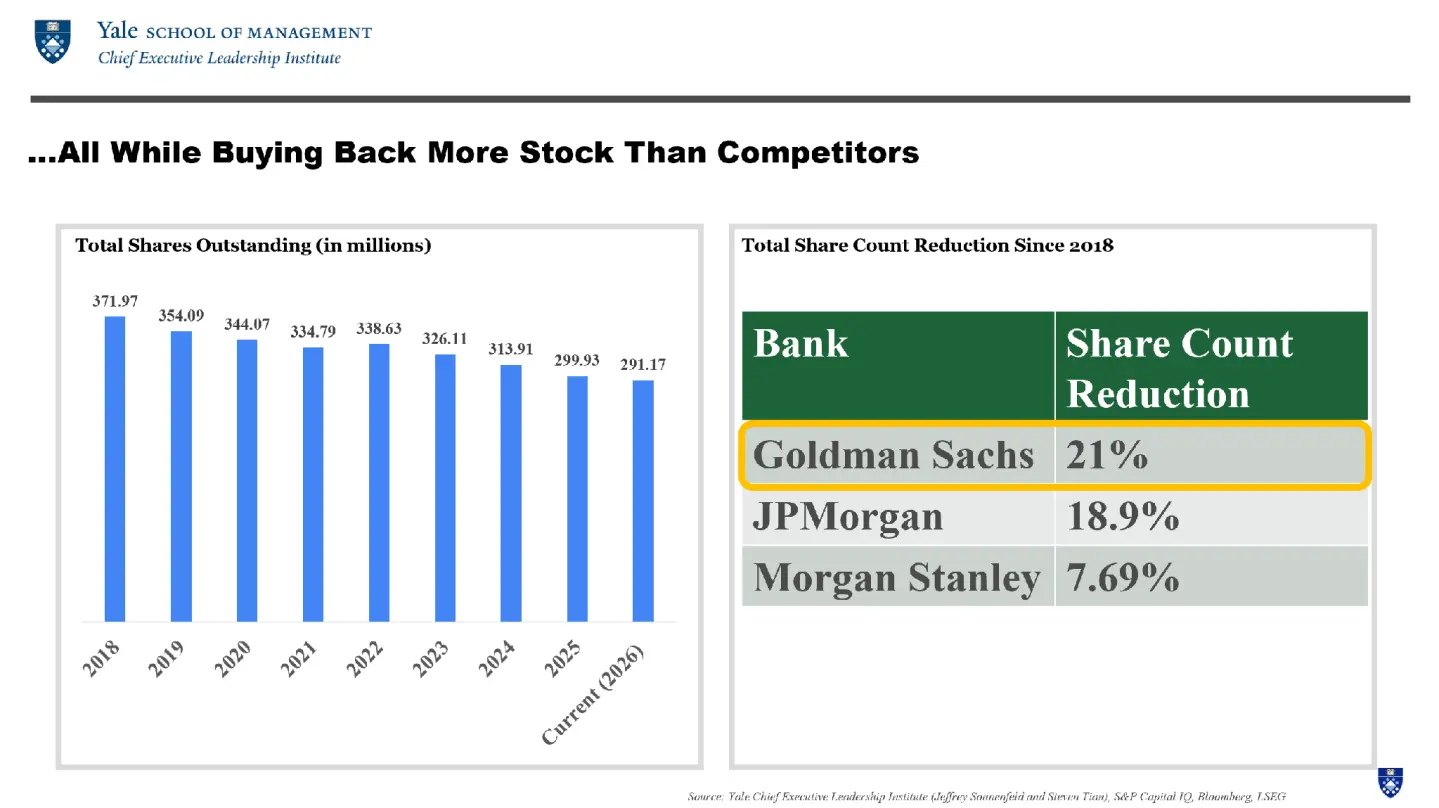
Capital allocation under Solomon has diverged sharply from prior eras. As a private partnership, Goldman prioritized partner distributions over reinvestment, constraining expansion into new business lines. The current administration has reversed this approach, directing capital toward growth initiatives while simultaneously retiring more than 21% of outstanding shares through buybacks—a repurchase rate exceeding peer institutions.
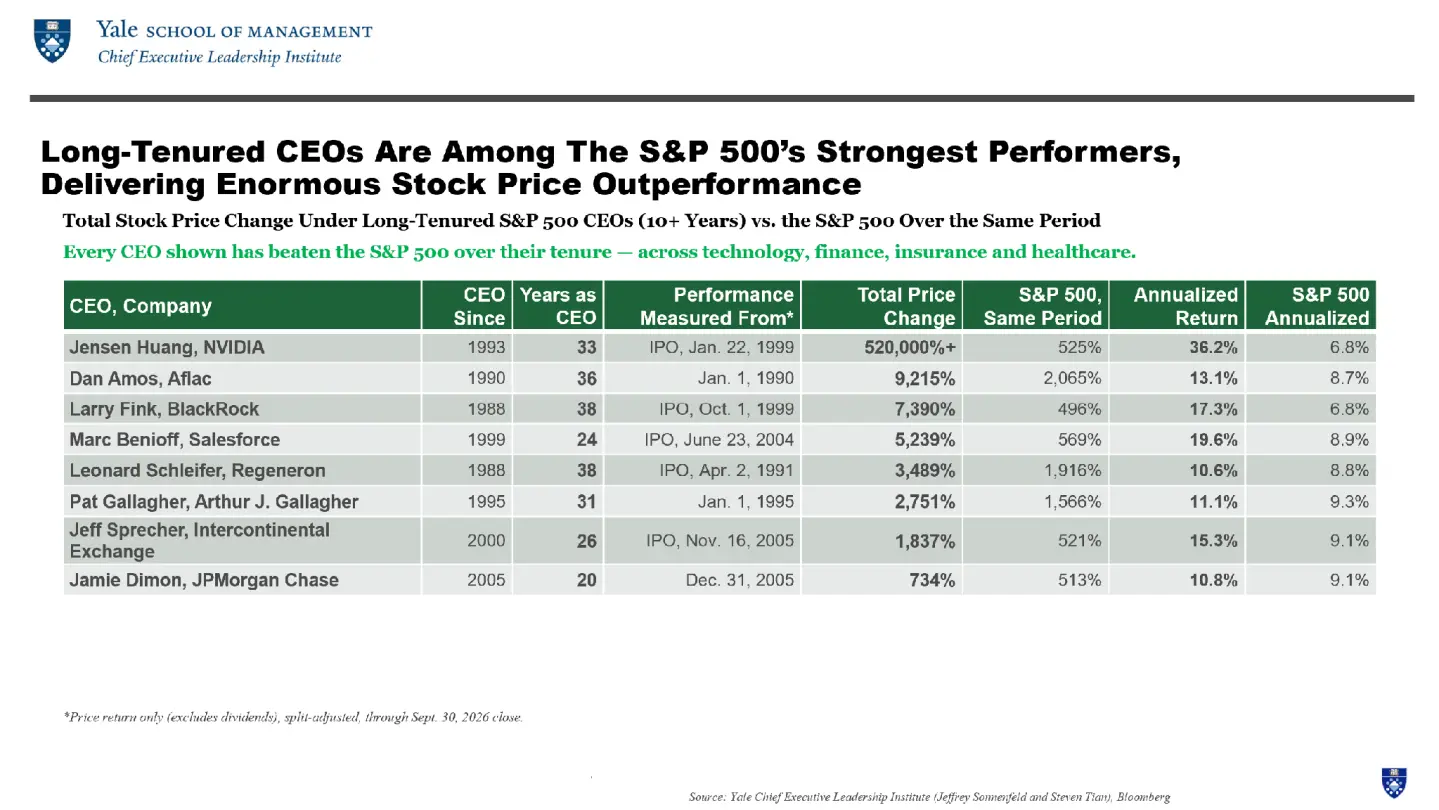
Long-serving CEOs in the S&P 500 frequently correlate with sustained outperformance, challenging assumptions that tenure limits enhance governance. Executives such as NVIDIA’s Jensen Huang, BlackRock’s Larry Fink, Salesforce’s Marc Benioff, and Regeneron’s Len Schleifer have delivered exceptional returns during extended tenures. Empirical evidence does not support arbitrary term limits when performance metrics remain strong.
Waldron remains a senior executive within the existing leadership structure without formal designation as CEO-in-waiting. The board’s evaluation process includes multiple internal and external candidates consistent with prudent contingency planning. No timeline for transition has been established, and Solomon retains full authority over strategy and operations.
Goldman Sachs currently trades at record valuations relative to book value, reflecting investor confidence in the firm’s revised operating model. Return on assets and return on equity rank among the highest in the peer group, validating the capital deployment decisions made over the past eight years.









