Former UK Crime Agent Ordered to Pay $2.4 Million for Stolen Silk Road 2.0 Bitcoin
Blockchain forensics unraveled a 2017 theft that investigators initially blamed on the dark web marketplace operator.

A British court has ordered a former National Crime Agency investigator to surrender £1,810,678.93 ($2.4 million) after he siphoned 50 Bitcoin from evidence seized during a dark web probe — assets worth roughly £60,000 when he stole them in 2017.
The confiscation order, secured Wednesday by the Crown Prosecution Service under the Proceeds of Crime Act 2002, targets Paul Chowles, 44, of Bristol. The legislation allows UK prosecutors to strip convicted criminals of financial gains derived from illegal activity, calculating repayment based on current asset values rather than the price at the time of the offense. That statutory mechanism explains the vast gap between what the cryptocurrency was worth nine years ago and the seven-figure sum Chowles now owes.
Chowles served as the lead analyst responsible for extracting digital currency from devices confiscated during the NCA’s investigation into Silk Road 2.0. Thomas White launched that successor marketplace weeks after the FBI dismantled the original Silk Road in October 2013. Investigators eventually arrested White, who pleaded guilty in 2019 to operating the platform and received a five-year sentence.


During the probe, Chowles transferred 50 BTC out of White’s personal reserve wallet over two days in May 2017. To conceal the movement, he fragmented the coins into smaller denominations and pushed them through Bitcoin Fog, a notorious cryptocurrency mixing service designed to sever the link between sender and receiver addresses on the public blockchain. He then liquidated the funds using prepaid debit cards issued by Cryptopay and Wirex, executing 279 separate transactions totaling £144,580.
For years, investigators assumed White himself had moved the missing coins before his arrest. White consistently denied the allegation, but by late 2021 authorities had written off the 50 BTC as untraceable. The case broke open in 2022 when a search of Chowles’ residence uncovered electronic devices containing the private keys controlling the stolen wallet.
Reconstructing the laundering trail required specialized forensic work. Merseyside Police partnered with Chainalysis, a blockchain intelligence firm widely contracted by global law enforcement agencies, to de-anonymize the transactions despite their passage through Bitcoin Fog. While mixers pool funds from multiple users to obscure origins, advanced heuristics and timing analysis can sometimes correlate inputs with outputs, particularly when the launderer subsequently cashes out through regulated payment processors.
Authorities recovered 30 of the 50 stolen Bitcoin from Chowles. The remaining 20 BTC were spent or converted during his 279 debit card transactions. Under the Proceeds of Crime Act, defendants remain liable for the full benefit figure even when they have already dissipated part of the proceeds.
Chowles pleaded guilty to theft, transferring criminal property, and concealing criminal property. Liverpool Crown Court sentenced him to five years and six months in prison in July 2025. The NCA formally dismissed him on July 11, 2025, the same month his sentencing concluded.
The case underscores persistent vulnerabilities in how law enforcement agencies handle seized digital assets. Unlike physical cash or bank accounts, cryptocurrency wallets are controlled entirely by private keys — cryptographic strings that grant absolute access to funds without requiring institutional authorization. When a single investigator holds both operational responsibility and unsupervised access to those keys, the risk of internal theft rises significantly. Several U.S. agencies, including the Department of Justice and the Secret Service, have adopted stricter chain-of-custody protocols and multi-signature wallet requirements following similar incidents involving rogue agents in high-profile cybercrime cases.
The CPS Proceeds of Crime Division has recovered more than £530 million through confiscation orders over the past five years, returning over £102 million directly to victims. A compensation order has been issued for the victim in the Chowles case.
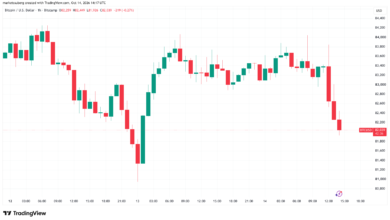
Bitcoin traded near $84,141 on Wednesday, reflecting the broader appreciation that transformed Chowles’ initial theft into a multimillion-dollar liability.