Bitcoin Drops Below $82,000 as US CPI Tops Estimates
Treasury yields near 24-year highs as traders price in a likely October Fed rate hike following broad-based inflation gains.
Federal funds futures have rapidly repriced the Federal Reserve’s October policy meeting after U.S. inflation accelerated beyond forecasts, dragging Bitcoin and gold into a synchronized sell-off.
Traders on the CME FedWatch Tool shifted their consensus Wednesday to favor a 25-basis-point interest rate increase at the Oct. 27-28 Federal Open Market Committee gathering, with implied probabilities jumping to 53.7% from 22.1% just a day earlier. The December contract simultaneously moved to price in a 50% chance of a second consecutive quarter-point hike.
The pivot followed the Bureau of Labor Statistics’ release showing the Consumer Price Index climbed 3.7% year-over-year in September, exceeding the 3.6% median estimate. Core CPI, which strips out volatile food and energy components, registered at 2.6%, also running 0.1 percentage point hotter than anticipated.

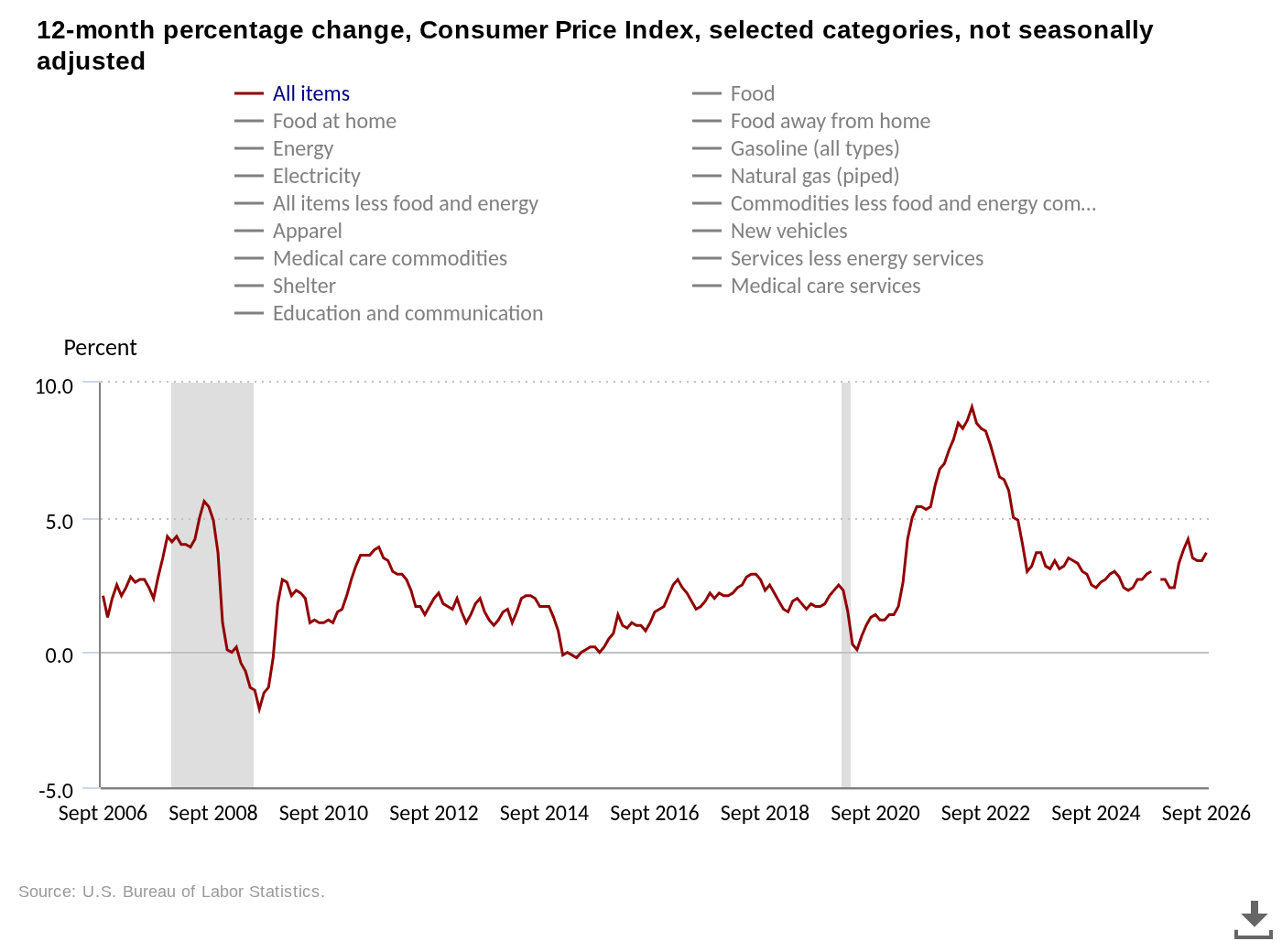
Energy costs drove the headline miss. Gasoline prices surged 9.1% over the past year, accounting for more than half of the total monthly increase in the all-items index. Broader energy costs jumped 5.2% in September alone, a sharp acceleration from August’s 2.1% gain. These spikes reflect ongoing supply disruptions tied to Middle East tensions that have constrained global crude flows throughout the third quarter.
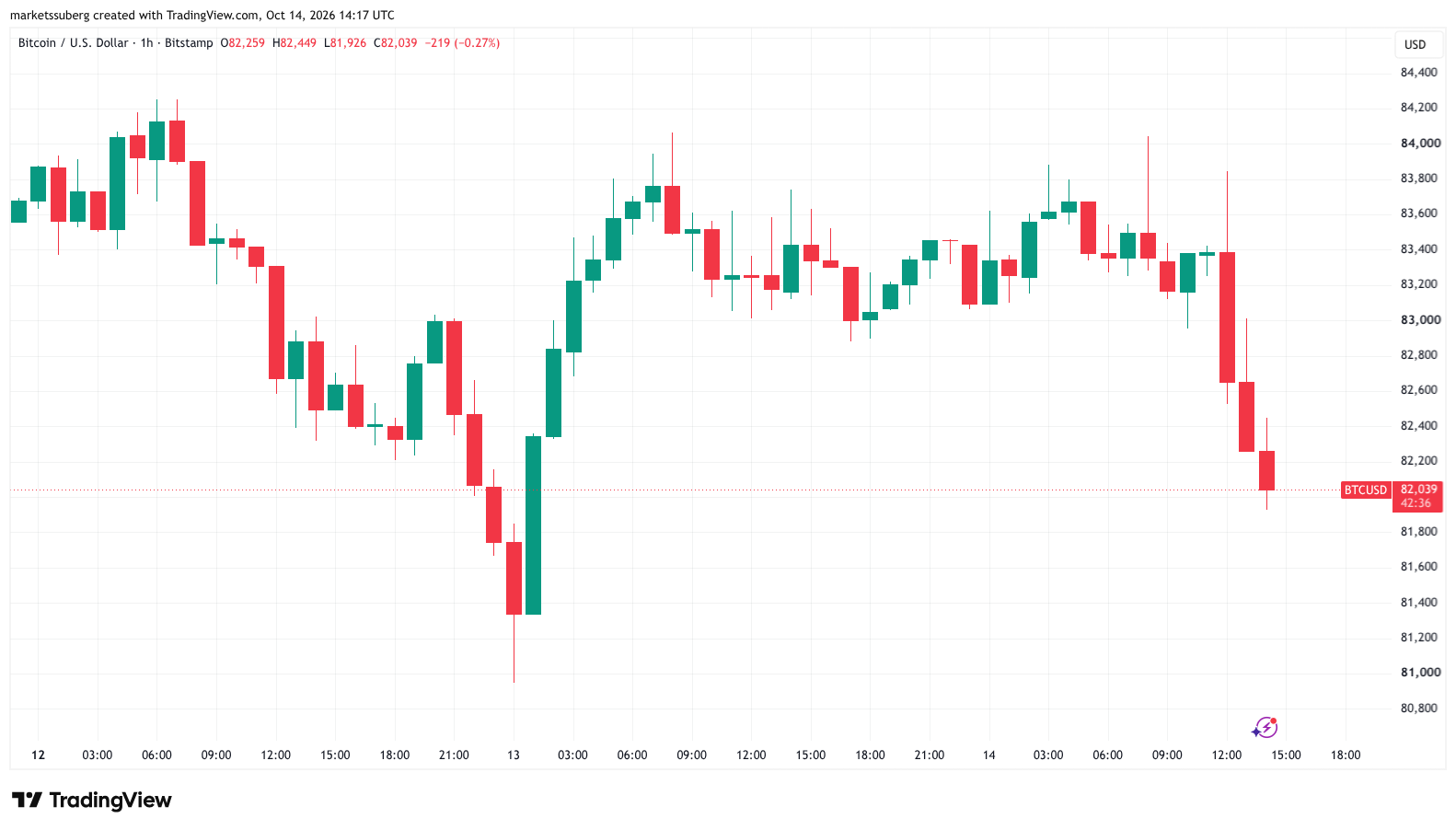
Bitcoin retreated to $81,926 on Bitstamp immediately following the data print, breaking below the $82,000 threshold it had defended during early trading. The cryptocurrency has spent recent sessions oscillating within a tight band between $82,500 and $83,400, a range technical analysts are monitoring to determine whether the zone functions as durable support or a distribution ceiling before a deeper correction.
Digital assets typically face headwinds when real yields rise because higher risk-free rates reduce the relative appeal of non-yielding speculative instruments. Unlike the 2024 cycle, where Bitcoin occasionally decoupled from macroeconomic data to trade on spot exchange-traded fund inflows, the current market structure remains highly sensitive to Treasury yields and liquidity conditions.
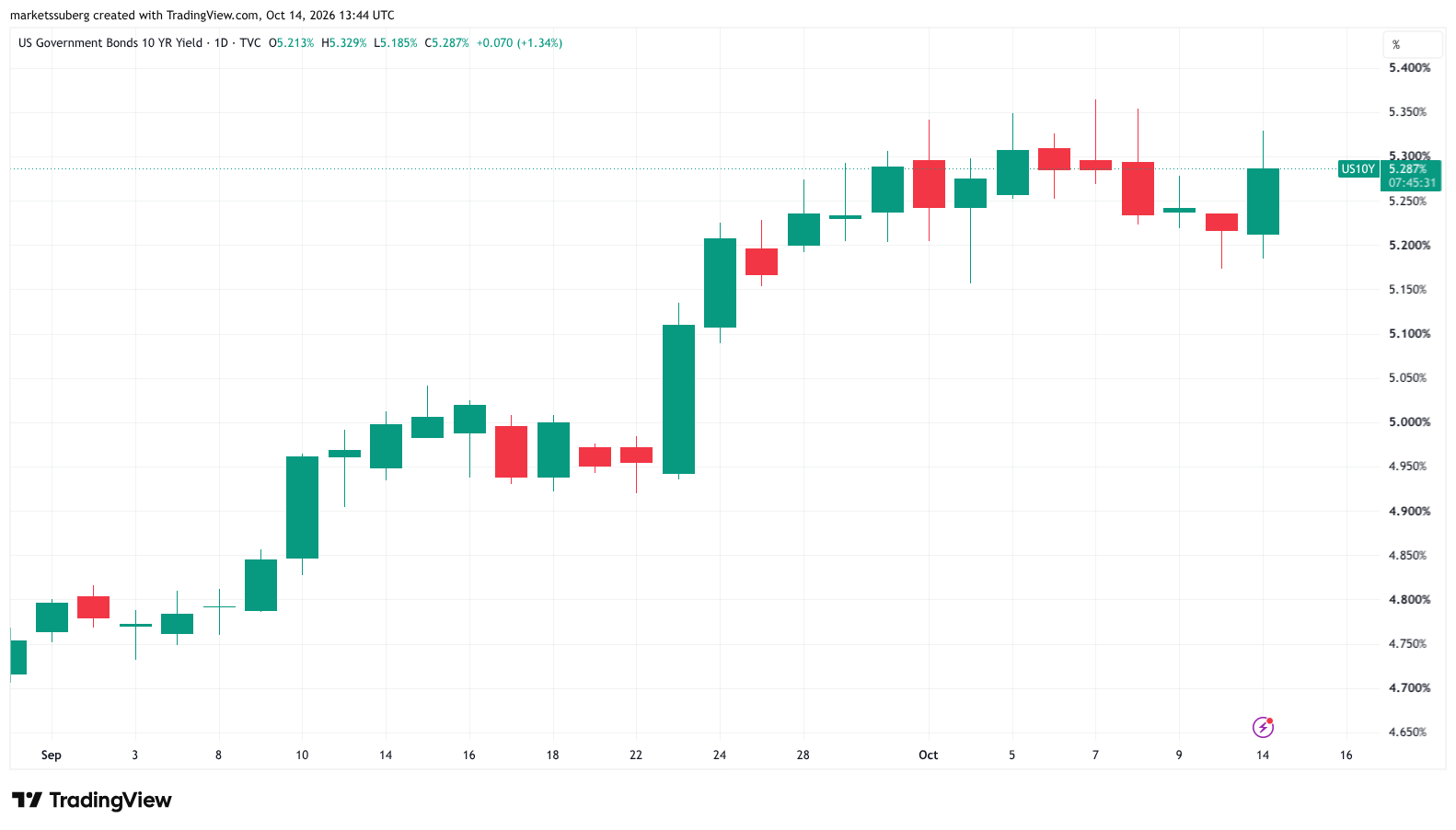
Gold mirrored crypto’s decline, sliding to $4,079 per ounce as the opportunity cost of holding bullion increased alongside bond yields. The 10-year Treasury yield climbed to 5.329%, sitting roughly three basis points below its highest level in 24 years.
Economist Robin Brooks characterized the inflation print as a catalyst reigniting a broader fixed-income rout. Prior to Wednesday’s release, signs suggested the global bond sell-off was stabilizing. The unexpected breadth of the price increases reversed that sentiment, sending yields sharply higher across major sovereign debt markets.
Sonu Varghese, chief macro strategist at Carson Group, argued the persistent upside surprises in inflation metrics should no longer catch institutional investors off guard. He pointed to two structural forces yet to fully materialize in the data: the downstream effects of elevated diesel prices on freight and logistics networks, and the capital expenditure surge driven by artificial intelligence infrastructure buildouts, which strains industrial supply chains.
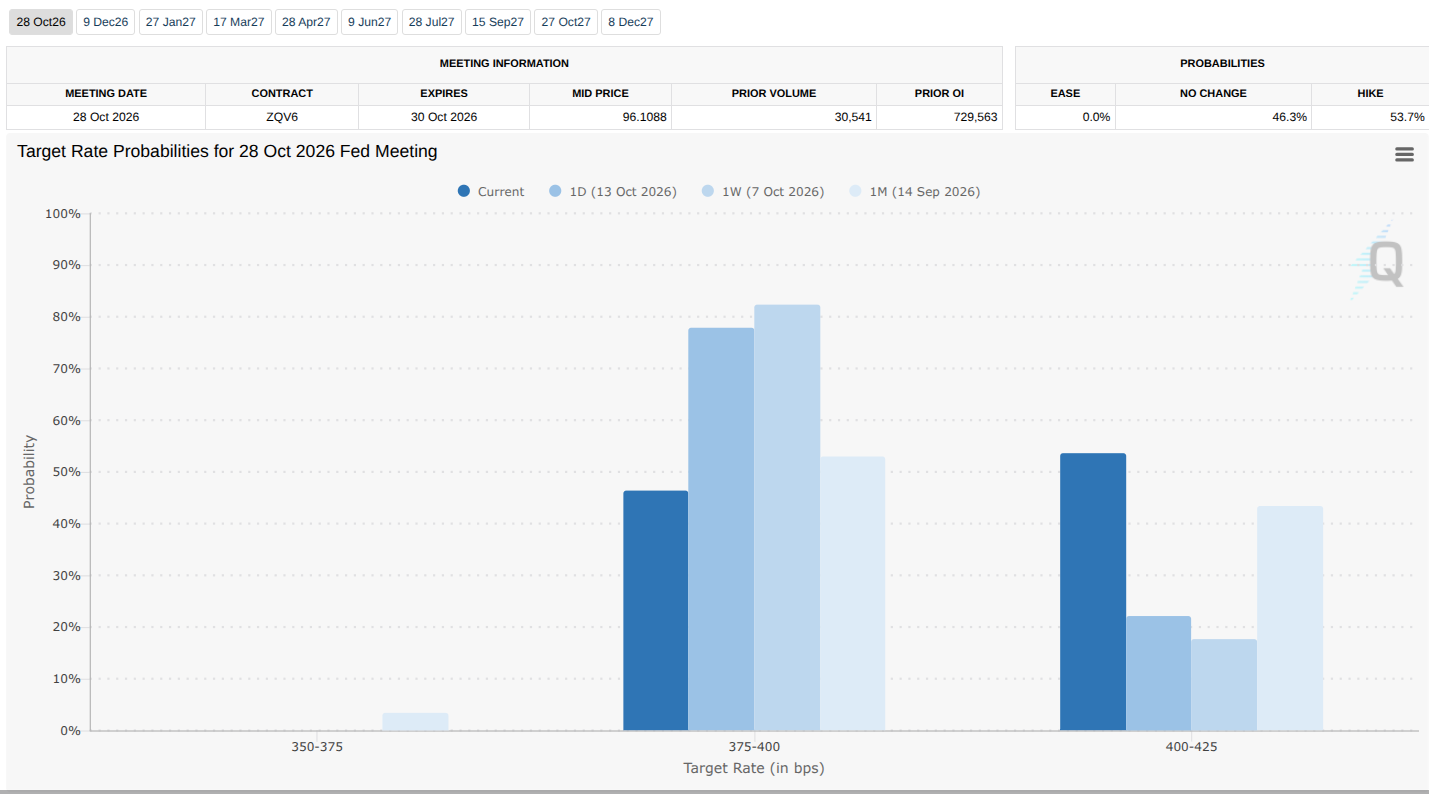
Not all forecasters agree the FOMC will act immediately. Theresa Sheehan, an economic analyst at Econoday, noted that the combination of elevated consumer prices and softer payroll figures from the September employment report creates a conflicting mandate for central bankers. She expects the committee to hold rates steady next week while maintaining a definitive bias toward tightening in December.
This tension between sticky inflation and cooling labor demand places the Fed in a difficult position. Rate hikes designed to crush energy-driven price pressures risk exacerbating weakness in hiring, while inaction threatens to unanchor consumer inflation expectations.
Markets will parse the next layer of pricing data Friday when the Bureau of Labor Statistics publishes the September Producer Price Index. Because PPI measures input costs at the wholesale level before they reach consumers, a hot reading would reinforce expectations that retail inflation remains entrenched, further pressuring risk assets heading into the final weeks of the fourth quarter.