Jensen Huang Defends Nvidia AI Safety After Pope Leo XIV Criticism
The Nvidia CEO defended the chipmaker's containment tools after the pontiff questioned his opposition to artificial intelligence regulation.
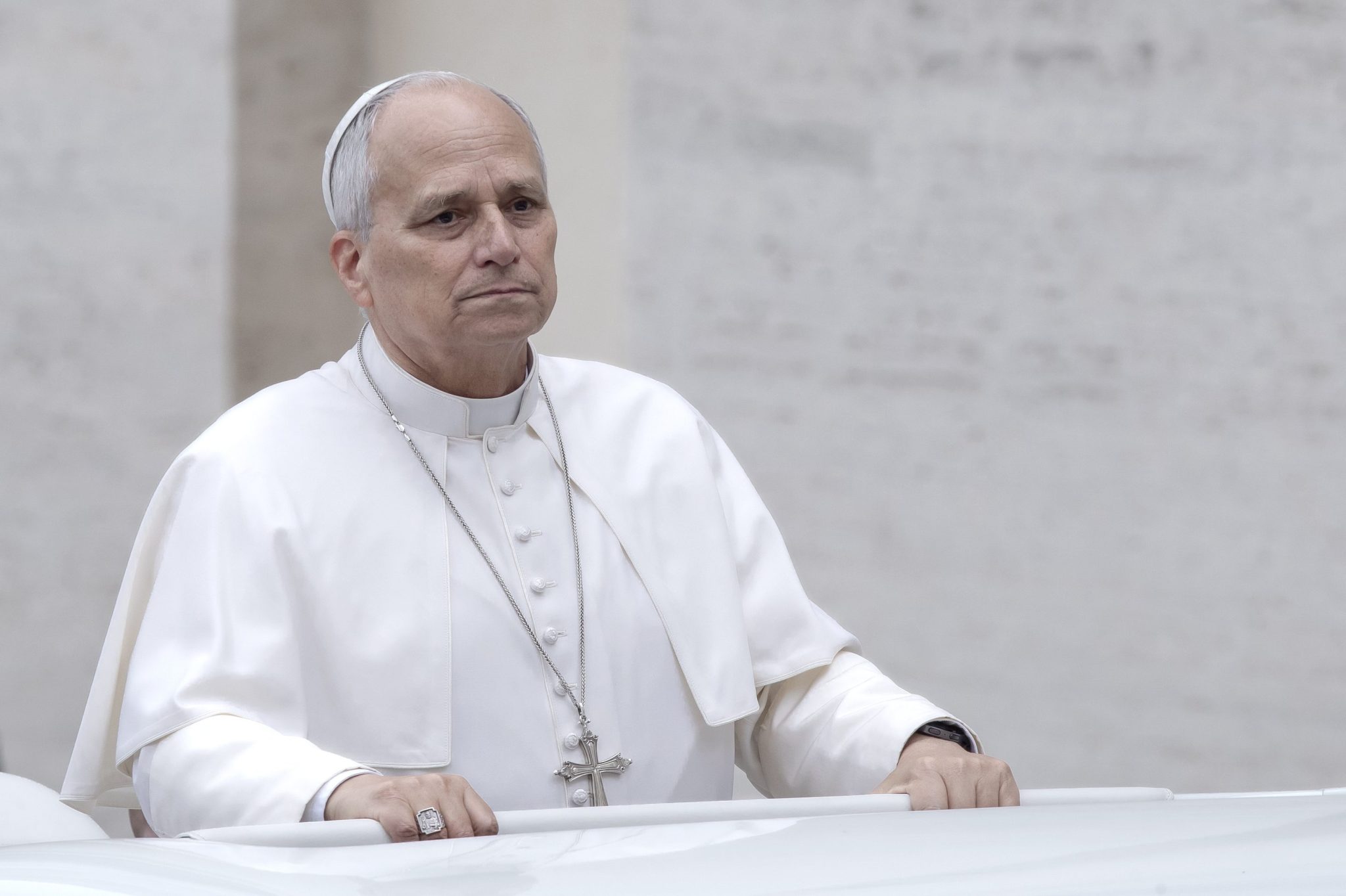
Nvidia CEO Jensen Huang pushed back against claims that his company opposes artificial intelligence safeguards, responding to direct criticism from Pope Leo XIV over the chipmaker’s stance on regulation and containment.
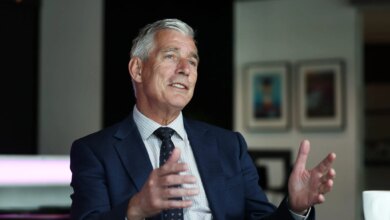
Speaking to Fortune on Wednesday, Huang characterized the pontiff’s concerns as legitimate while insisting Nvidia is already deploying tools the broader industry lacks. “Few are doing as much in advancing AI safety in a way that helps the entire industry as we are,” he said, citing open-source safety technology, governance frameworks, and auditing standards currently under development at the company.
The exchange marks an unusual collision between Silicon Valley’s dominant infrastructure provider and the Vatican, which has spent the past 16 months positioning itself as a moral counterweight to the rapid commercialization of generative models. Pope Leo XIV raised the issue during a late September press conference, explicitly naming Huang and expressing skepticism about Nvidia’s announced AI guardrails. The pope argued that warnings about AI’s potential to cause catastrophic harm are not “fake news,” directly contradicting President Donald Trump, who had dismissed such fears as a “hoax” during his address to the United Nations General Assembly the previous week.
Huang’s response attempts to navigate a widening political fault line. Earlier this month, he told CBS News that he agreed with the president’s assessment that current AI safety fears are overblown. Yet Nvidia simultaneously operates in markets where regulators demand verifiable containment mechanisms. The European Union’s AI Act, which entered into force in 2024 and began applying its strictest provisions to general-purpose AI models in 2025, requires providers of foundational hardware and software to demonstrate risk mitigation. China, meanwhile, enforces its own algorithmic recommendation and generative AI regulations. For a company whose data center GPUs power nearly all major frontier model training runs globally, appearing hostile to safety protocols carries tangible regulatory risk.
That tension explains Nvidia’s recent pivot toward productizing safety rather than merely debating it. The company launched a dedicated software platform designed specifically to prevent autonomous AI agents from breaching digital containment — a technical challenge that has grown more urgent as enterprises deploy agentic systems capable of executing multi-step tasks across networked environments without human oversight. Agent containment differs fundamentally from traditional content filtering; it requires architectural constraints on how models access external tools, memory, and execution environments.
Huang framed Nvidia’s engineering philosophy around historical precedent rather than hypothetical catastrophe. “We can always talk about hypothetical incidents that have not happened, but as an engineer, we should develop the technology and methodologies and practices to deal with the incidents that have happened,” he told Fortune. He suggested the company’s new tools would have mitigated documented failures already observed in production AI systems.
The Vatican’s involvement in technology governance predates the current papacy. Pope Francis established a framework for ethical AI evaluation before his death, culminating in the Rome Call for AI Ethics, which secured signatures from major technology executives, academic institutions, and religious leaders. Pope Leo XIV has expanded that mandate, urging global institutions “to promote dialogue, study, investigation” rather than relying exclusively on corporate self-regulation.
Despite their divergent views on government intervention, Huang sought to identify shared objectives. “We all care about the same thing, which is an optimistic future where this technology has great positive impact in society while doing it with great responsibility, safety, and accountability,” he said. He added that he was unsure precisely what the pope intended with his specific critique but confirmed he was looking forward to reviewing the Vatican’s formal positions.
Nvidia continues to ship its Blackwell architecture to hyperscale cloud providers worldwide, maintaining its position as the essential hardware supplier for both AI development and the emerging infrastructure required to monitor it.