Geely Unveils ‘Shendun’ Battery and AI Cooling to Counter Fast-Charging Degradation
New cooling systems and pulse restoration tech aim to double battery longevity despite ultra-fast charging demands.
The race for electric vehicle adoption has hit a critical bottleneck: the tension between consumer demand for rapid refueling and the chemical reality that high-speed charging degrades lithium-ion cells. Geely Auto is attempting to resolve this paradox with a suite of technologies announced this week, centering on its new “Smart Charging” architecture and two distinct battery chemistries designed to withstand extreme thermal stress.
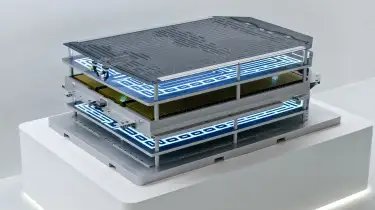
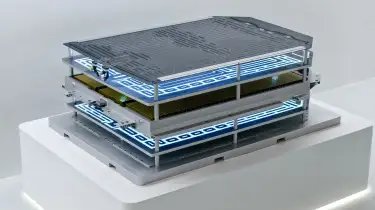
At the core of this announcement is the introduction of the “Shendun Golden Battery,” engineered specifically for ultra-fast performance, alongside the next-generation “Ultra Short Blade Battery.” While the former targets speed, the latter prioritizes longevity and safety without sacrificing significant charging capability. This dual-track strategy addresses the fragmented EV market, where some consumers prioritize range anxiety relief while others demand durability over years of ownership. To support these cells, Geely has implemented laser-welding technology for battery cell tabs and covers, a manufacturing refinement claimed to reduce internal resistance and heat generation during charging by approximately 10 percent.
Hardware alone cannot solve thermal runaway risks associated with megawatt-level power delivery. Consequently, Geely has deployed an end-to-end five-point liquid-cooling system. Unlike traditional setups that cool only the battery pack, this integrated loop manages temperature across the entire energy transfer chain. It actively cools the stationary energy-storage batteries at the charging station, the conductive cables themselves, the vehicle’s charging port interface, and finally, the onboard battery pack. By maintaining optimal temperatures at every junction, the system minimizes efficiency losses and prevents localized hotspots that typically accelerate cell degradation.


The most significant innovation lies in the software layer governing these physical components. Geely’s AI-driven management system tailors the charging profile for each individual vehicle in real time. Rather than applying a static current curve, the algorithm adjusts peak amperage, cooling intensity, and session duration based on the specific state of health (SoH) and temperature of the target battery. When combined with a newly developed “lithium-ion pulse restoration” technique, the manufacturer projects a 20 percent increase in overall cycle life. Pulse restoration involves delivering brief, controlled bursts of energy to reverse minor sulfation or lithium plating effects that accumulate during rapid ion transport.
For home users who rely on slower Level 2 chargers, Geely has introduced a dedicated low-rate charging strategy. This mode is designed to gradually mitigate degradation caused by previous sessions of ultra-rapid public charging, effectively acting as a maintenance protocol that protects cell integrity over the vehicle’s lifecycle. This holistic approach suggests a shift in OEM philosophy from maximizing single-session charge speeds to optimizing total lifetime energy throughput.
While the technological framework is robust, regional availability remains uncertain. There is no confirmed timeline for the deployment of this specific Smart Charging infrastructure in the United Kingdom or other Western markets. Currently, Geely’s presence in Europe is anchored by models like the EX2 supermini, available through third-party retailers starting near £20,000, though it is unclear if these initial units will feature the full Shendun battery integration described in the latest announcements.