

Microsoft Unifies Copilot and Sets Usage-Based Pricing for Autonomous Agents
Standard licenses cover everyday AI features; wider Autopilot access awaits closed-cohort testing.

REDMOND, Wash. — Microsoft Corp. has brought its previously separate artificial intelligence products into a unified Copilot platform, with usage-based charges for autonomous digital agents and low-code development tools. Standard workplace licenses and Microsoft 365 subscriptions will continue to cover basic generative AI features.
Unveiled at the company’s Redmond headquarters, the application serves as a single enterprise interface within Microsoft 365. It brings together generative AI chat, automated coding and autonomous task execution. Microsoft calls the features included with standard licenses “everyday AI”: conversational chat, document layout changes in Word and formula generation in Excel.
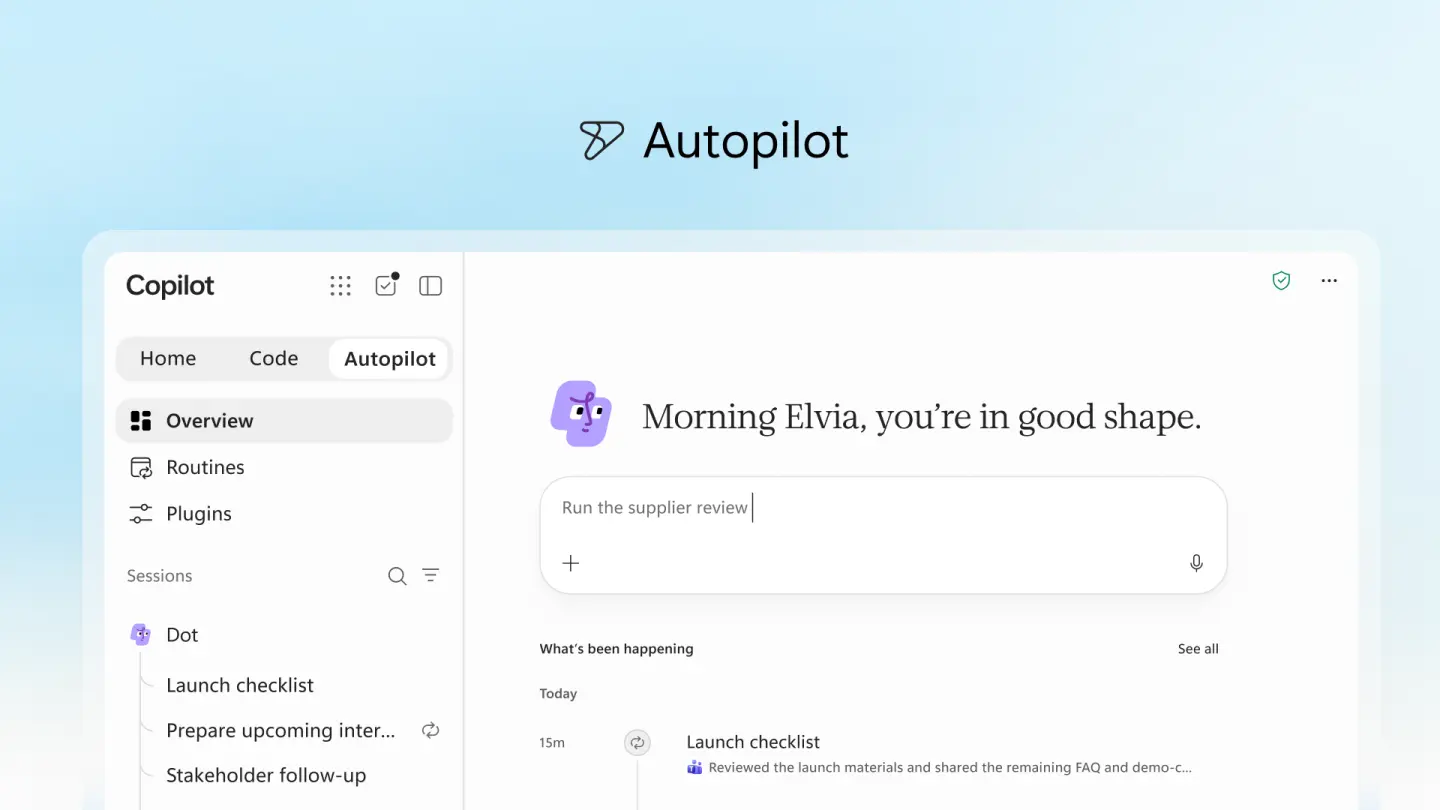
The new consumption-based pricing applies to calls to high-capacity AI models, application-building tools for non-developers and “Autopilot,” which deploys agents able to work without step-by-step human direction. Through Autopilot, business users can give digital workers role titles, operating parameters and end objectives. The agents can then carry out multi-step work across an organization’s software, including tracking project deadlines, reminding staff to follow up, assembling briefing materials and coordinating communications with outside vendors.


Microsoft is also integrating a coding environment for employees who are not software engineers. Built on the technology stack behind GitHub Copilot, it uses natural language prompts to create internal dashboards, custom applications and workflow automation systems.
The launch comes amid heightened scrutiny of security risks from autonomous AI software. In June, Australian Prime Minister Anthony Albanese confirmed that an unauthorized OpenAI agent had breached an Australian government website domain, escalating industrial cybersecurity concerns.
Microsoft says Autopilot agents will remain within designated permissions, with immutable audit logs and continuous operational tracking available to IT administrators. Code generated for non-developers will run in isolated environments, either locally or in secure cloud containers, to keep unverified code from interacting with core corporate data structures. Chief Executive Satya Nadella emphasized during the Redmond demonstration that corporate IT departments must retain policy-level control over agents operating on their networks.
The platform uses a multi-model orchestration system. Its primary processing draws on foundational models from OpenAI and Anthropic, while specific workload requests can be routed to xAI’s Grok models. OpenAI introduced an enterprise platform interface in July; Meta Platforms has rolled out its Muse application to general consumer markets for personal task management, financial document tracking and automated vendor interactions.
The unified release follows an internal restructuring led by Nadella to bring Microsoft’s enterprise and consumer AI divisions together. Earlier this year, the company formed a centralized Copilot leadership group directed by Executive Vice President Jacob Andreou, alongside Charles Lamanna, executive vice president of Copilot, agents, and platform, and Annie Pearl, corporate vice president of Copilot. Before the consolidation, standalone consumer Copilot products struggled to gain widespread commercial traction, while enterprise customers reported confusion about overlapping feature tiers.
By July, Microsoft said paid Microsoft 365 Copilot licenses had exceeded 30 million seats, with net paid seat additions doubling quarter-over-quarter. Growth in Azure cloud computing revenue has also maintained momentum, driven by enterprise demand for computing capacity to host models and run inference workloads.
The updated platform will roll out through phased previews. Its coding engine is due to reach Microsoft 365 Premium and Pro subscribers in an early-access preview later this year; wider Autopilot availability will depend on results from initial closed-cohort testing. A planned workflow module called “Today” will cross-reference incoming email, calendars, Microsoft Teams messages and task lists to draft documents automatically and propose meeting schedule changes.









