Why Rooftop Solar Fires Are Exposing a Gap in European Safety Rules
Full-scale trials challenge material-by-material roof safety testing
The rapid expansion of commercial and industrial rooftop solar installations across Europe has exposed a critical gap in building safety regulations. Traditional fire-testing protocols do not account for the complex thermal interactions created by modern solar arrays, prompting fire safety experts and European construction trade groups to advocate evaluating complete, integrated rooftop systems rather than individual building materials in isolation.
Standard building safety codes have historically assessed roof assemblies through protocols such as the European Union’s EN 13501-5 standard, which rates roof exposure to external fires under various conditions. Those tests were developed before the widespread use of building-applied photovoltaic (BAPV) systems, in which solar modules are retrofitted onto existing flat or low-slope roofs.
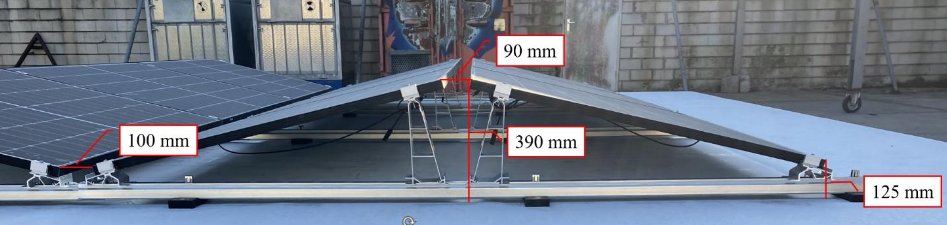
BAPV modules sit slightly above the roof surface, unlike building-integrated photovoltaics (BIPV), in which solar components replace the building envelope itself. The installation leaves a narrow, continuous cavity between the modules and the waterproofing membrane. A DC arc flash caused by damaged cabling, degraded connectors, or junction box failures can turn that space into a physical channel that traps radiant heat, recirculates hot gases, and creates a convective loop known as the “chimney effect.”

That chimney effect can accelerate lateral flame spread across the underlying roofing membrane even when the membrane has passed standard external fire exposure tests. The hazard is particularly acute in modern commercial buildings designed to meet stringent energy-efficiency regulations, where thick insulation layers are commonly used to achieve high thermal performance.
Expanded Polystyrene (EPS) is widely used globally because of its excellent thermal resistance (R-value), low weight, high compressive strength, and cost-effectiveness. It is also an organic, thermoplastic foam. EPS melts at approximately 100°C to 120°C and can ignite when exposed to sustained heat and oxygen, unlike stone wool or mineral wool, which are classified as Class A1 under European fire standards.
The combustibility of EPS has increased pressure on trade associations to find engineering solutions that retain its economic and thermal performance advantages while eliminating the risk of catastrophic fire propagation. Germany’s Rigid Foam Industry Association (Industriendustrieverband Hartschaum, IVH) and the Association for European Manufacturers of Expanded Polystyrene (EUMEPS) commissioned seven large-scale fire tests to investigate potential engineering barriers.
Kiwa BDA, an international testing, inspection, and certification agency specializing in roofing and building envelope systems, conducted the physical trials between October 2024 and April 2025. The experiments took place at the Troned Training Factory, a specialized industrial fire-testing facility at the Twente Safety Campus in Enschede, Netherlands. Engineers and researchers from the Danish Institute of Fire and Security Technology (DBI), an independent research and technology organization specializing in fire safety, witnessed all seven tests and later analyzed the raw thermocouple data and video records.
Researchers built square mockups measuring 7 meters by 7 meters to replicate commercial industrial roofs. The baseline arrangement simulated a heavy concrete deck, while the experimental configurations represented lightweight industrial roof assemblies supported by profiled trapezoidal steel decking. EPS boards between 100 mm and 260 mm thick formed the core insulation layer, reflecting the insulation depths required by different regional European building energy codes.
The insulation was covered by a standard 1.8 mm-thick polyvinyl chloride (PVC) waterproofing membrane separated by two layers of glass fleece. The solar arrays used non-ballasted PV modules in a standard east-west configuration. The first four tests examined a compact 2×2 array of four modules, while the final three used a larger 4×3 array of 12 modules.

For the localized electrical ignition simulation, a square 15 kW gas burner was suspended beneath a corner PV module. It sat 80 mm above the PVC roof membrane and 120 mm horizontally from the lower edge of the solar module, operating continuously for exactly 10 minutes in every test. Arrays of physical thermocouples tracked heat transfer and thermal profiles across the roof’s internal layers: the four-module assemblies used 27 thermocouples, and the 12-module arrays used 30 sensors at critical material interfaces.
The main variable was a 12 mm-thick cement-bonded particle board (CPB) installed directly between the combustible PVC waterproofing membrane and the EPS insulation. Across the seven tests, the outcomes fell into three categories: flame spread beneath all PV modules with deep penetration into the insulation; flame spread beneath all modules without breaching or igniting the insulation; and no self-sustained flame spread after the gas burner was turned off.
Without the CPB barrier, the baseline fire traveled across the PVC membrane beneath all four solar modules. Intense radiant heat melted the EPS directly below the flame zone, but the insulation melted away from the flame front and self-extinguished, so the fire did not continue through the core insulation layer.
In three of the four tests that included the CPB, the board prevented self-sustained flame spread across the roof. Damage remained localized to the area immediately surrounding the PV module positioned above the burner. Thermocouple data showed the CPB acting as a thermal heat sink: it absorbed intense radiant energy trapped in the cavity and substantially delayed heat transfer to the EPS below.
The fourth CPB test produced a different result. Flames eventually spread beneath the entire PV array, which researchers attributed to elevated wind loads during the outdoor trial that pushed flames laterally through the cavity. The EPS insulation nevertheless remained physically protected, with damage limited to the area directly exposed to the 10-minute burner flame.
Two reference tests examined alternative materials. In the first, the PVC membrane was replaced with an 8.2 mm multi-layer bitumen roof covering while the 12 mm CPB and EPS insulation were retained. Flames spread across the entire PV array, but the CPB limited physical damage to the EPS to the area directly beneath the burner.
In the second reference test, EPS was replaced entirely with non-combustible mineral wool and the 12 mm CPB was omitted. Fire still propagated rapidly through the cavity between the PVC membrane and the PV array. Safety officers manually terminated the trial after 11 minutes when uncontrolled fire propagation between different sections of the solar array was confirmed.
The results indicate that an individual material’s fire classification does not guarantee safety once it is integrated into a complex rooftop PV system. Mineral wool is an A1 non-combustible material, yet it did not prevent rapid lateral flame spread along the combustible PVC membrane beneath the modules. EPS, by contrast, remained protected from ignition when shielded by a 12 mm CPB heat sink.
According to Emanuela Gallo, EU Technical Affairs Manager at EUMEPS, rooftop fire behavior is governed by the complex thermo-physical interaction of the entire system, including the roofing membrane, protective layers, core insulation, and geometric configuration of the PV array, rather than by the properties of one component.
DBI researchers and the commissioning trade bodies emphasized that the initial tests should not be treated as a final certified roof configuration. The data is intended to provide a technical foundation for updating building codes and developing harmonized, system-level European standards for the specific hazards of rooftop solar installations.