Wall Street Races to Profit From Pentagon’s Mineral Push
Federal appropriations are turning previously unbankable mining and defense projects into Wall Street's most reliable growth sector.
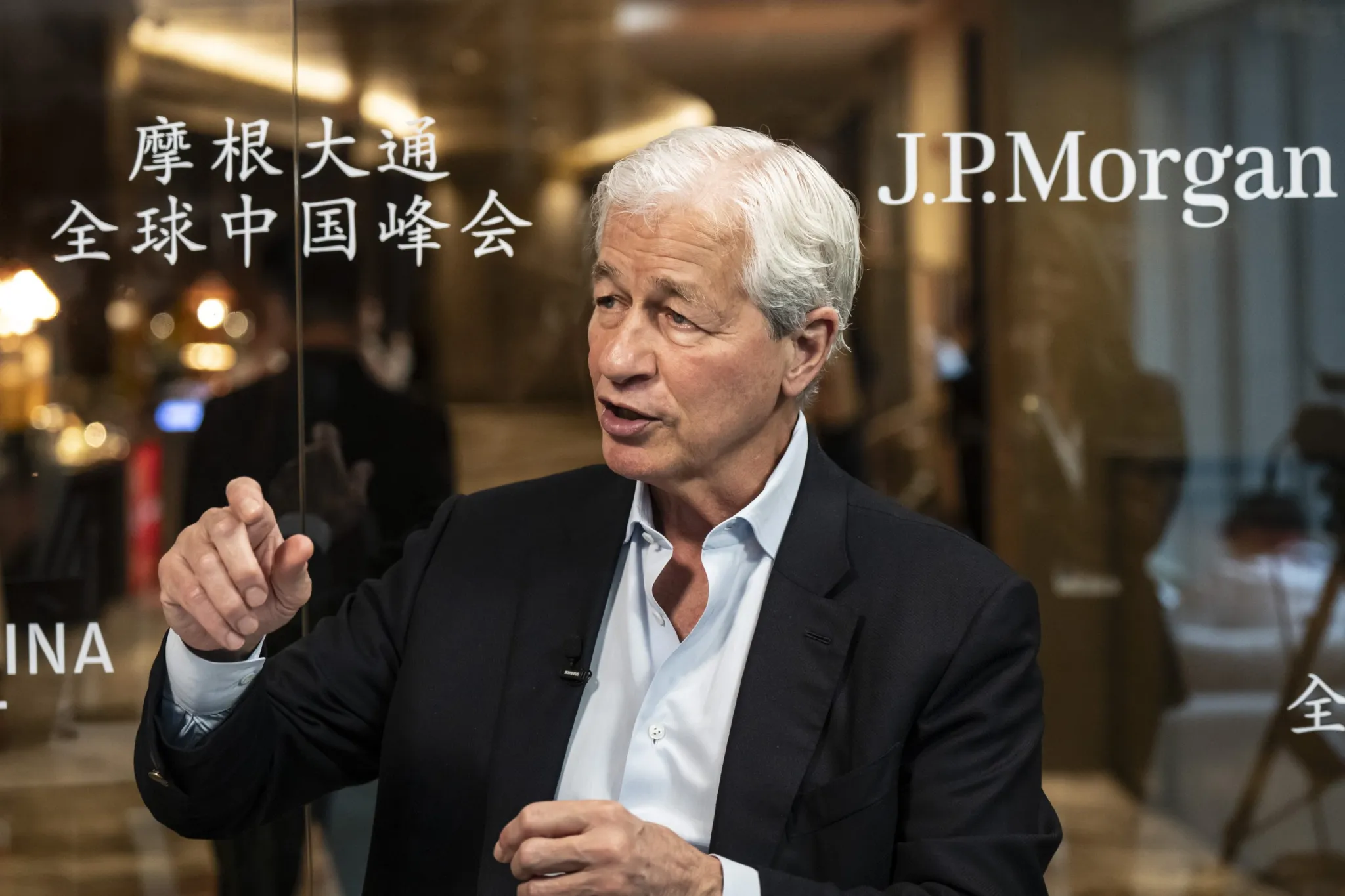
The U.S. government is spending billions to break China’s grip on critical minerals, and Wall Street is positioning itself as the essential middleman. JPMorgan Chase said Monday it has financed or facilitated $230 billion over the past year into sectors tied to national security, including defense, frontier technology, and raw materials processing. The figures mark the first anniversary of the bank’s 10-year, $1.5 trillion Security and Resiliency Initiative.
For investors tracking how federal industrial policy translates into private returns, the bank’s portfolio offers a direct map of where Washington’s money is flowing next. JPMorgan has committed $5 billion of its own capital to defense-related startups—halfway through an initial $10 billion allocation—and hired Andrew Frame as a dedicated critical minerals chief to lead supply chain efforts.
“Strong economies and national security don’t happen by accident,” CEO Jamie Dimon said in a press release announcing the milestone. “They require investment in critical infrastructure, manufacturing, energy, defense and innovation, as well as policies that encourage growth.”


The commercial logic is straightforward. Federal dollars are de-risking projects that traditional lenders historically avoided. Jeff Barrington, managing director at sell-side mergers and acquisitions advisory firm Windsor Drake, told Fortune the bank is investing in areas “that now have a federal tailwind behind them” rather than acting from patriotism. “The bank is following the capital that the state is effectively guiding,” Barrington said.
That guidance comes with massive appropriations. The Pentagon plans to spend $5 billion over fiscal years 2026 and 2027 to shore up critical minerals supply chains, including $3.6 billion targeting shortages of antimony, gallium, germanium, and aluminum used in military equipment. Since January 2025, the Trump administration has signed or approved $40 billion in critical minerals deals. JPMorgan’s own researchers flagged these materials as a potential flashpoint between the U.S. and China back in 2024.
The bank’s equity bets track those federal priorities precisely. It invested $75 million for a 2.7% stake in Perpetua Resources, which is developing an Idaho mine expected to hold the only identified U.S. reserve of antimony, a key component in ammunition.
JPMorgan is also arranging financing for Korea Zinc’s $7.4 billion processing plant in Clarksville, Tennessee. According to Korea Zinc’s letter to shareholders, the project includes $1.4 billion in planned Pentagon equity and debt financing alongside $210 million from the Commerce Department. Commercial operations producing zinc, germanium, and gallium are scheduled to begin in 2029.
Similar structures appear across the bank’s deal sheet. JPMorgan worked alongside the Pentagon on MP Materials, helping arrange $1 billion in financing to expand domestic production of rare earth magnets used in fighter jets. The transaction accompanied a Defense Department investment that made the agency the company’s largest shareholder.
The strategy extends beyond American borders. In August, the bank issued a conditional commitment for up to $500 million in loans to a U.S. government-backed entity created to purchase rare earth minerals from Brazilian producer Serra Verde. USA Rare Earth announced plans to acquire the operation as Washington looks to Latin America to source materials outside Chinese control.
Defense manufacturing is drawing similar capital flows. Todd Combs, Berkshire Hathaway’s former stock-picker, helped allocate the bank’s $5 billion equity sum to 10 firms, Bloomberg reported. Among the disclosed recipients are Hadrian, which builds automated factories for precision weapons, and Castelion, a developer of hypersonic missiles. JPMorgan led a nearly $1.4 billion funding round for Hadrian and an $800 million round for Castelion.
Advisory work mirrors the direct investments. In January, JPMorgan advised L3Harris on a $1 billion Pentagon investment in its missile business, which manufactures components for Tomahawk and Patriot missiles. The Defense Department completed the investment in April, taking a financial stake in the unit. L3Harris plans to take the business public, according to its SEC filing, using the funds to modernize factories and expand production.
Heading into the second year of the initiative, JPMorgan said it intends to invest in additional companies “that can expand critical capacity” and make strategic projects financeable. “Success will be measured not only by capital mobilization, but also by stronger industrial capacity, more reliable supply chains and a deeper pipeline of companies able to scale when demand rises or disruption occurs,” the bank said.