NBA Roster Overhauls Force Role Changes for Rising Players
Front-office decisions in Los Angeles, Miami and Oklahoma City are rewriting the developmental timelines for the league's emerging talent.
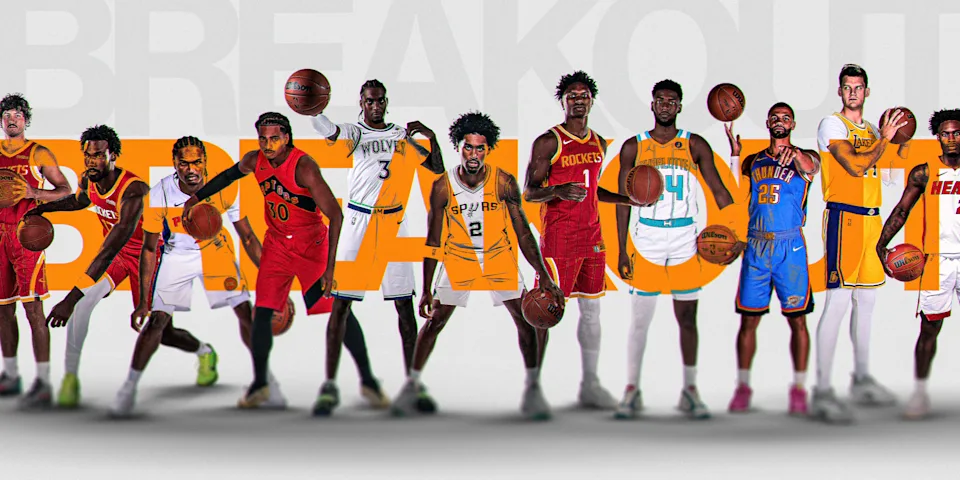
Walker Kessler’s move to the Los Angeles Lakers and Davion Mitchell’s new surroundings in Miami are forcing two of the league’s emerging players into entirely different tactical frameworks this season. The shifts highlight how front-office decisions made over the summer are already dictating on-court development trajectories before the regular schedule fully takes hold.
Join or create a Yahoo Fantasy Basketball league for the 2026-27 NBA season
(Henry Russell/Yahoo Sports Illustration)


Kessler now operates as the primary rim protector alongside Luka Dončić and Austin Reaves, according to the original report’s analysis of the Lakers’ roster construction. This is a stark departure from his previous environment. The Lakers acquired him specifically to rotate, screen, roll and finish. His effectiveness hinges entirely on developing immediate chemistry with Dončić in pick-and-roll sequences, arriving at the rim faster and functioning as a short-roll or lob threat. Historically, young centers paired with elite playmakers either accelerate their development rapidly or struggle to adapt to the required processing speed. Kessler’s ability to time his defensive rotations around the rim will also dictate how aggressively the Lakers can pressure the perimeter.
Advertisement
In Miami, Mitchell faces a different structural change. Playing alongside Giannis Antetokounmpo alters the geometry of the Heat’s offense. Last year, the team relied heavily on Mitchell’s drives. Now, those penetrations become secondary options rather than primary initiations. His transition attack and willingness to beat closeouts take priority, supplemented by catch-and-shoot three-pointers. The blend of his speed with improved decision-making will determine whether he functions merely as a rotational defender or a consistent offensive asset within a star-driven system.
Advertisement
Oklahoma City’s backcourt adjustments have created a direct opening for Ajay Mitchell. With preseason discussions focusing on Shai Gilgeous-Alexander operating off the ball, the Thunder are leaning on Mitchell’s earned trust within their system. His capacity to drive and reject pick-and-rolls allows him to initiate action before kicking out to Jalen Williams or Gilgeous-Alexander. Defenses forced to account for Mitchell’s scoring aggression open up spacing for an already elite Thunder unit.
Advertisement
Houston’s roster additions are similarly reshaping individual responsibilities. Amen Thompson’s development no longer requires him to shoulder primary initiation duties. With other guards handling the ball, his energy can redirect toward defense and paint touches. If his ball-handling growth holds, his speed becomes a constant transition weapon. Teammate Tari Eason enters the season without contract negotiations looming, freeing him to focus on pass-and-cut actions and downhill attacks. Meanwhile, Reed Sheppard benefits directly from the arrivals of Fred VanVleet and Marcus Smart. Rather than serving as Houston’s sole pull-up threat, Sheppard can operate off-ball, simplifying his reads and relying on his shot-making.
Advertisement
Detroit opted against adding external playmaking this offseason, banking instead on Ausar Thompson’s internal progression. His improved decision-making and comfort running pick-and-rolls allow the Pistons to move Cade Cunningham off flares and pindowns. When opponents assign slower defenders to Thompson, he exploits the mismatch as a screener and roller.
Advertisement
San Antonio elevated Dylan Harper into its starting lineup following his rookie-year postseason impact. His lack of hesitation in the preseason suggests he is prepared to anchor a three-guard configuration, utilizing stepbacks and pull-ups when defenses concede space in pick-and-roll situations.
Advertisement
Minnesota’s shift toward a smaller, more athletic roster amplifies Jaden McDaniels’ role. Following his aggressive playoff performance against the Denver Nuggets, McDaniels fits the Timberwolves’ push for transition offense. He operates as a screener, attacking midrange opportunities and reading defenses during handoffs while maintaining his status as a versatile perimeter defender.
Advertisement
Charlotte is watching Brandon Miller navigate the attention drawn by his late-season scoring consistency. His development depends on recognizing double teams, spraying passes to the perimeter after driving into help defense, and understanding when his job on a given possession is complete.
Advertisement
Toronto expects Collin Murray-Boyles to maintain his disruptive defensive activity while expanding offensively. Working as a five, his screening opens rolling lanes, and his ability to flash into open spaces near the dunker spot provides the Raptors with varied lineup configurations if he adds reliable drives and three-point shooting.