Two States Are Bidding for the Bears. Here Is Every Public Dollar on the Table
Thursday morning gave the whole bidding war away: Indiana's House Ways and Means Committee voted 24-0 to advance a stadium authority for Hammond, while Illinois canceled its own hearing on a Bears tax bill — at the team's request. The numbers, state by state, plus what Chicago collects if the Bears leave anyway.
Thursday morning delivered the whole auction in miniature. In Indianapolis, the Indiana House Ways and Means Committee voted 24-0 to create a stadium authority for the Chicago Bears’ move to Hammond. In Springfield, the Illinois House Revenue and Finance Committee canceled its own hearing on a bill written to keep them. The Bears themselves had asked for the pause, one day after a three-hour meeting with state leaders.
The governor’s office found out the way everyone else did. “This morning, we were surprised to see a statement lauding Indiana and ignoring Illinois,” Matt Hill, a spokesman for Gov. JB Pritzker, posted on X. The Bears’ statement praised Indiana’s legislature and never mentioned Illinois at all.
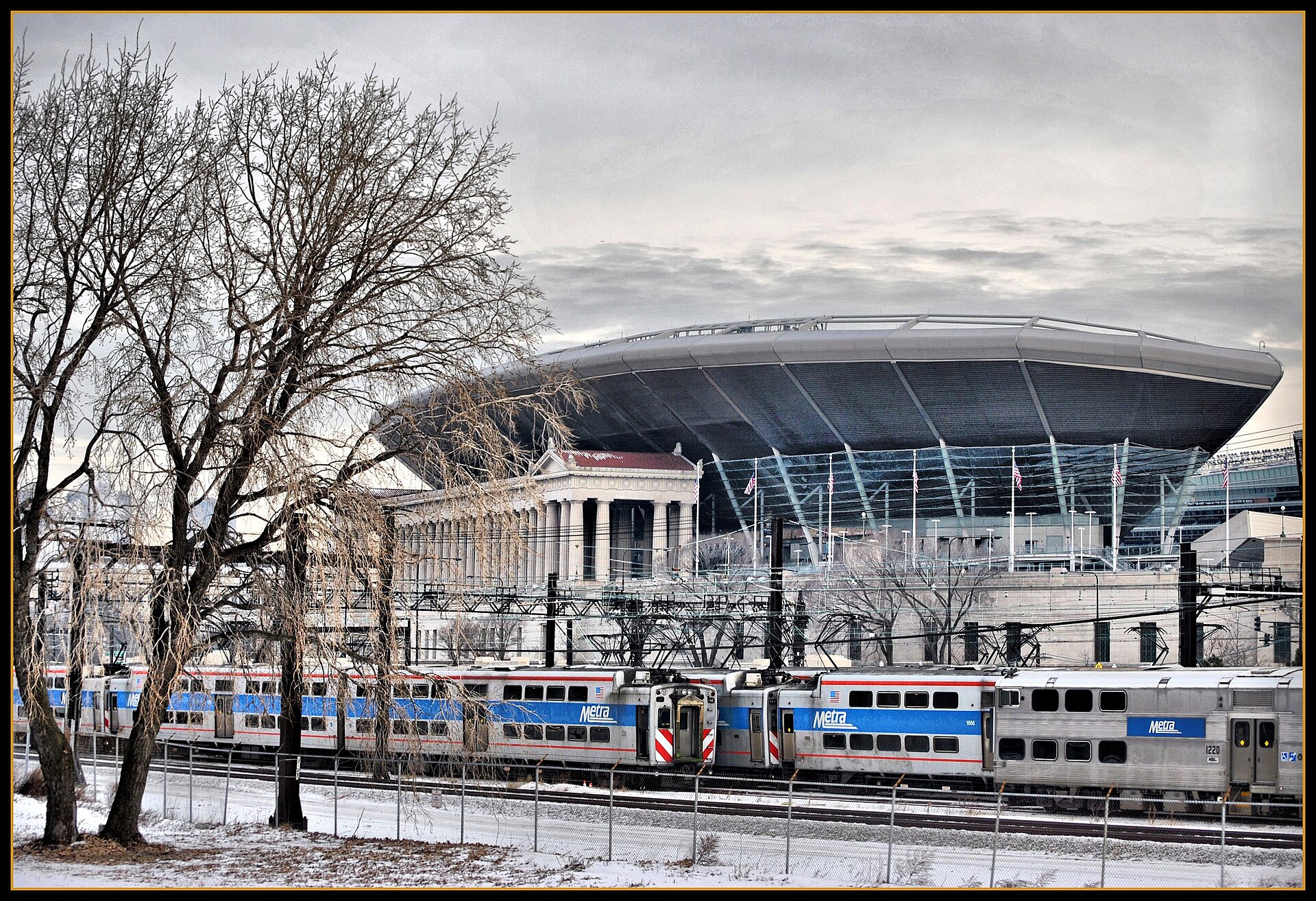
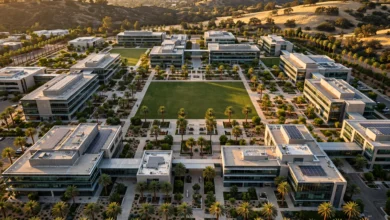
Indiana’s bid is the only one fully written down. Gov. Mike Braun signed a public funding package in February worth up to $1 billion, and the Bears would put in $2 billion of their own. The money comes from four taps: a property tax inside a special district drawn around the stadium, a 10 percent admissions tax, a 1 percent food and beverage tax across Lake and Porter counties, and a 5 percent hotel tax in Lake County. SB 27, the bill that cleared committee 24-0, creates the vehicle to spend it — a public authority that can finance, build and lease the stadium — and Hammond Mayor Thomas McDermott Jr. puts local support at about 75 percent, saying the city would rebrand itself around the team, colors and logos and water towers declaring it the home of the Chicago Bears.

The model underneath is Lucas Oil Stadium in Indianapolis, which is also where the catch sits. Indianapolis had a state convention center helping pay the bills, plus a 5 percent rental car tax and an extra 1 percent food-and-beverage tax left over from the old RCA Dome, imploded in 2008. Northwest Indiana has none of those revenue tools, which is worth keeping in mind next to the warning stadium-subsidy analyst Neil deMause gives in weeks like this one. DeMause has spent years cataloging what these deals actually cost. “The big lesson is, read the fine print,” he said. “A lot of deals in the past have gotten approved without legislators or the public examining all the different line items, and it ends up costing a lot more than you expect.”
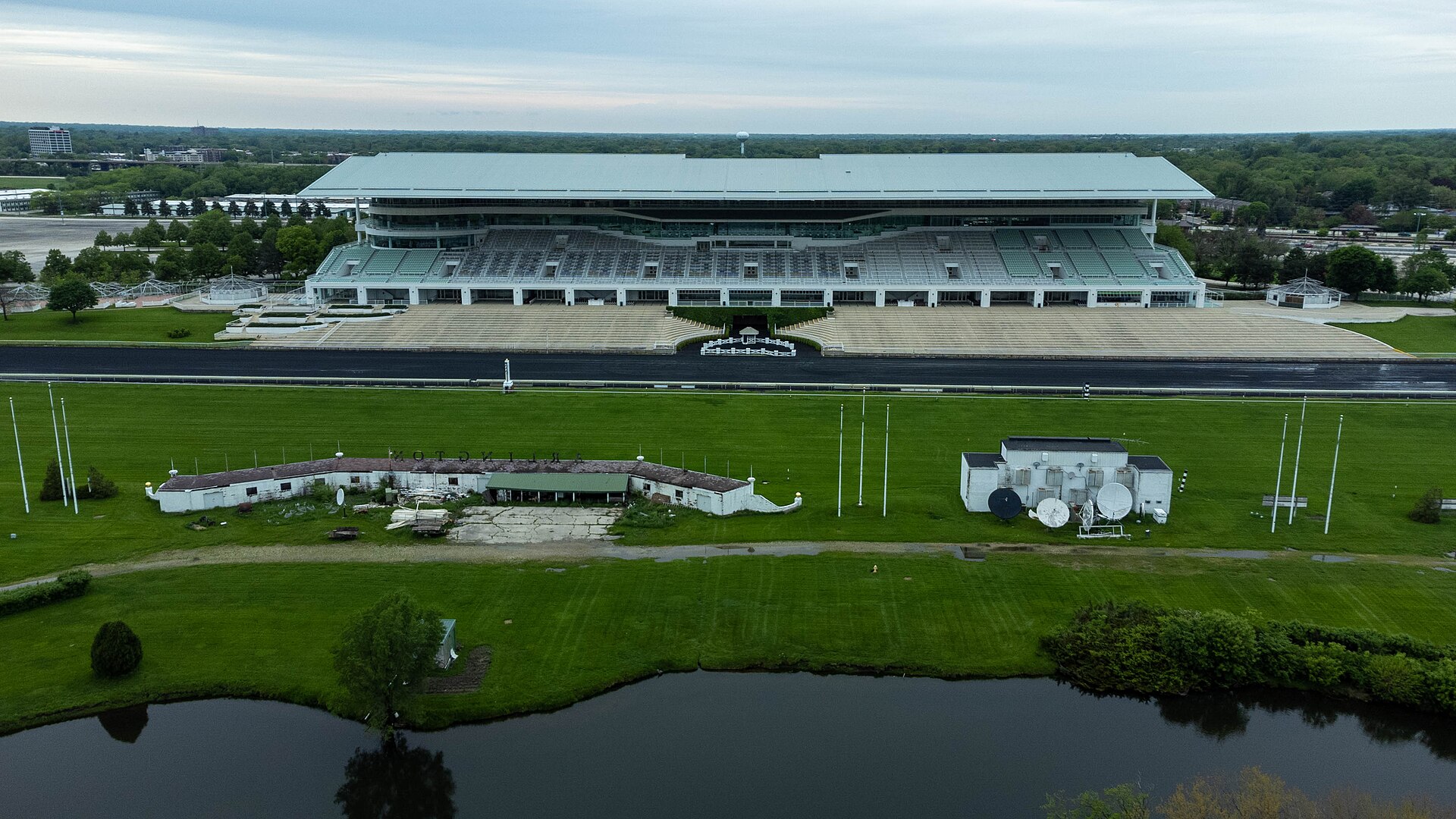
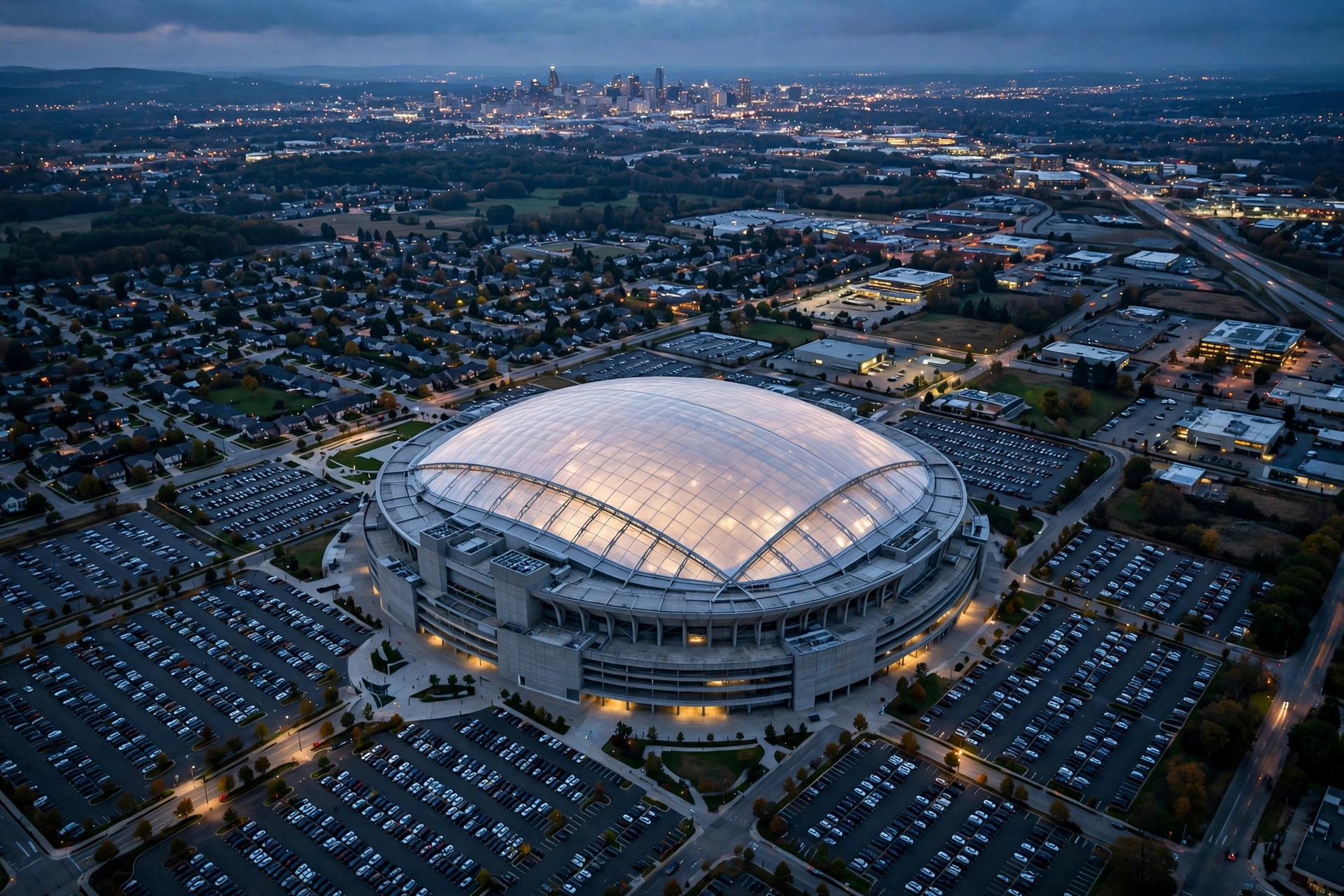
Illinois, by contrast, is mostly the team negotiating with itself. The canceled hearing was for a bill that would have let the Bears, and any developer of a big enough project, negotiate long-term property tax rates directly with local taxing bodies — the kind of quiet machinery that decides stadium deals. The team asked for the pause to “make further tweaks,” in Hill’s account, and no new date has been announced. What Illinois has on paper instead: the team owns 326 acres in Arlington Heights, the old racetrack, and says it will pay $2 billion for the domed stadium itself; what it wants from the state is $855 million in public money for the infrastructure around it — roads, utilities, the works — according to a consultant report released in September. An earlier bid for a property-tax freeze died in the legislature last October, which is why construction didn’t start in 2025. The thinnest item on this side arrived this month via ProFootballTalk: a new Bears stadium in Illinois could be publicly owned. No site, no financing, no lease terms have been attached to it, though public ownership would hand Illinois the naming rights, the concert revenue and the redevelopment rights around the site.
Nobody at Halas Hall calls it an auction. “This is not about leverage,” team president Kevin Warren wrote to fans in an open letter in January. “We spent years trying to build a new home in Cook County.” Mike Florio of ProFootballTalk isn’t buying it. “Of course it’s a leverage play,” Florio said. “If it wasn’t, a deal would already be done to build in Hammond.”
Traders are pricing the doubt. On Kalshi this week, a new Illinois location sat at 60 percent, Indiana at 39 percent, no move at 5 percent. The Bears, for their part, keep saying Hammond. “Our focus is on Hammond,” controlling owner George McCaskey said in August. “That’s where the bulk of our time, attention and resources are being devoted.” He also confirmed the team would keep the Chicago name across the state line.
The landlord, meanwhile, has a plan for life after the Bears. The Chicago Park District wants $630 million for Soldier Field without them: $130 million for the building itself, sound system and dressing rooms, and $500 million for the roads and parking around it, with the pitch to Springfield being that the infrastructure half comes out of the state’s road fund, paid by motor fuel taxes. The Bears’ share would be roughly $90 million, what they’d owe for breaking a lease that runs to 2033. What the Park District would be losing is smaller than most fans assume. The Bears generate less than 20 percent of Soldier Field’s revenue; the rest is concerts, international soccer, and a year-round parking garage on the 57-acre Museum Campus. The city also still owes $356 million on the bonds from the 2003 renovation — north of $500 million with interest — paid off by a 2 percent hotel tax.
“The future of Soldier Field is very bright, with or without the Bears,” former Park District CEO David Doig said. The extra concerts, he argued, will more than cover the revenue loss. Not everyone is convinced the suburbs are where the money works, though. In a video posted this week by the economics account The First Million, the host argued that moving the stadium out of the city strips away the downtown entertainment district, the “epicenter” whose sales taxes pay the public investment back; spend $1 billion of state money on suburban infrastructure, his argument runs, and that revenue doesn’t come back to the city that paid.
The fans are split, and a Sun-Times poll from June measured the split precisely: 62.5 percent said they’d support the team the same wherever it plays, and 33.8 percent said they’d back it less. Asked who to blame, 51.8 percent pointed at the Bears, 32.3 percent at Illinois lawmakers, 15.9 percent at Chicago’s mayor. At a tailgate filmed by Roca Sports this week, one fan’s verdict on Hammond needed no poll: “Packers suck and Hammond blows.” Another called the McCaskey family “the greediest franchise.” A fan who goes by Machine Gun Sherry, interviewed by Bosa Sports, wants Arlington Heights because it’s closer to her house, and had a message about the governor’s tax policy: “Illinois is Illinois and we deserve our teams.” Cody Brown, posting on Facebook, dissented from all of it — Indiana would make tickets and parking cheaper, he argued, calling the current Soldier Field trip “prohibitively expensive and time-consuming.”
The Bears have declined to say whether they have a signed letter of intent for Hammond.