Abortion Protests, $20M War Chest, and Trump’s Absence: Inside Maine’s Unexpected Senate Fight
Abortion protests, $20M war chest, and Trump's absence redefine New England's last GOP Senate seat
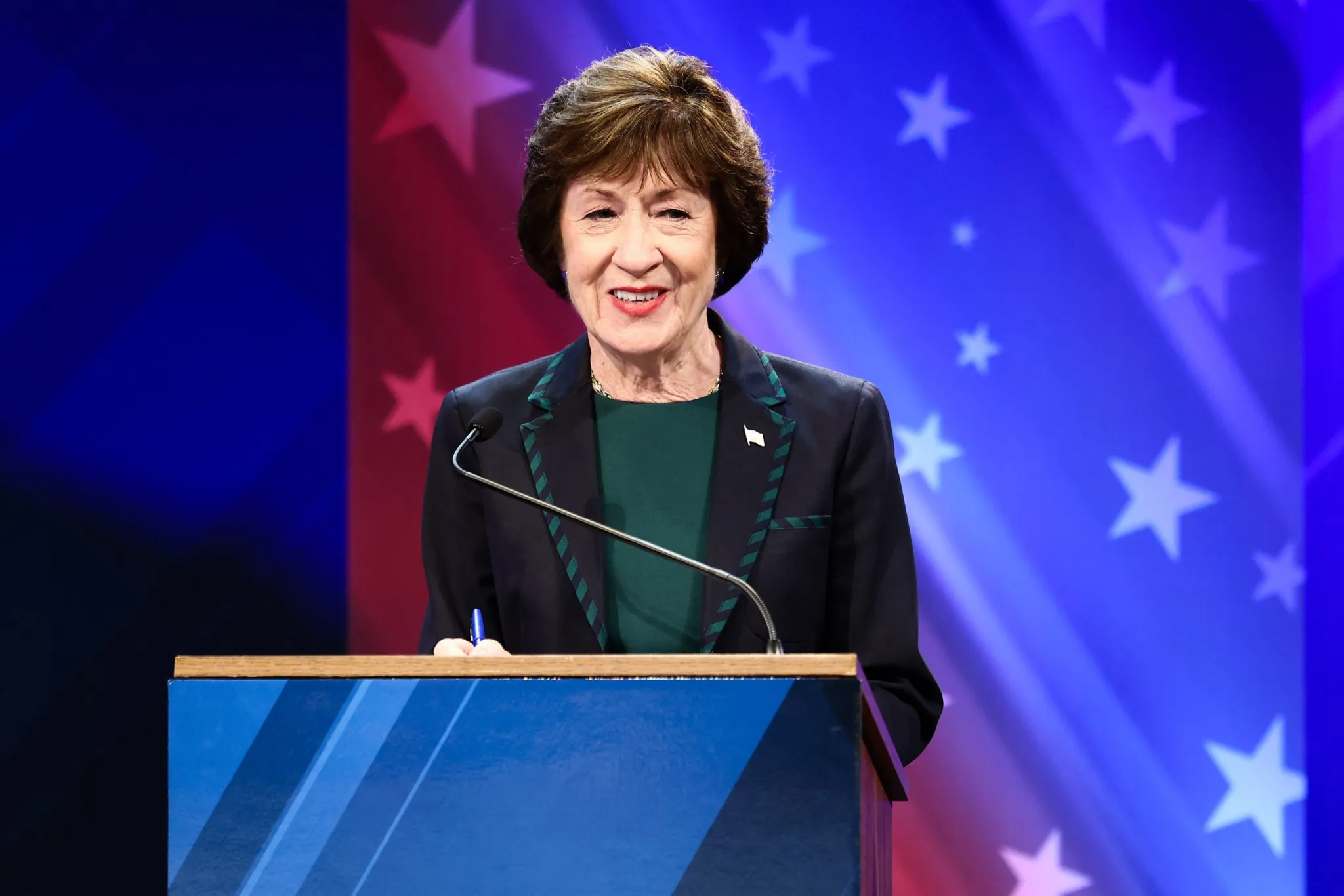
LEWISTON, Maine — Across the street from Simones’ Hot Dog Stand, a half-dozen protesters held signs bearing Brett Kavanaugh’s face. Their message was unambiguous: Susan Collins‘ 2018 vote to confirm the justice who helped overturn Roe v. Wade remains the defining fault line of her sixth-term bid.
Inside, Collins sat beside Joe Manchin, the former West Virginia Democrat turned independent, who declared losing her would mean losing “the soul of the Senate.” The contrast — a bipartisan breakfast photo op versus a sidewalk referendum on reproductive rights — crystallizes a race that has quietly become one of the cycle’s most volatile.
Troy Jackson, the Democratic nominee and former state Senate president, has erased Collins’ financial advantage in a single quarter. His campaign raised more than $20 million between July and September, leaving him roughly $3 million behind the incumbent with weeks remaining. For a logger from Allagash who entered the race late after the party’s first choice withdrew, the fundraising surge signals national Democratic alarm over holding a seat that once seemed safely Republican.


Collins, 73, has never faced a midterm with a Republican president this unpopular. Trump’s approval sits well below his inauguration numbers, and an Associated Press-NORC poll shows a strong majority of voters want change in Washington. The former president has not set foot in Maine this cycle. His campaign has effectively written off the state’s two congressional districts, which split their electoral votes in 2020.
That absence is strategic. Collins voted to convict Trump in his second impeachment trial. She opposed Pete Hegseth’s confirmation as defense secretary. In early October, she told reporters she is “not exactly his favorite senator.” Yet Democrats have made her proximity to Trump the centerpiece of their advertising, with one spot blaming a “healthcare crisis” on “Susan Collins and Donald Trump” — citing her procedural vote to advance Medicaid cuts she ultimately opposed.
The Kavanaugh vote, however, generates the most visceral opposition. David Sysko, demonstrating outside the hot dog stand, said simply: “Someone needs to stand up and be a check on Donald Trump and his harmful policies.” Jackson has hammered Collins on both Kavanaugh and her vote to confirm Robert F. Kennedy Jr. as health secretary. Collins says she regrets neither.
Republicans have countered by portraying Jackson as temperamentally unfit. A super PAC attack ad accuses the 58-year-old of bullying female colleagues — allegations he denies. Collins took the unusual step of publicly distancing herself from the spot Wednesday, saying it “should be taken down.” The move underscores a campaign wary of alienating the ticket-splitters who have sustained her career.
Jackson campaigns Thursday in Portland with Alexandria Ocasio-Cortez, a pairing designed to energize progressives. Collins counters with Manchin, a politician who once said Trump would “destroy democracy in America” if reelected. Both surrogates carry risks: Ocasio-Cortez may reinforce Republican caricatures of Jackson as a coastal elite puppet; Manchin’s 2023 prediction about Trump tests Collins’ independence narrative.
Mike Marcotte, a Collins supporter at the Lewiston event, summarized the incumbent’s appeal: “When I look at the vitriol that’s in the U.S. Senate right now, we need more people like Susan Collins.” Whether that sentiment survives a nationalized referendum on Trump, abortion, and Senate control will determine if New England’s lone Republican senator survives her toughest test.