Lindsey Vonn Eyes Ski Return After Olympic Crash, 8 Surgeries
U.S. Ski & Snowboard placed the 41-year-old on its provisional 2026-27 roster despite eight surgeries and a warning of possible leg amputation.
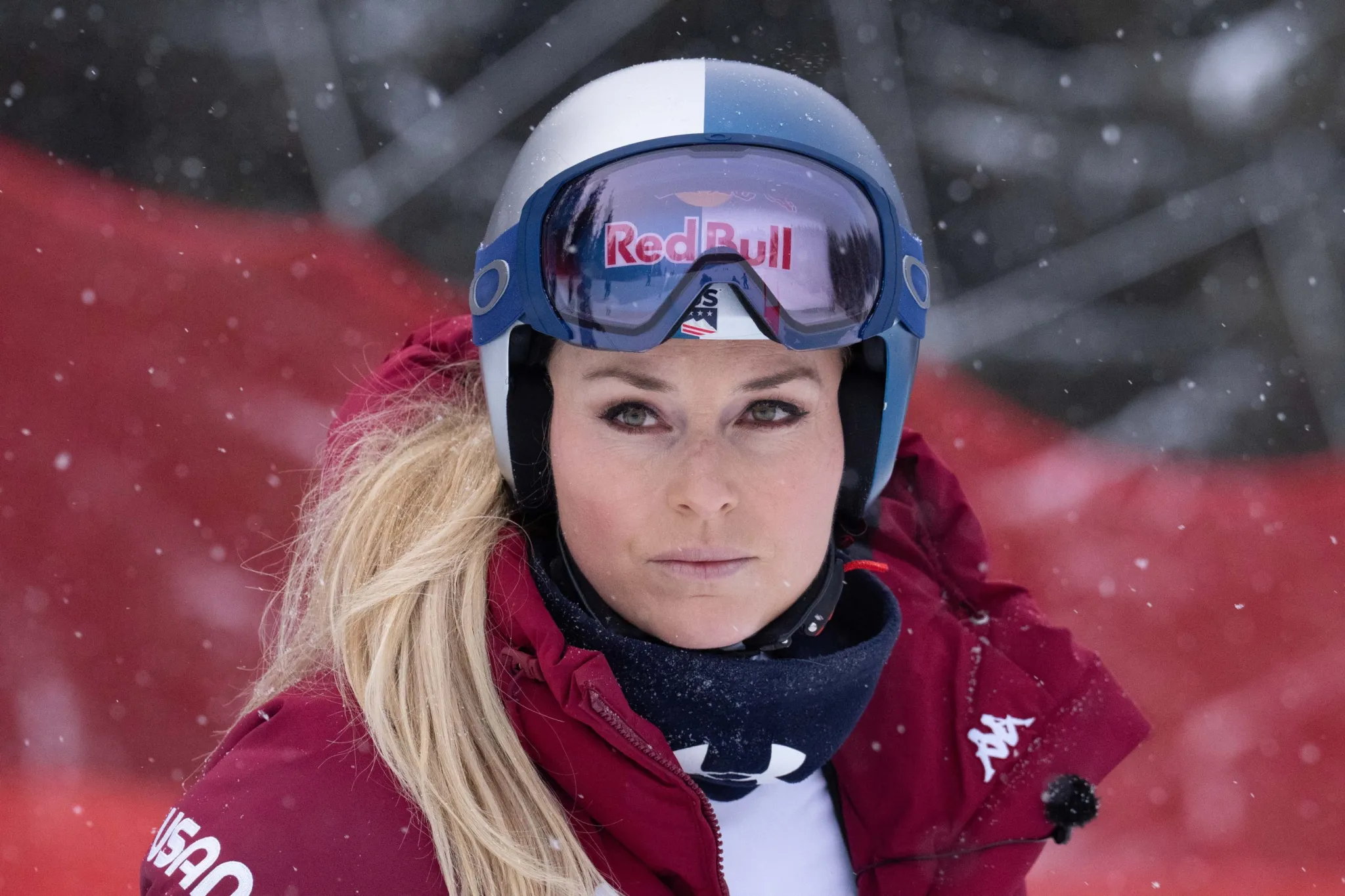
U.S. Ski & Snowboard included Lindsey Vonn on its preliminary 2026-27 alpine team roster, a procedural move that keeps the door open for the 41-year-old to attempt another competitive season eight months after a near-amputation crash at the Milano Cortina Winter Olympics.
Vonn’s downhill run in February ended when she lost control and was airlifted from the course with a broken left leg and a torn ACL. The trauma triggered a medical crisis severe enough that doctors warned amputation remained a possibility, a detail Vonn disclosed publicly weeks later. She has since undergone eight surgeries and spent nearly two months confined to a wheelchair, describing the ordeal as the most painful experience of her career.
Despite the severity, Vonn told an audience at Zeta Live 2026 this week that a “small chance” exists she will race again. The statement directly contradicts the assessment of her father, Alan Kildow, who told the Associated Press immediately after the crash that his daughter’s racing days were finished and he would oppose any attempt to return.


The gap between Kildow’s declaration and U.S. Ski & Snowboard’s roster decision reflects how governing bodies handle veteran athletes navigating catastrophic injuries. National teams routinely place established competitors on provisional rosters during rehabilitation so they retain access to federation-funded sports medicine staff, training facilities, and insurance coverage without requiring a formal commitment to compete. For an athlete with Vonn’s record — 84 World Cup victories, four overall World Cup titles, three Olympic medals, and eight World Championship medals — removal from the roster is typically a voluntary administrative step rather than a medical mandate.
Her age complicates the timeline. Standard recovery from a combined ACL reconstruction and complex tibial fracture requires nine to twelve months before sport-specific loading begins, even for athletes decades younger. Downhill skiing subjects the knee joint to forces exceeding three times body weight at speeds approaching 90 mph, demanding full proprioceptive restoration that often lags behind structural healing by several months. Vonn acknowledged the biological reality, noting that previous recoveries allowed her to rebuild quickly because time was on her side, whereas the current rehabilitation required four months just to reach a baseline of measurable progress.
This crash represents the 14th significant injury Vonn has sustained since 2007, a catalog that includes multiple MCL sprains, fractured bones, and prior ACL tears. She retired initially in 2019, citing degenerative knee damage that made standing painful. Her comeback began in late 2024, driven by advances in partial knee replacement technology and titanium implants that restored functional range of motion previously considered permanently lost.
No competition schedule or specific event target has been announced. The next major milestone on the international alpine calendar is the 2027 World Championships in Crans-Montana, Switzerland, which would fall roughly 18 months after her Milano Cortina crash — a timeline consistent with elite return-to-sport protocols for multi-ligament and fracture injuries in older athletes.