

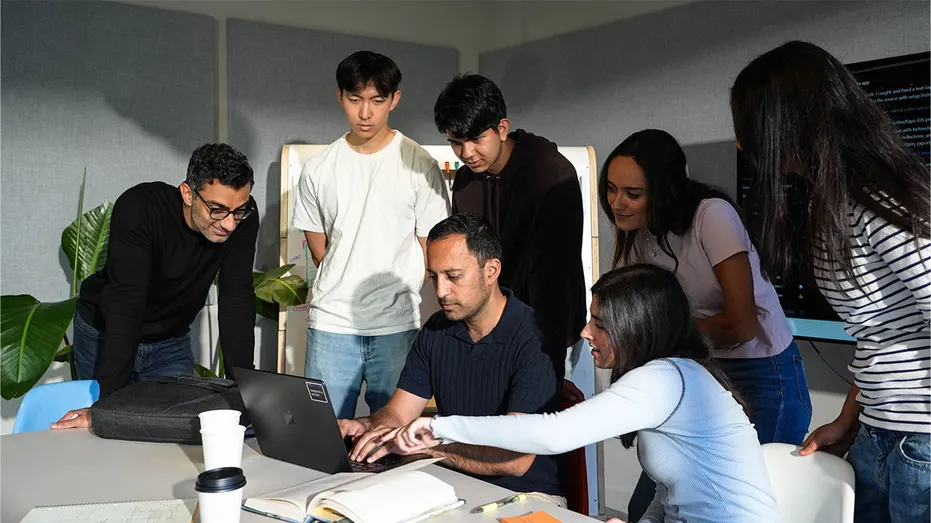
Andreessen Horowitz is committing $35 million to launch a private, in-person academy in San Francisco designed to bypass the traditional four-year university pipeline and funnel young builders directly into artificial intelligence companies. The Horowitz Andreessen Academy will enroll roughly 50 students for a tuition-free Founding Class Fellowship starting in fall 2027.
Chief Executive Gagan Biyani, who previously co-founded the online learning platform Udemy, structured the program around what he calls “proof of work.” Admissions prioritize applicants who have shipped applications with substantial user bases, generated business revenue, or solved complex technical problems during high school. Standardized test scores and transcripts remain part of the evaluation process but carry less weight than demonstrated output.


The initiative arrives as recent college graduates navigate persistent underemployment. Federal Reserve Bank of New York data from the second quarter of 2026 showed an unemployment rate of 5.6% among graduates aged 22 to 27, with approximately 42% working in roles that do not require a bachelor’s degree. Yet broader labor statistics complicate the argument against higher education. Bureau of Labor Statistics figures from 2025 indicated workers aged 25 and older with bachelor’s degrees earned median weekly wages of $1,578 and faced a 2.8% unemployment rate, compared to $966 weekly and 4.3% unemployment for those holding only high school diplomas.
Biyani argues that generative AI has fundamentally altered employer priorities, shifting demand away from knowledge retention toward product execution, public speaking, sales capability, and what the tech industry terms “high agency.” The two-year curriculum, which expects to charge tuition comparable to elite private universities beginning in 2028 pending regulatory approval, integrates AI development tools directly into its coursework rather than treating them as separate subjects.
More than 50 companies have agreed to hire academy graduates before the first cohort begins, according to Biyani. The founding partner roster includes Anthropic, OpenAI, Nvidia, Meta, Google, Coinbase, Palantir, Replit, Stripe, and defense technology firm Anduril. This network mirrors earlier Silicon Valley efforts to circumvent traditional degrees, most notably the Thiel Fellowship established by Peter Thiel in 2011, which pays young entrepreneurs to skip college. Unlike the Thiel model, which provides individual stipends for independent projects, the Horowitz Andreessen Academy operates as a structured institutional program backed by one of the largest venture capital firms globally.
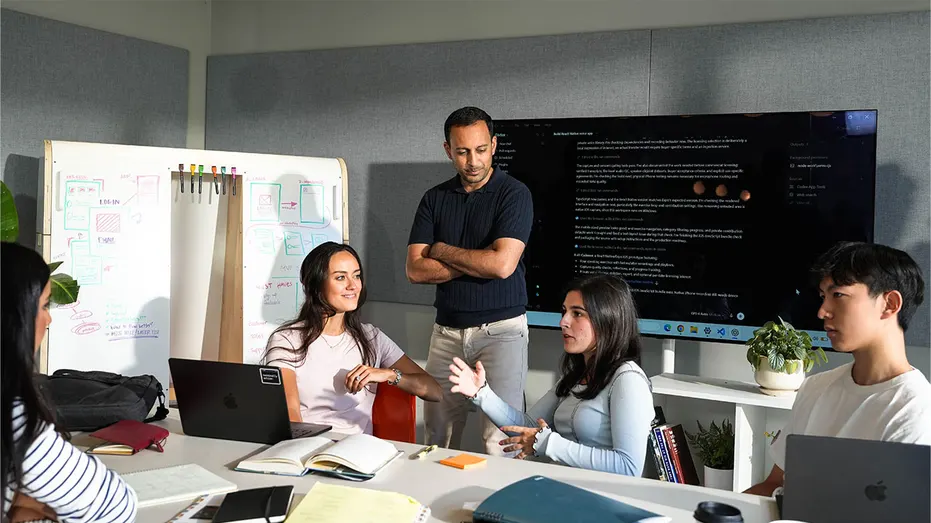
The academy explicitly targets a narrow demographic rather than attempting to overhaul the broader higher education system. Biyani positioned the program as an alternative for students focused on immediate employment or company formation, contrasting it with institutions like Stanford University, which he described as better suited for academic research careers. Future cohorts are expected to scale to several hundred students.
Ben Horowitz and Erik Torenberg are involved in the academy’s leadership alongside Biyani. The program’s inaugural class in 2027 will serve as the first measurable test of whether venture-backed, portfolio-driven education can reliably produce employable AI engineers without university credentials.



