

SpaceX Crew-13 Launches to ISS with Stem Cell Research and Deep-Space Tech Validation
Mission validates autonomous plant systems and portable vascular diagnostics for future lunar exploration
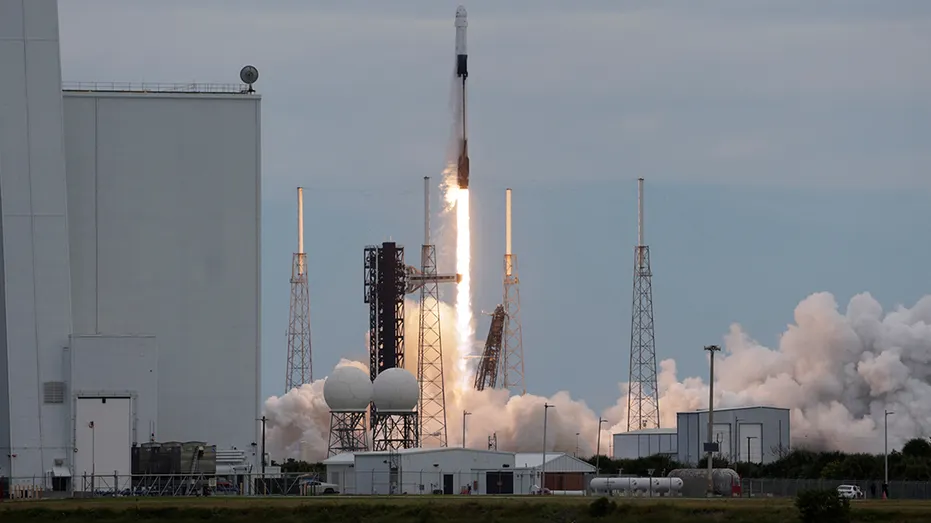
NASA astronauts Jessica Watkins and Luke Delaney, Canadian Space Agency astronaut Joshua Kutryk, and Roscosmos cosmonaut Sergey Teteryantnikov are en route to the International Space Station following a successful liftoff Thursday from Cape Canaveral Space Force Station. The SpaceX Falcon 9 rocket carried the Crew-13 team into orbit aboard a Dragon spacecraft that previously supported the private Ax-4 mission, marking another step in NASA’s strategy to maximize hardware reuse for crewed flights.
The mission’s scientific agenda focuses heavily on bridging the gap between low-Earth orbit operations and future lunar or Martian expeditions. Unlike previous rotations that prioritized general microgravity science, Crew-13 carries specific payloads designed to validate life-support technologies and biomedical protocols required for deep-space transit. A primary objective involves producing human stem cell-derived tissues in microgravity to advance personalized medicine. These tissue samples are intended for disease modeling and pharmaceutical screening targeting conditions such as Parkinson’s disease and heart failure, leveraging the unique cellular growth patterns possible only in weightlessness.
Watkins, who previously served as a mission specialist on Crew-4 in 2022, returns to orbit as commander, bringing critical experience from her geological fieldwork background to the station’s expanded research portfolio. Her leadership coincides with the installation of a new autonomous plant growth facility. This system moves beyond earlier vegetable production experiments by testing crop viability in modular “plant pillows” distributed throughout the station, rather than in fixed laboratory racks. The decentralized approach aims to simulate how food production might function in future habitats where dedicated agricultural modules may not exist.


Crew health monitoring also receives a technological upgrade during this expedition. The astronauts will test a new inflight diagnostic device designed to detect blood flow abnormalities, a persistent concern for long-duration spaceflight. Vascular changes and vision impairment remain among the most significant physiological risks for crews spending months in microgravity. Validating portable diagnostic tools reduces reliance on ground-based analysis and is considered essential for missions beyond Earth’s immediate vicinity where communication delays preclude real-time medical consultation.
The launch vehicle itself demonstrated the maturity of SpaceX’s operational tempo. The Falcon 9 first stage completed its third flight, having previously launched Crew-12 and a Starlink batch, before returning to Landing Zone 40 at Cape Canaveral. This rapid refurbishment cycle underscores the logistical framework supporting NASA’s Commercial Crew Program, which has now sustained continuous U.S. crew access to the station since 2020. The Dragon capsule’s reuse further illustrates the agency’s shift toward treating crew vehicles as routine transportation assets rather than single-use government hardware.
Teteryantnikov’s presence maintains the seat-swap arrangement between NASA and Roscosmos, ensuring both nations retain operational knowledge and contingency capabilities aboard the outpost despite broader geopolitical tensions. This cross-strapping agreement, extended through 2028, guarantees that at least one American and one Russian crew member are always present to manage their respective segments independently if necessary.
Crew-13 is scheduled to dock with the station’s forward port approximately 24 hours after launch, joining the Expedition 74 crew already onboard. Their arrival restores the station’s complement to seven members, enabling the full activation of the new plant growth hardware and the commencement of the stem cell tissue generation sequence within the first week of operations.









