Savannah Bananas 2027 Banana Bowl Set for New Nissan Stadium
The 2027 championship caps a three-city Tennessee tour, with the ticket lottery closing Oct. 31, 2026.
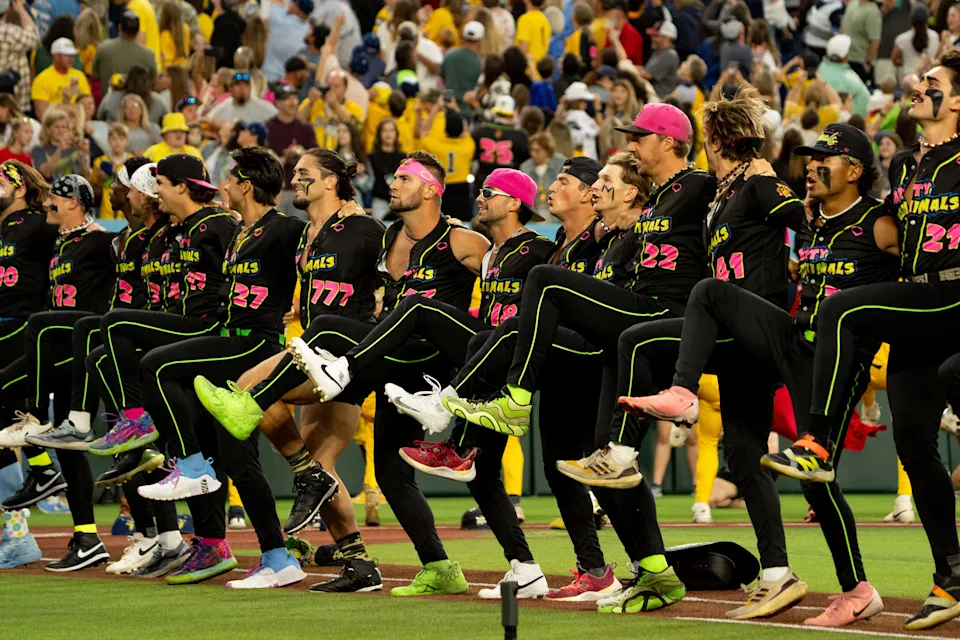
The Savannah Bananas will stage their annual championship event, the Banana Bowl, at Nashville’s newly constructed Nissan Stadium on Sept. 25, 2027, anchoring a three-city Tennessee swing that underscores the exhibition baseball franchise’s aggressive expansion into NFL-caliber venues.
The team confirmed the date on Oct. 15 as part of its broader 2027 schedule release. The championship matchup represents the third consecutive year the organization has targeted the Nashville market, following a May 2025 appearance at the previous iteration of Nissan Stadium and a June 2026 showcase at First Horizon Park, the minor league home of the Nashville Sounds. Moving the marquee event to the new $2.1 billion stadium — built primarily to serve the Tennessee Titans — signals the Bananas’ continued shift away from traditional minor league ballparks toward massive infrastructure capable of handling demand that routinely exceeds 40,000 attendees per stop.
Tennessee serves as a primary hub for the 2027 tour. Beyond the September championship in Nashville, the schedule places the Indianapolis Clowns and the Tailgaters at Knoxville’s Covenant Health Park on June 4-5. Memphis will host the Party Animals and the Clowns at AutoZone Park on April 2-3. The concentration of dates reflects the franchise’s strategy of saturating regional markets where travel logistics allow fans from neighboring states to converge on single events.


Securing entry requires navigating a system fundamentally different from standard sports ticketing. The Bananas do not hold public on-sale dates. Instead, they rely entirely on a randomized digital lottery. Registration for the 2027 events is currently active through the team’s official website and closes at midnight on Oct. 31, 2026. Entering the pool costs nothing, and the organization explicitly notes that submitting an application early provides no statistical advantage over late entries. Winners are drawn randomly and granted access to a restricted purchasing window capped at five tickets per selected account. This model was engineered by owner Jesse Cole to suppress secondary-market scalping, which historically inflated prices for the touring squad far beyond typical independent baseball rates.
The product sold through that lottery diverges sharply from professional or collegiate baseball. Banana Ball operates under a proprietary ruleset designed to eliminate dead time. Games are governed by a strict two-hour clock rather than innings played to completion. Walks are banned entirely; batters who accumulate too many balls face alternative consequences determined by the specific game’s rule variations. Scoring mirrors match play in golf, where teams compete to win individual innings rather than accumulate total runs. A foul ball caught directly by a spectator registers as an official out.
These mechanical changes support an atmosphere closer to a traveling circus or halftime show than a sporting event. Rosters execute choreographed routines between plays, pitchers frequently leave the mound to interact with spectators in the stands, and players arrive hours before first pitch in full uniform specifically to mingle. Opposing squads such as the Party Animals, the Firefighters, and the Clowns function less as athletic competitors and more as co-performers in a scripted entertainment format.
The franchise originated as a Coastal Plain League summer collegiate team based in Savannah, Georgia, before Cole fully pivoted the organization toward the touring exhibition model. That transition transformed a regional amateur roster into a national brand generating nine-figure annual revenues, prompting discussions across the sports industry about the viability of entertainment-first formats competing directly with traditional leagues for live-event dollars. The 2027 Banana Bowl will test whether that momentum holds inside one of the newest and largest stadiums in the American South.
Lottery registration remains open until the Oct. 31 deadline.