Elon Musk pours $168M into Texas Senate race for Ken Paxton
Federal filings reveal $168 million in super PAC donations aimed at shielding incumbent Ken Paxton from a surging Democratic challenger.
Elon Musk has funneled $168 million through political action committees to protect Republican Ken Paxton’s U.S. Senate seat in Texas, according to federal campaign finance filings released Thursday, transforming what was once a routine GOP hold into the most expensive outside-spending battleground of the 2026 midterms.
The disclosure details a $158 million contribution from Musk to the Senate Leadership Fund, the primary super PAC aligned with Senate Republican leadership. That committee subsequently routed the entire sum to Texas PAC, now the single largest financial backer of Paxton’s campaign. Musk separately deposited $10 million into Lone Star Liberty PAC, another group broadcasting ads on Paxton’s behalf.
No individual donor has injected this volume of cash into a single statewide contest since the Supreme Court’s 2010 Citizens United decision dismantled limits on independent political expenditures. The sheer scale of the investment underscores how deeply Republican strategists fear losing Texas — a state that has not elected a Democrat to statewide office since Ann Richards won the governorship in 1990.


Paxton’s vulnerabilities explain the panic within the GOP. The incumbent attorney general survived a 2023 impeachment trial in the Texas House, where members of his own party voted to charge him with bribery and abuse of public trust before the state Senate acquitted him. He also carried unresolved securities fraud charges dating back to 2015 for years before reaching a plea agreement. Those liabilities have made him historically weak for a Republican running in a state Donald Trump carried by roughly 11 percentage points in 2024.
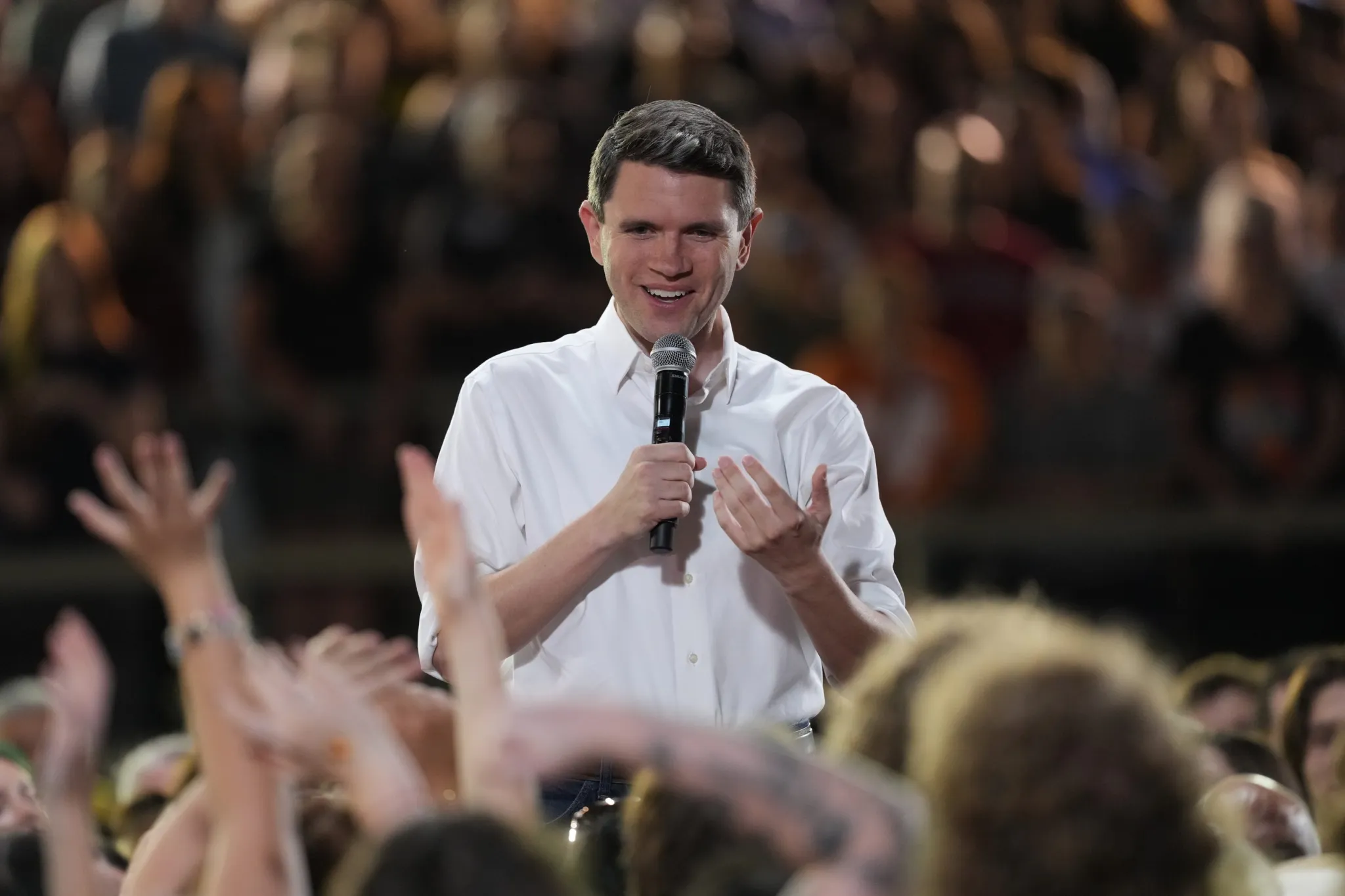
Democratic state representative James Talarico has capitalized on those weaknesses by building a fundraising operation that outpaces Paxton’s direct campaign receipts, drawing heavily from small-dollar donors nationwide eager to see Texas shift. Speaking at a rally Thursday night in San Marcos, south of Austin, Talarico framed the financial disparity as a modern David-and-Goliath dynamic, casting the electorate as the counterweight to billionaire-funded campaigns without naming Musk directly.
Talarico’s central message avoids traditional partisan framing. A seminarian who represents a suburban Austin district, he focuses almost exclusively on housing costs, grocery inflation, and wage stagnation, arguing that systemic unaffordability stems from corporate consolidation and political corruption rather than ideological differences between Democrats and Republicans.
That populist pitch is designed to thread a geographic needle no Texas Democrat has successfully navigated in three decades. Talarico is campaigning simultaneously in the heavily Democratic urban cores of Dallas, Houston, and Austin; the Rio Grande Valley border counties that swung sharply toward Trump in 2020 and 2024; and the vast rural expanses of West Texas and the Panhandle. To maintain credibility across those distinct electorates, he has kept visible distance from the national Democratic apparatus. When Sen. Bernie Sanders travels to Texas later this month to discuss economic inequality, the two will not appear on the same stage.
Control of the U.S. Senate hangs directly on the outcome. With Republicans defending a narrow majority during the final two years of Trump’s second term, a Democratic pickup in Texas would fundamentally alter the legislative landscape in Washington, potentially stalling executive priorities and empowering committee investigations.
Trump has responded to the threat by making repeated personal appearances in Texas to bolster Paxton, recognizing that the president’s own approval ratings in the state remain the Republican ticket’s strongest asset.
Talarico returned to the trail Thursday after a nine-day absence earlier this month caused by influenza. During that gap, conservative social media accounts circulated fabricated claims that the candidate had been admitted to a psychiatric facility in Ohio. The rumors collapsed quickly under scrutiny but illustrated the intensity of digital warfare surrounding a race that both parties now view as determinative for the balance of power in Washington.