Smartphone Startups Hit Wall as Market Shrinks 20% and Giants Tighten Grip
Nothing's $1.3B valuation tested as global shipments hit 14-year low and duopoly controls 45% of market
Global smartphone shipments collapsed 20% in the third quarter of 2026, marking the weakest third quarter since 2012, according to Counterpoint Research. Rising memory-chip costs pushed average selling prices higher just as consumer demand evaporated. For the handful of startups still trying to crack the market, the numbers are existential.
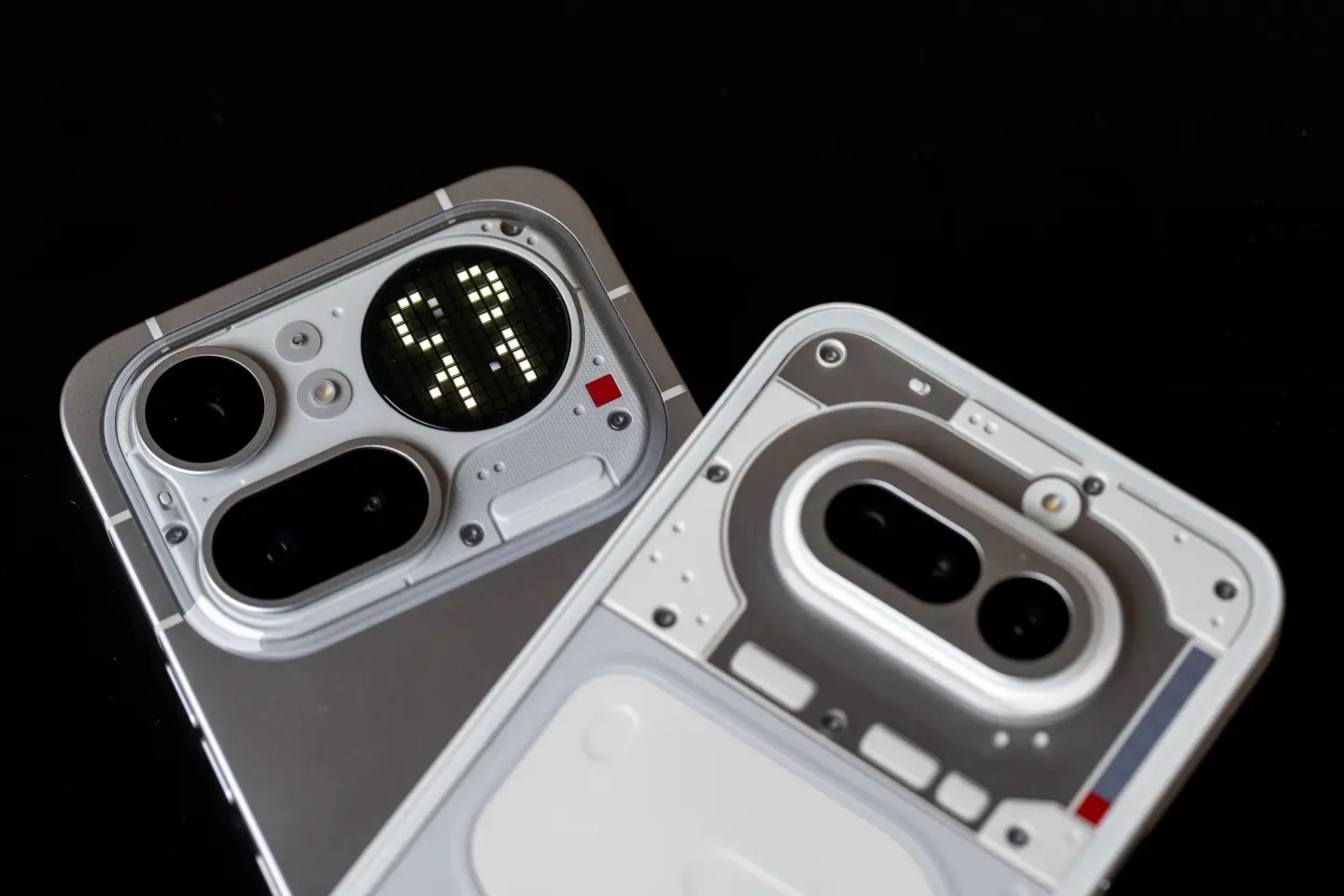
Nothing, the London-based company founded by OnePlus co-founder Carl Pei, reached a $1.3 billion valuation after a $200 million Series C round in 2025. Its transparent, retro-futuristic phones have won design awards and a cult following. But valuation and survival are different metrics. Apple and Samsung now control 45% of the global market combined — Samsung at 23%, Apple at 22% — up from 37% a year earlier, Counterpoint data shows. Every other player fights for the remainder.


The industry’s fixed costs don’t shrink with the market. Component minimums, carrier certification, regulatory compliance, and after-sales infrastructure require volume that new entrants cannot guarantee. Pei’s previous venture, OnePlus, solved this by leaning on parent company BBK Electronics’ supply chain. Nothing has no such backstop.
Charlie Smith, who joined as chief brand officer in January after seven years at LVMH’s Loewe, argues that brand differentiation can overcome structural disadvantage. He points to Dyson as the last British consumer “super brand” and has recruited Adam Bates, Dyson’s former head of design, as Nothing’s design director. But Dyson entered vacuums — a fragmented, low-innovation category — not a duopoly defended by trillion-dollar ecosystems.
The marketing playbook Smith rejects — glossy renders, spec-sheet wars, performance advertising — exists because it delivers measurable return on ad spend in a mature replacement market. Duke University’s 2026 CMO Survey found 56% of marketing chiefs face intensified CFO pressure for financial proof. Seven in ten have doubled down on short-term performance tracking. Nothing’s alternative — community board observers, $10,000 nightlife grants for creators, graffiti stunts against Apple — generates buzz but has no proven path to the millions of units needed for supply-chain leverage.
AI skepticism may help at the margins. An IAB survey found 30% of Gen-Z respondents called brands using AI in advertising “inauthentic.” Nothing’s March launch at Central Saint Martins put 300 students in a room with its industrial design team. At Loewe, Smith filmed craftspeople at work and encouraged rough, unpolished TikToks. But authenticity is a positioning tactic, not a business model. The fundamental question remains: who buys a $500 phone from a company that might not exist in three years?
Carrier shelves are the real gatekeepers. In the U.S., three carriers control nearly all postpaid volume. They stock what sells. Nothing has no carrier deals in its largest potential market. In Europe, where unlocked sales are more viable, the addressable audience is smaller and more price-sensitive. The Club Nothing Fund’s four $10,000 grants total $40,000 — roughly the cost of a single regional billboard flight.
History is litter with better-funded failures. Essential, founded by Android creator Andy Rubin, raised $330 million and shut down in 2020. Microsoft wrote off $7.6 billion on Nokia’s phone business. Google’s Pixel, backed by Alphabet’s balance sheet, still hovers around 3% global share after eight years. Nothing’s $200 million war chest funds perhaps 18 months of operations at current burn rates.
The transparent casing that defines Nothing’s aesthetic is a design choice. The transparent finances of a hardware startup in a contracting market are a liability. Smith bets that extreme risk-taking beats boring execution. The market bets otherwise.