iPhone Duo shipping pushed to 2027 as retailers hold holiday stock
Best Buy maintains November and December inventory while Apple direct orders slip past the holidays

Buyers who missed the initial wave of iPhone Duo pre-orders face a wait stretching well into next year. Apple’s online stores across the United States, Japan, Spain and the United Kingdom now display an estimated delivery date of January 22 for new orders, according to checks conducted on Tuesday.
Third-party electronics chains are holding significantly earlier inventory. Best Buy lists November 10 availability for in-store pickup and shipping on the 512GB model. The 256GB version at the same retailer carries a December 14 fulfillment estimate. For consumers prioritizing holiday delivery over purchasing directly from the manufacturer, authorized resellers currently represent the only viable path.


Apple began accepting pre-orders on October 16. Shipping timelines slipped to 2027 almost immediately after launch windows opened. The company previously described demand for the device as “nothing short of extraordinary.”
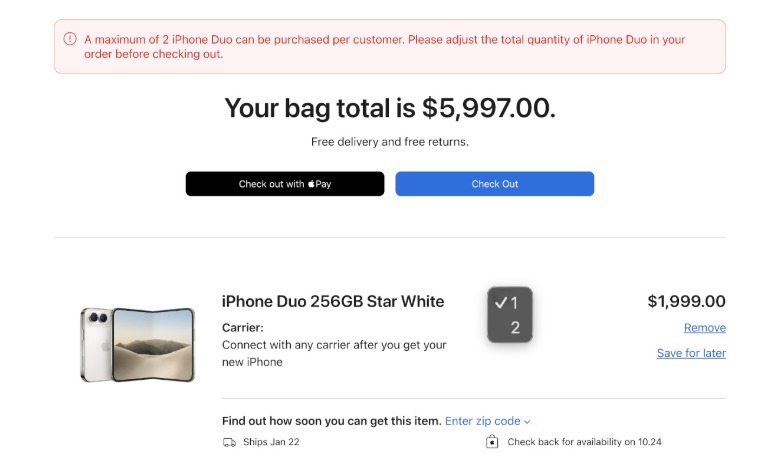
To manage the supply shortfall, Apple capped purchases at two units per customer regardless of selected storage configuration. The restriction applies globally. Customers attempting to add a third unit to their cart encounter a hard block with a prompt to reduce the quantity before checkout. According to MacRumors, the exact timing of when this enforcement mechanism went live remains unclear. Users on Reddit‘s iPhone Duo community noted that orders exceeding the two-unit threshold processed successfully during the earliest hours of the October 16 launch window.
The cap does little to address bulk acquisition by resellers operating multiple accounts and payment methods. How effectively Apple tracks and blocks such activity across different credit cards and user profiles has not been detailed by the company.
Some early buyers have reported receiving revised delivery estimates moving their shipments ahead of original projections. These adjustments appear isolated rather than indicative of a broader acceleration in manufacturing output.