Why Converse Can’t Fix the Chuck Taylor While Adidas Reinvented the Samba
Heritage trap: How product rigidity turned a $2.4B brand into Nike's biggest liability
The Chuck Taylor All Star hasn’t changed meaningfully in a century. That used to be its selling point. Now it’s the problem.
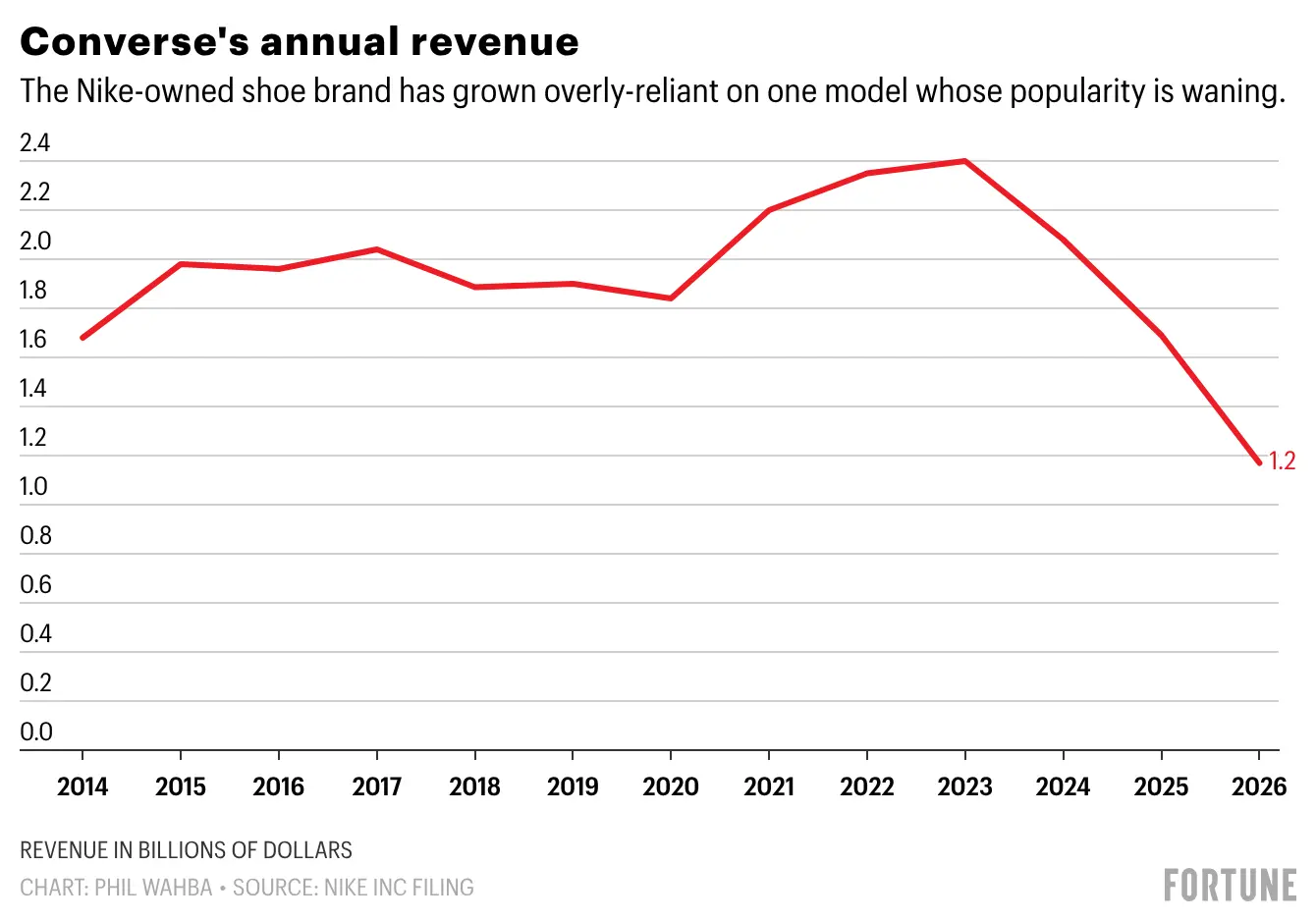
Converse sales collapsed 28% last quarter, dragging down Nike’s overall results despite representing just 2.5% of revenue. The brand that hit $2.43 billion in sales two years ago is on track to fall below $1 billion — a level not seen since 2010. But the deeper story isn’t about Nike’s portfolio strategy. It’s about a product that refused to evolve while the market moved on.
“They’re far too dependent on one item and when that one item cools off, like it is now, there’s no place to hide,” said Matt Powell, senior advisor at BCE Consulting and a 30-year footwear industry veteran. “It’s a fashion business and nothing lasts forever.”


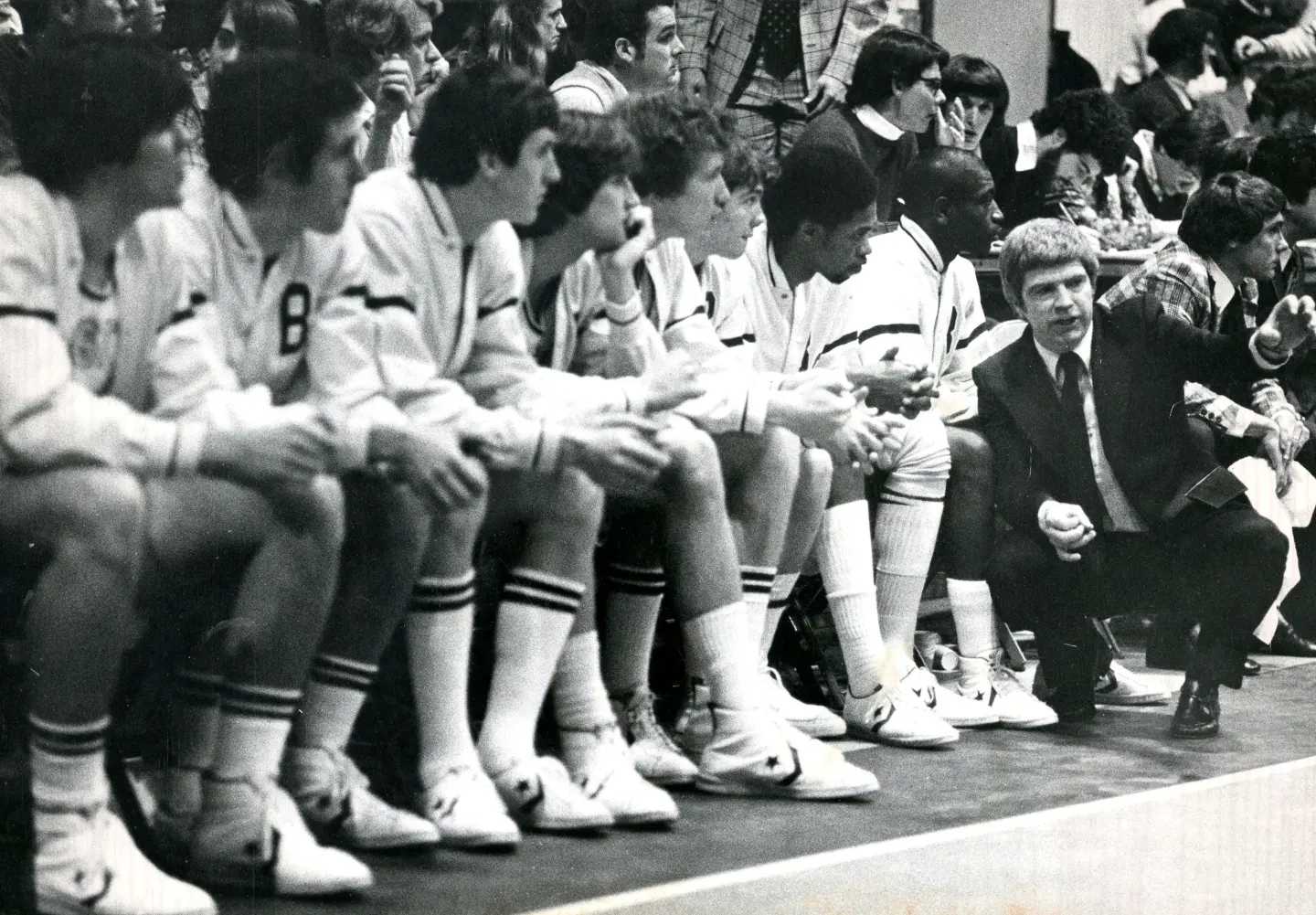
The Chuck Taylor’s vulcanized rubber sole and heavy canvas upper — virtually unchanged since Chuck Taylor himself redesigned the All Star in 1932 — are exactly what younger consumers are rejecting. They want lighter, breathable, flexible. On Running, HOKA, New Balance, and APL have all captured the lifestyle sneaker market by delivering exactly that.
Adidas faced the same trap with the Samba. The 1950s indoor soccer shoe could have become a museum piece. Instead, Adidas treated it as a platform: gum sole variations, leather upgrades, a recent slip-on version, collaborations with Wales Bonner and Song for the Mute. Each iteration kept the silhouette recognizable while solving actual wearability complaints. The Samba became Adidas’s fastest-growing franchise in 2023 and 2024.
Converse tried. The Chuck 70 added slightly better cushioning and a higher rubber foxing. The CX line introduced Nike React foam. But each effort felt tentative — a toe dipped in water rather than a commitment. The core Chuck Taylor remained heavy, stiff, and hot. Retailers report customers trying on Chucks, complaining about weight and break-in time, then walking out with New Balance 550s or On Cloudnovas.
“If and when this shoe hits again, it’s going to be ridiculously successful,” Powell said. “But it needs to be less heavy, less stiff, and more breathable.”
That “if” is doing a lot of work. Heritage brands face a paradox: the authenticity that builds the legend becomes the constraint that kills it. Change too much and you alienate the core. Change too little and you become irrelevant. Adidas navigated this by treating the Samba as a living product line. Converse treated the Chuck Taylor as a monument.
Nike acquired Converse for $305 million in 2003, four years after the brand’s bankruptcy. Since then, Nike has shed Cole Haan, Umbro, Starter, Bauer, and Hurley. Converse is the last acquisition standing. BNP Paribas analyst Laurent Vasilescu noted the 44% demand decline in the quarter ending November 2025 was unprecedented in his coverage and said he wouldn’t be surprised if Nike sells.
But a sale doesn’t fix the product. Any buyer inherits the same physics problem: a canvas upper that doesn’t breathe, a sole that doesn’t flex, a weight that modern consumers won’t tolerate. The Jack Purcell — named for a 1930s badminton champion — shows modest growth, proving Converse can sell other silhouettes. But it’s a fraction of the business.
Nike CEO Elliott Hill told investors last month he’s focused on returning Converse to “financial health.” A spokesperson confirmed the brand “remains an important part of the portfolio” and promised details at Nike’s investor day next month. The market will be listening for one thing: not a marketing plan, but a product roadmap that finally answers the question Adidas solved two years ago. How do you make a classic wearable in 2025?