MotoGP Qatar GP Pushes Corporate Travel Policies to the Limit
Manufacturers must weigh corporate liability against broadcast contracts as riders split over racing in Doha.
Corporate risk departments at Yamaha and Honda face a direct collision with MotoGP’s commercial calendar. The championship’s promoter is pushing ahead with the Qatar Grand Prix on November 6-8, forcing manufacturers to decide whether to override internal travel bans that prohibit employees from entering unstable territories.
The race was originally scheduled for April before the outbreak of war in Iran in late February forced a postponement. Now, with the conflict still ongoing and most European governments advising citizens against traveling to Qatar, the financial machinery behind the series has determined the event must proceed.
Yamaha began rerouting logistics staff away from the affected region nearly two months ago, according to Motorsport.com. That operational scramble highlights the gap between the assurances provided by the MotoGP Sports Entertainment Group (MGPSEG) and the legal exposure companies assume when sending personnel into zones flagged by their own compliance frameworks. Honda initially shared Yamaha’s firm opposition to deploying staff near a conflict zone but has since shifted its stance during weeks of meetings with championship executives.


The International Road-Racing Teams Association (IRTA) emailed all teams confirming its intention to hold the race with 15 days remaining before paddock setup begins at the Lusail circuit outside Doha. The communication cited a contingency plan developed by the local promoter and noted that IRTA remains in contact with relevant embassies, none of which have advised a change of approach.
Qatar represents the final stop of a grueling triple-header. Teams race in Australia next weekend, move immediately to Malaysia the following week, and then fly to the Middle East. Canceling the finale would fracture broadcast agreements tied to the three-race package and disrupt a logistical chain already stretched across three continents in consecutive weeks.
CEO Carmelo Ezpeleta and deputy CEO Carlos Ezpeleta have leaned heavily on Qatari government messaging to reassure stakeholders. They point to Hamad International Airport operating at full capacity as proof of stability. The Lusail circuit is also contracted to host Formula 1 from November 27-29, creating intense pressure to prove the venue remains viable for global sporting events.
“We are monitoring the situation closely. We are planning to travel to Qatar but, obviously, the safety and well-being of all personnel and fans is our top priority. We continue to monitor developments,” Ezpeleta said in Indonesia.
Riders remain the most exposed variable. Motorsport.com reports that three-quarters of the grid prefer not to race in Doha, while the remaining quarter supports proceeding. The division will be tested Thursday when competitors are questioned about the issue at Phillip Island.
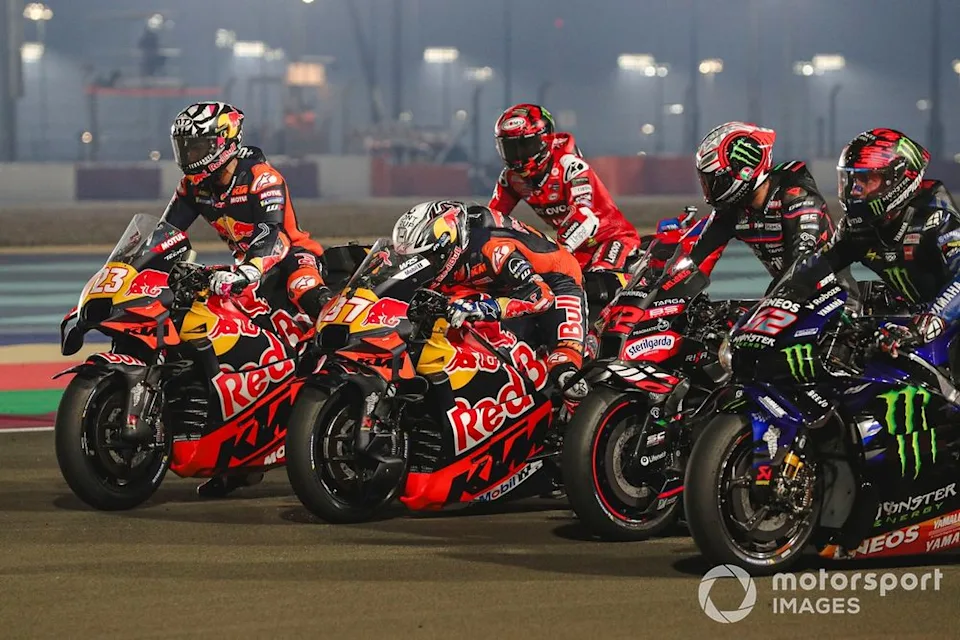
Pedro Acosta, Red Bull KTM Factory Racing
Pedro Acosta, Red Bull KTM Factory Racing
The outcome hinges less on track conditions than on whether multinational corporations are willing to absorb the liability of sending mechanics, engineers, and riders into a region their own human resources policies currently classify as off-limits.
To read more Motorsport.com articles visit our website.