Private Hire VAT Returns as the Tax Uber Once Wanted for Everyone
The Supreme Court preserved the agency model in July 2025. The Treasury left it alone in November 2025. The Budget has now taken it from the largest operators by statute.
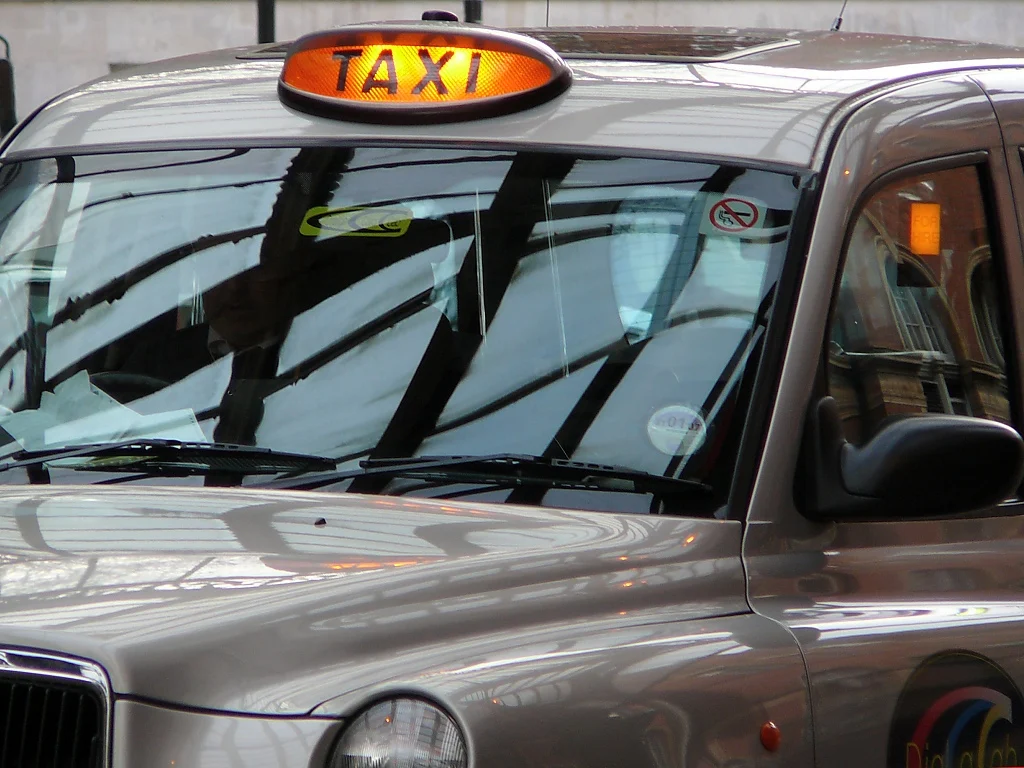
On 29 July 2025, five Supreme Court justices dismissed Uber’s attempt to force every private hire operator outside London to contract with passengers the way Uber does. Uber Britannia had asked the courts to declare that the law required all operators to accept bookings only by contracting as principal to provide the journey. That model would have made each operator liable for VAT on the full fare, instead of VAT on a commission. The court refused, unanimously, and the agency model that D.E.L.T.A. Merseyside and Veezu had defended stayed lawful across England and Wales.
The Divisional Court settled London in 2021. Its ruling on the capital’s separate licensing law required London operators to contract as principal, and Uber changed its London model in March 2022, charging 20 per cent VAT on the full fare there from that spring. Uber then sought the same declaration for the rest of the country under the Local Government (Miscellaneous Provisions) Act 1976. A High Court judge granted it in 2023. The Court of Appeal reversed that decision in July 2024, and the Supreme Court’s dismissal a year later ended the argument. Outside London, an operator could still act as an agent for the driver, with the driver treated as the supplier of the journey.
Lord Briggs, giving the judgment for all five justices, said the 1976 Act was essentially silent on how an operator accepts a booking, apart from requiring records to be kept. The one provision that touched contracting was section 56(1). It deems every hire contract to be made with the operator who accepted the booking, whether or not that operator provided the vehicle. Briggs read that as a deeming provision, not a mandate: it only makes sense, he said, if the Act assumes the historical range of models, including agency and intermediary arrangements, are permissible. Public safety, in his reasoning, was protected by a different mechanism altogether, the triple licensing lock under which the operator, the driver and the vehicle must each be licensed by the local authority.


The Treasury’s consultation response, published in November 2025, closed the other route large operators had used to cut their VAT bills. From 2 January 2026, private hire and taxi journeys supplied on their own could no longer use the Tour Operators’ Margin Scheme. The scheme was designed for travel businesses, and it let an operator account for VAT only on its margin. The Treasury put the effective rate some principal-model operators had achieved at around 4 per cent, against the standard 20 per cent, and estimated ending access to the scheme would secure about £700 million a year. But the agency model itself was left where the Supreme Court had put it. Veezu’s chief executive, Nathan Bowles, welcomed what he called stability. “The Supreme Court’s unanimous and clear ruling in Uber v Sefton confirmed that our long-standing operating model works and keeps services affordable, reliable and safe.” Layla Barke-Jones, the solicitor who had acted for DELTA in the Supreme Court case, said the announcement “will not affect fares from those private hire firms that use an agency-based model.”
Uber was among the platforms that rearranged themselves around that settlement. By April 2026, HM Treasury material recorded that ride-hailing platforms, including Uber, had restructured arrangements outside London so they acted as agents rather than suppliers. The change moved the VAT liability to drivers, most of whom earn below the £90,000 VAT registration threshold, so that VAT was often still not charged on rides outside the capital. A Treasury minister, James Murray, restated the position in a written parliamentary answer published weeks before the 2026 Budget, saying the TOMS change “does not affect smaller operators outside London whose drivers contract directly with passengers, or black cabs”.
The black-cab side had never accepted the settlement as fair. Steve McNamara, general secretary of the Licensed Taxi Drivers’ Association, called the TOMS closure “a landmark step for fairness and integrity in our industry”, and put the platforms’ effective rate at less than 5 per cent on vast revenues. Andrew Brem, Uber’s general manager for the UK, answered in January 2026 that “the courts have twice ruled that the Tour Operators’ Margin Scheme applied to operators like Uber”. He warned: “The government’s action today to change the rules will mean higher prices for passengers in London, and less work for drivers, when people are already struggling with the cost of living.”
John Healey‘s first Budget, delivered on 28 October 2026, reversed the settlement for the largest firms. The Chancellor told Parliament: “I will resolve the question of VAT for larger taxi companies, ensuring they play by the same rules, no matter where they are located, while still protecting smaller local firms.” The mechanism is a deeming rule of the kind the Supreme Court had said the 1976 Act did not contain. From 2 January 2028, passenger transport supplied through an agent will be deemed to be made by the agent and not the driver, so the operator accounts for VAT on the full value of the fare. The change is made by amending section 47 of the VAT Act 1994. A new subsection 4A treats the supply as both a supply to the agent and a supply by the agent, and a new section 4B gives the Treasury power to set the circumstances in which the deeming provision does not apply. It will catch only operators whose annual fare turnover exceeds a threshold the Government will consult on, with £50 million the lead option. Smaller businesses are not affected.
The Treasury’s own costing ladder, certified by the Office for Budget Responsibility, puts the yield at £95 million in 2027-28, then £385 million in 2028-29, £395 million in 2029-30, £410 million in 2030-31 and £425 million in 2031-32. The first figure is a part-year number: the measure starts on 2 January 2028, inside the final quarter of the 2027-28 tax year, so the £95 million covers roughly three months against £385 million for the first full year. Private hire VAT, on the Government’s numbers, is worth about four times as much in a full year as in the stub year in which it begins.
A £20 fare shows what is at stake. The Government’s impact note says only that the measure may affect passengers if operators change their fares. Take a £20 fare as an illustration, with the platform keeping £5 of it and the driver below the VAT registration threshold. Under the agency model the VAT collected is the tax on the £5 commission, £0.83 of the £20. Under the deeming rule the VAT element of the same £20 fare is £3.33. The difference is £2.50 on every £20, payable by the passenger if fares rise by the full amount, or shared between the operator and the driver if they do not. The impact note adds that the burden would not fall evenly: its evidence on private hire use in England is that people with mobility issues take a higher number of trips a year than people without, and women take a higher number than men.
An operator with £49 million in annual fares keeps the agency model the Supreme Court preserved; one with £51 million loses it by statute. Healey’s rule ends the London and outside-London split for the largest operators, and replaces it with a big-firm and small-firm split measured by fare turnover. How turnover is counted, across licensing areas and corporate structures, is still to be settled in consultation, and the last consultation on this subject, which ran from April to August 2024, drew 86 responses from drivers, operators, trade associations and licensing authorities, a measure of how contested the counting is likely to be.
Bolt had around £190 million at issue in its attempt to use the Tour Operators’ Margin Scheme, and Uber deposited £1.446 billion with HMRC to appeal its own assessments, more than £1.6 billion between the two cases. Tribunals at the first two levels accepted that the scheme could apply to private hire journeys; the Court of Appeal overturned them, and the Supreme Court refused Bolt permission to appeal, leaving the Court of Appeal’s reasoning as the final word. HMRC is expected to pursue the difference on past supplies, with interest added.