

Russia Escalates Maritime Threats as Ukraine Builds New Regional Alliance
Maritime threats, hybrid attacks, and drone strikes intensify as Kyiv forges a new regional bloc
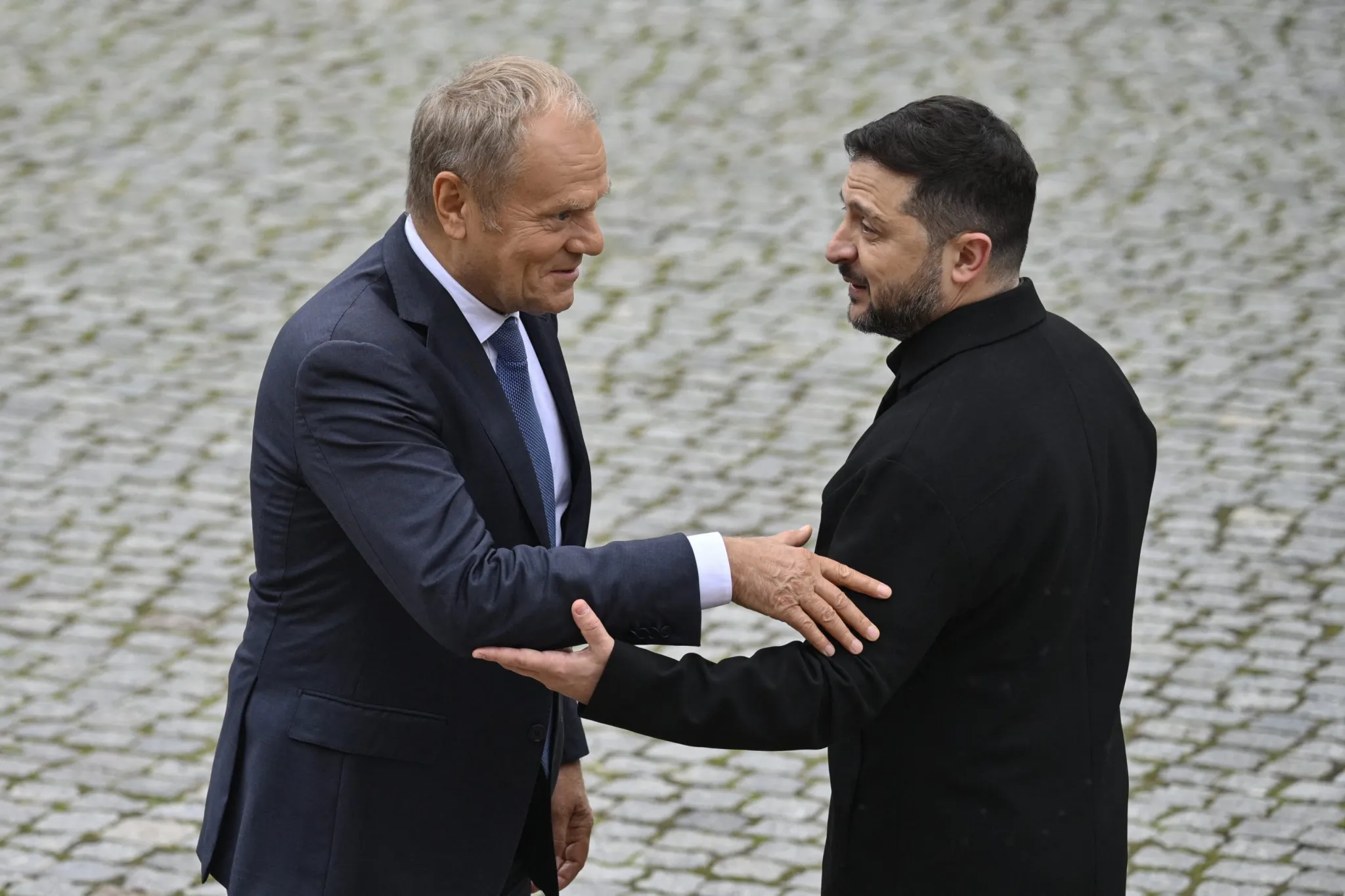
A volatile security confrontation between Moscow and European capitals intensified on Friday as Ukrainian President Volodymyr Zelenskyy hosted leaders from seven neighboring states at the inaugural summit of the “Carpathian Eight” in Bukovel, a ski resort town in Ukraine’s western Ivano-Frankivsk region.
The bloc brings together Ukraine, Poland, Romania, the Czech Republic, Slovakia, Hungary, Austria, and Serbia, with representation from the European Union. Zelenskyy wrote on Telegram that the summit launched a coordinated effort to strengthen cross-border logistics, energy-grid resilience, regional economic ties, and community security.
The gathering came as the older Visegrád Four cooperation framework has fractured over differing approaches to Moscow. U.S.-backed peace mediation also remains stalled over Russian demands for territorial concessions in the Donbas and Ukrainian demands for robust Western security guarantees.


Political divisions among Ukraine’s immediate neighbors were visible at the summit. Poland and Romania remain core suppliers of military hardware and transit corridors for NATO supplies, while Hungary, Slovakia, and Serbia continue to refuse direct military assistance to Kyiv, maintaining energy ties or diplomatic dialogue with the Kremlin.
At the same time, Polish Prime Minister Donald Tusk warned that Russian intelligence services were preparing covert strikes using drones or missiles against European countries supporting Ukraine, specifically identifying Poland as a primary target. His warning followed security incidents reported across Germany, Poland, and Denmark, including sabotage attempts against industrial sites, arson attacks, suspicious surveillance of critical defense infrastructure, and an alleged plot involving an explosive-laden drone aimed at a major European airport.
European Commission President Ursula von der Leyen called for a standardized, NATO-like response mechanism within the European Union. She urged member states to reach agreement on collective action against hybrid acts that fall below the threshold of an armed attack under NATO’s Article 5 charter but still threaten national security.
The maritime confrontation also sharpened. Speaking at a meeting of a government commission on new military hardware, Russian President Vladimir Putin warned that Moscow would retaliate if Western nations continued detaining Russian-operated merchant vessels. He called such actions against Russian shipping “piracy” and threatened asymmetrical counter-measures anywhere in the world.
Western governments have increased enforcement against a vast “shadow fleet” made up of hundreds of aging, often unflagged or flag-of-convenience oil tankers. Russia uses the vessels to bypass international price caps and sanctions imposed after its February 2022 invasion of Ukraine. France and the United Kingdom recently impounded several shadow-fleet tankers suspected of carrying oil in violation of G7 and European Union sanctions, which capped Russian crude at $60 per barrel.
The EU has formally sanctioned hundreds of the vessels, prompting the Russian Navy to begin deploying warships to escort commercial ships. Putin dismissed Western accusations of Russian aggression as a pretext for expanding NATO defense budgets.
Diplomatic tensions flared in Moscow after the Russian Foreign Ministry summoned Britain’s Chargé d’Affaires for a formal reprimand over London’s expanding supply of long-range drones and heavy weaponry to Ukraine. Russian officials said British military facilities established on Ukrainian soil would be treated as legitimate targets.
The British Foreign Office rejected the protest, describing it as a propaganda maneuver intended to distract from Russia’s full-scale war in Ukraine. London reaffirmed its commitment to military support for Kyiv.
The European Union transferred a fresh 3.3 billion-euro ($3.8 billion) financial tranche to Kyiv on Friday after a phone call between Zelenskyy and von der Leyen. The money came from broader European financing packages supported partly by extraordinary revenues generated from frozen Russian state assets, and was earmarked for emergency defense needs, including missile defenses and domestic drone manufacturing.
Ukraine faces an estimated $27 billion budget shortfall this year. Zelenskyy said further discussions on long-term macro-financial stability would take place next week during high-level meetings at the United Nations General Assembly in New York.
The summit also coincided with the opening of a three-day voting period in Russia’s parliamentary election. It is the first national legislative vote held in Russia since the 2022 invasion, and no viable opposition candidates are participating, ensuring that President Vladimir Putin’s ruling United Russia party will retain total control over the State Duma.
High-intensity military strikes continued as the diplomatic and political maneuvering unfolded. Overnight Russian air strikes in Ukraine’s western Zhytomyr region killed two people and injured two others, while severe fires spread across industrial warehouses and manufacturing sites.
The Ukrainian State Emergency Service said firefighting was repeatedly delayed because rescue crews had to take cover during secondary air raid alarms. Bomb disposal units were also clearing unexploded ordnance from the scene.
In the eastern Kharkiv region, a Russian drone struck an electric suburban train at a railway station in the Novovodolazka community. One person was killed and six were injured, while two passenger carriages caught fire.
Russian forces also launched targeted attacks against Black Sea maritime and transport infrastructure. A bulk carrier docked at the port of Chornomorsk was struck, and Russian air strikes destroyed a Nova Poshta logistics complex six kilometers northwest of Odesa. The Russian Ministry of Defense claimed the complex was used to store Western-supplied military cargo.
Ukrainian forces carried out one of their largest long-range drone offensives of the conflict. Russia’s Defense Ministry said its air-defense units intercepted and destroyed 629 Ukrainian unmanned aerial vehicles overnight across 14 Russian regions, as well as over occupied Crimea and the Black and Azov seas.
Moscow Mayor Sergei Sobyanin said more than 350 drones were directed toward the Russian capital. He reported that 64 were shot down on the immediate approaches to Moscow, while the remainder were intercepted at greater distances.
In Russia’s Kursk region, where Ukrainian ground forces launched a cross-border offensive in August 2024, the state nuclear agency Rosatom reported that a Ukrainian drone struck a cooling tower at the Kursk Nuclear Power Plant in Kurchatov. Rosatom said the strike caused no radiological contamination and that the facility’s reactors continued to operate normally.










One Comment