

Travis Kalanick’s Atoms Raises $1.7 Billion to Build Food-Preparation Robots
The Andreessen Horowitz-led round backs a venture combining robotics ambitions with Kalanick’s post-Uber businesses.
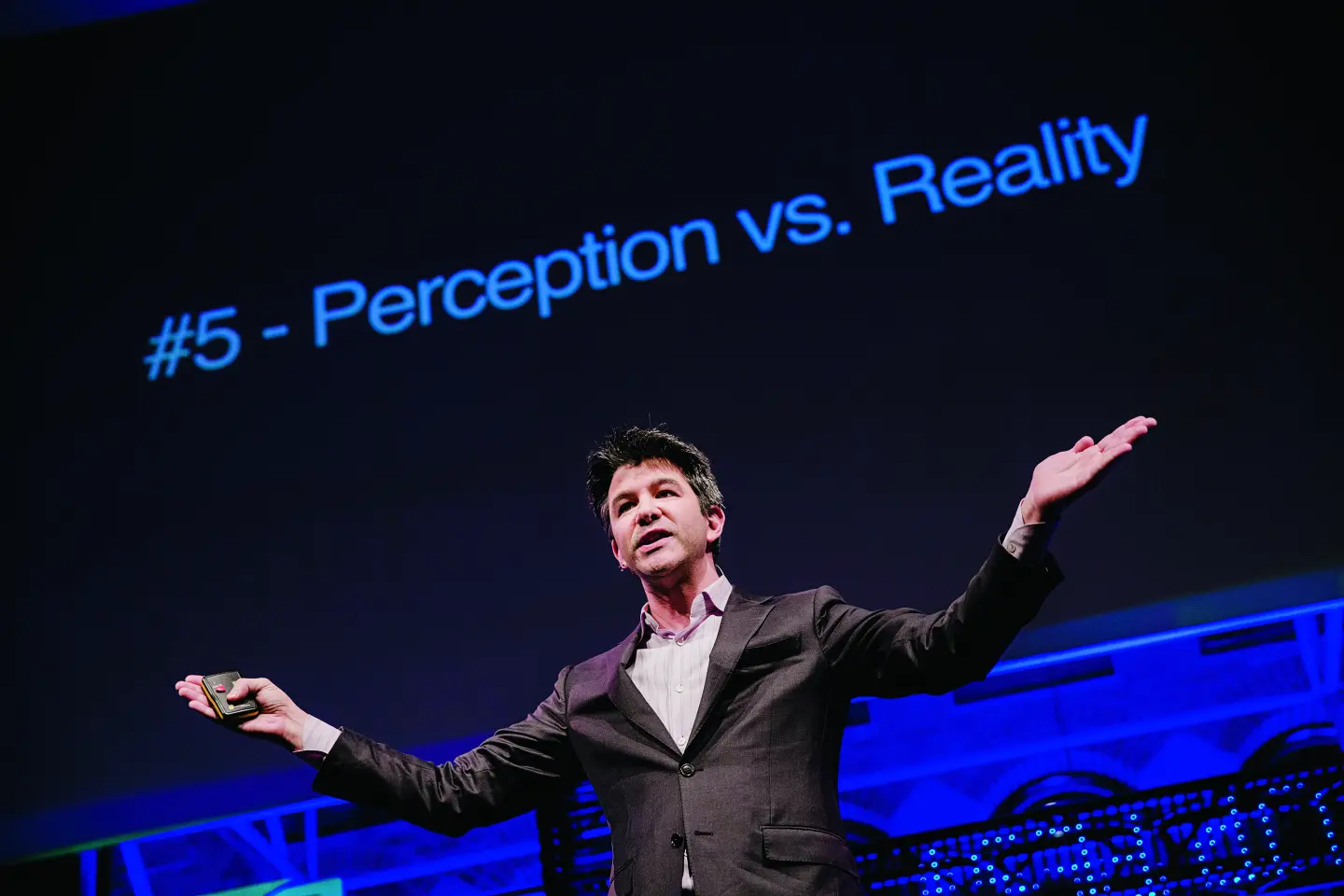
SAN FRANCISCO — Travis Kalanick, Uber Technologies Inc.’s co-founder and former chief executive, has secured $1.7 billion in equity financing for Atoms, an industrial robotics and artificial intelligence startup. Led by venture capital firm Andreessen Horowitz, the round marks his return to major institutional backing nearly a decade after an investor revolt forced him from Uber.
Atoms is developing what it calls “physical AI”: autonomous systems intended to automate commercial food preparation and logistics, with the eventual goal of preparing and distributing meals without human intervention. Kalanick has likened its potential impact to a “second industrial revolution,” placing the company alongside physical AI pioneers such as Elon Musk’s Tesla Inc. in the race to deploy commercial robotics at scale.
The startup brings together Kalanick’s post-Uber businesses, including CloudKitchens, a food-delivery infrastructure and real-estate venture he quietly started under the holding company City Storage Systems. That business received a $400 million investment from Saudi Arabia’s Public Investment Fund (PIF) in 2019, valuing it at $5 billion. The new financing from Andreessen Horowitz, also known as a16z, builds on earlier private funding for his real-estate holdings.



Kalanick has also made several acquisitions to expand Atoms’ technology, among them a mining technology venture run by Anthony Levandowski, his former self-driving engineering chief at Uber. Levandowski was central to a 2017 trade-secrets lawsuit brought against Uber by Alphabet Inc.’s self-driving unit, Waymo; the case ended in a $245 million settlement. He was later sentenced to 18 months in prison for stealing autonomous vehicle trade secrets and received a presidential pardon in January 2021.
The support from top-tier venture capitalists positions Kalanick’s operational style as an asset in the competitive physical robotics sector. In a promotional blog post titled “Travis Is Back,” Andreessen Horowitz co-founder Ben Horowitz wrote that “it takes a rare kind of entrepreneur to change these old-school, heavy parts of our economy.”
That endorsement contrasts with the circumstances of Kalanick’s June 2017 departure. A viral blog post by former Uber software engineer Susan Fowler had raised allegations of systemic sexual harassment and gender discrimination. Uber’s board then commissioned an independent investigation led by former U.S. Attorney General Eric Holder. Its “Holder Report” recommended extensive cultural reforms, and Kalanick’s executive authority was curtailed.
A coalition of early institutional backers led by Benchmark Capital partner Bill Gurley, alongside Fidelity Investments and Menlo Ventures, delivered a joint demand for his resignation in Chicago. It came just 11 days after his mother died in a boating accident that seriously injured his father. Former Expedia CEO Dara Khosrowshahi replaced Kalanick and led Uber to an initial public offering (IPO) in May 2019. Kalanick later sold his remaining Uber equity for an estimated $4 billion in pretax capital, providing seed funding for his real-estate acquisitions.
For Atoms’ public rollout, Kalanick and his backers have turned to founder-friendly, pro-tech podcasts and direct-to-creator digital platforms rather than traditional mainstream news organizations. The approach coincides with a wider Silicon Valley embrace of “founder mode,” a management philosophy popularized in 2024 by Y Combinator co-founder Paul Graham. It calls for absolute founder control over corporate decisions and rejects heavy-handed governance by institutional boards.
Critics, including independent tech commentators and former journalists, cite Kalanick’s record of aggressive corporate espionage programs: “Greyball,” designed to evade local law enforcement, and “Hell,” used to track competitor Lyft. His current supporters regard those methods as evidence of the competitive drive needed to disrupt legacy industries. On recent podcasts, Kalanick has defended his earlier tactics, including aggressive driver recruitment campaigns codenamed “Shoplifting.”
Atoms is seeking to expand its automated distribution model nationwide. Its commercial partnerships already include delivery collaborations with wellness brand Goop, founded by Gwyneth Paltrow.









