

Peloton’s $2,195 Folding Treadmill Rewrites Its Hardware Strategy
A compact $2,195 treadmill joins Peloton’s premium Vision models
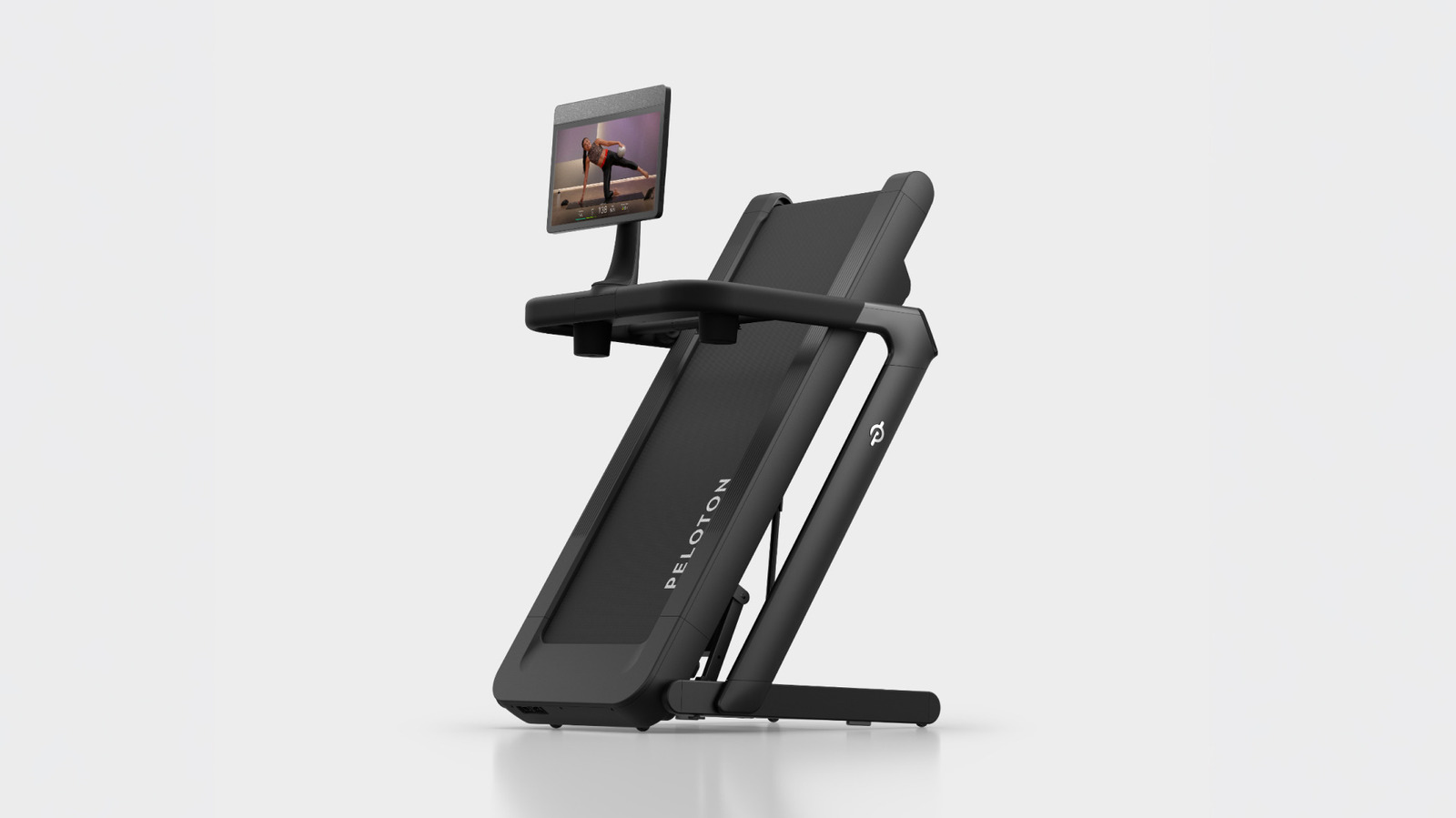
NEW YORK — Peloton Interactive, Inc. will introduce the Tread Flex in fall 2026, its first-ever compact, folding treadmill. Priced at $2,195, it will be the lowest-priced treadmill in Peloton’s lineup. More than eight years ago, the company entered the treadmill market with hardware priced at approximately $4,000.
The Tread Flex is built for space-constrained households and urban apartment dwellers. Its running deck folds vertically, cutting the active floor footprint by roughly half when stored. Built-in wheels allow the machine to be repositioned, while a two-step release system gradually lowers the deck to the floor. A safety locking pin keeps the deck from falling open during upright storage.
Peloton’s technical specifications list a maximum speed of 12.5 mph and a noise level of 70 decibels at that speed, measured without a runner on the deck. The machine also retains a pivoting touchscreen display, although Peloton has not disclosed the Flex’s exact screen dimensions.

The Flex display is smaller than the 23.8-inch consoles on Peloton’s premium models and is aligned more closely with the 21.5-inch Full HD screens used on older generations of Peloton hardware. Built-in speakers developed with Sonos, Inc. continue the companies’ ongoing hardware collaboration. Unlike the higher-priced models, the Tread Flex does not have an integrated camera.
Peloton is pairing the Flex with two higher-tier machines: the $3,495 Tread Vision and the $6,695 Tread+ Vision. Both have 23.8-inch screens, integrated cameras, and sturdier heavy-duty running decks designed for high-mileage road runners. They also include a proprietary running analysis tool intended to assess and improve user form.
The Tread+ Vision price continues Peloton’s effort to rebuild its premium treadmill segment after the company voluntarily recalled its original Tread+ and Tread in May 2021. The recall was conducted in cooperation with the U.S. Consumer Product Safety Commission (CPSC) following reports of dozens of injuries and the death of one child. The premium Tread+ did not return until late 2023, with redesigned safety guards and a $5,995 retail price.
All three machines will use Peloton’s updated software suite, powered by Peloton IQ. The platform provides automated training scheduling, real-time performance feedback, and active coaching. It also introduces personalized Pace Targets ranging from levels 1 through 10; Peloton IQ monitors performance across 10 completed running workouts before calculating individualized pace ranges.
The software will support targeted Zone 2 heart-rate training, a biometric coaching feature Peloton officials said was among the most frequently requested updates from subscribers. Zone 2 training emphasizes low-intensity aerobic endurance building and has become widely popular across the broader fitness industry.
Another feature, ReRuns, will be available across the new Tread lineup. Runners can import outdoor routes previously tracked through the Peloton mobile application or an Apple Watch. The treadmill maps the route’s recorded GPS and biometric data to the machine and automatically adjusts the deck’s physical elevation in real time to mimic the original outdoor terrain.
The hardware changes follow years of post-pandemic market corrections. Peloton experienced explosive growth during the COVID-19 pandemic before facing steep declines in hardware demand, inventory surpluses, and significant corporate restructuring. Chief executive Barry McCarthy departed in May 2024, and Peter Stern became CEO in January 2025. Stern, a former Apple executive, took the role with a mandate to drive high-margin subscription revenue through hardware innovations and digital platform enhancements.
Peloton’s tiered pricing model is aimed at budget-conscious consumers as well as customers who have historically been left out by the company’s premium, stationary equipment. The approach also seeks to lower the entry barrier to Peloton’s digital subscription platform, which remains the primary driver of its long-term recurring revenue.
In the space-saving fitness category, Peloton will compete with established manufacturers including iFIT Health & Fitness, the maker of NordicTrack and ProForm, along with Sole Fitness. Those companies have long dominated the folding treadmill market.










One Comment