Otis College Students Fuse LEDs and Lycra for Nike, Wilson
Junior designers integrated LEDs, modular layers, and all-white textile engineering under direct guidance from Nike, Wilson, and Vuori executives.
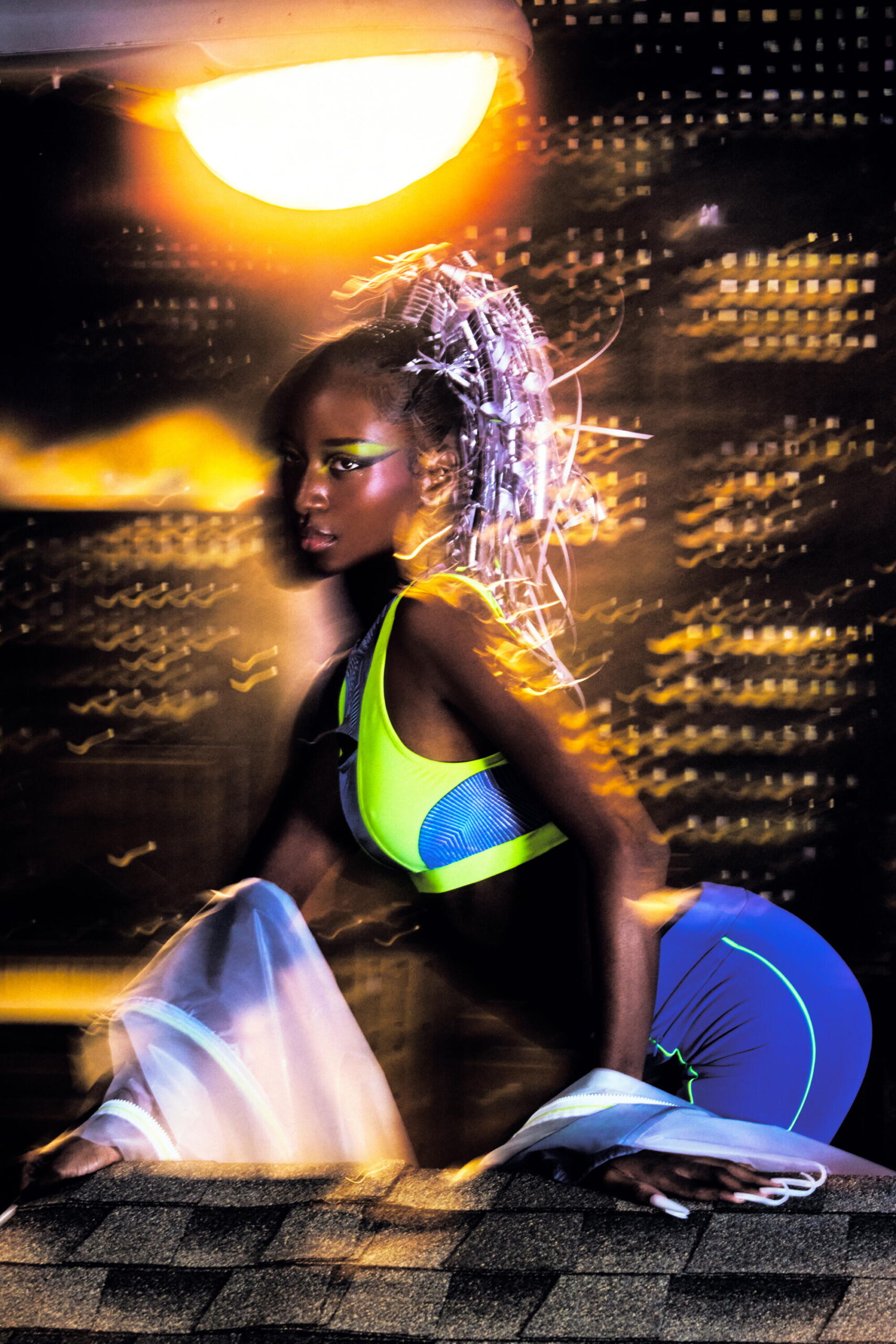
Forty-two junior fashion design students at Otis College of Art and Design are preparing to debut a runway collection that merges athletic performance engineering with high-fashion experimentation. Scheduled for May 16, the culminating show represents the final stage of a yearlong sportswear curriculum built around direct mentorship from executives at Nike, Wilson Sporting Goods, and Vuori.
Unlike standard academic design projects, the Otis program operates as an industry pipeline. Founded alongside the Los Angeles college’s fashion department in 1980, the mentorship model pairs upperclassmen with brand leaders—frequently alumni—who issue specific design briefs and critique garments through successive fittings. For the spring semester, those briefs forced students to navigate strict commercial constraints while pushing technical boundaries, a balancing act that defines modern sportswear development.
The global activewear market has expanded far beyond gym floors, driven by consumer demand for transitional clothing that functions during physical activity but reads as streetwear or elevated casual wear. The three participating brands represent distinct segments of that market. Encinitas, California-based Vuori, which has rapidly scaled since its 2015 launch, assigned students to design for an athlete moving directly from a workout into an art gallery. Kirk Heifner, Vuori’s vice president of men’s design, instructed his cohort to maintain sleek silhouettes and muted palettes while ensuring the underlying construction remained strictly performance-driven.


Student Eva Jiang, 26, responded by sourcing French terry fabric originally associated with Alexander McQueen, constructing a one-piece tracksuit featuring horizontal yellow accents and ruched sleeves. Her classmate Patrice Ilunga, 25, who relocated to the U.S. from the Democratic Republic of Congo, engineered a streetwear-inspired jacket and shorts set where every visual element doubled as functional hardware. Drawstrings allowed for adjustable length, zippers controlled ventilation, and reflective detailing ensured nighttime visibility.
Wilson Sporting Goods, a Chicago-based company owned by Finland’s Amer Sports, took a historically rigid approach. Drawing on its decades-long relationship outfitting players at Wimbledon, Wilson challenged students to conceptualize a modern athlete kit for the 2027 tournament rooted in the aesthetic energy of 1999. The non-negotiable constraint: adherence to the All England Lawn Tennis Club’s strict all-white dress code, a tradition enforced since the Victorian era to minimize the appearance of sweat.
Design director Deborah Sabet pushed students to rely entirely on textile manipulation rather than color. Jade Hallyday, 21, combined lycra, mesh, lace, and sherpa into a three-piece set, recutting and resewing the garments multiple times to calibrate subtle variations in white tones. Wanqi Wang, 21, extended a sheer windbreaker to floor length to create dramatic movement over a utilitarian lycra unitard equipped with specialized tennis ball pockets.
Nike’s brief demanded the most aggressive technical integration. Mentors Alexsandra Del Real, a women’s product line manager, and senior technical design manager Michelle Kwak asked students to design for the immediate aftermath of a run—specifically, transitioning into nightlife environments like raves or underground clubs. The prompt required integrating illumination technology and modular layering into garments capable of sustaining high-output cardiovascular movement.
Silverio-Indigo Vazquez, 20, built a two-layer system using neoprene, lycra, nylon, and transparent vinyl, embedding LED lights into a removable outer windbreaker designed for dark venues. Callie Kinnan, 21, constructed a translucent hooded jacket wired for bioluminescence, ultimately discarding her initial stretch mesh after it warped during assembly. Kwak guided the Nike cohort through the biomechanics of running apparel, emphasizing how excess arm space and precise hood angles dictate whether a garment succeeds or fails during actual athletic use.
This intersection of wearable technology and traditional pattern-making reflects broader shifts across the apparel sector. Integrating flexible LED arrays and power sources into washable, kinetic textiles remains a significant manufacturing hurdle, one typically managed by dedicated research and development teams rather than undergraduate studios. By forcing students to source components from the Los Angeles Garment District and troubleshoot circuitry alongside seam allowances, the program accelerates their transition from conceptual designers to technical problem-solvers.
The 42 completed garments will be presented in a full-production campus fashion show on May 16.