

OpenAI and Microsoft Privately Feared AI Could Destroy Publishers
Unsealed filings expose private fears over AI’s impact on journalism
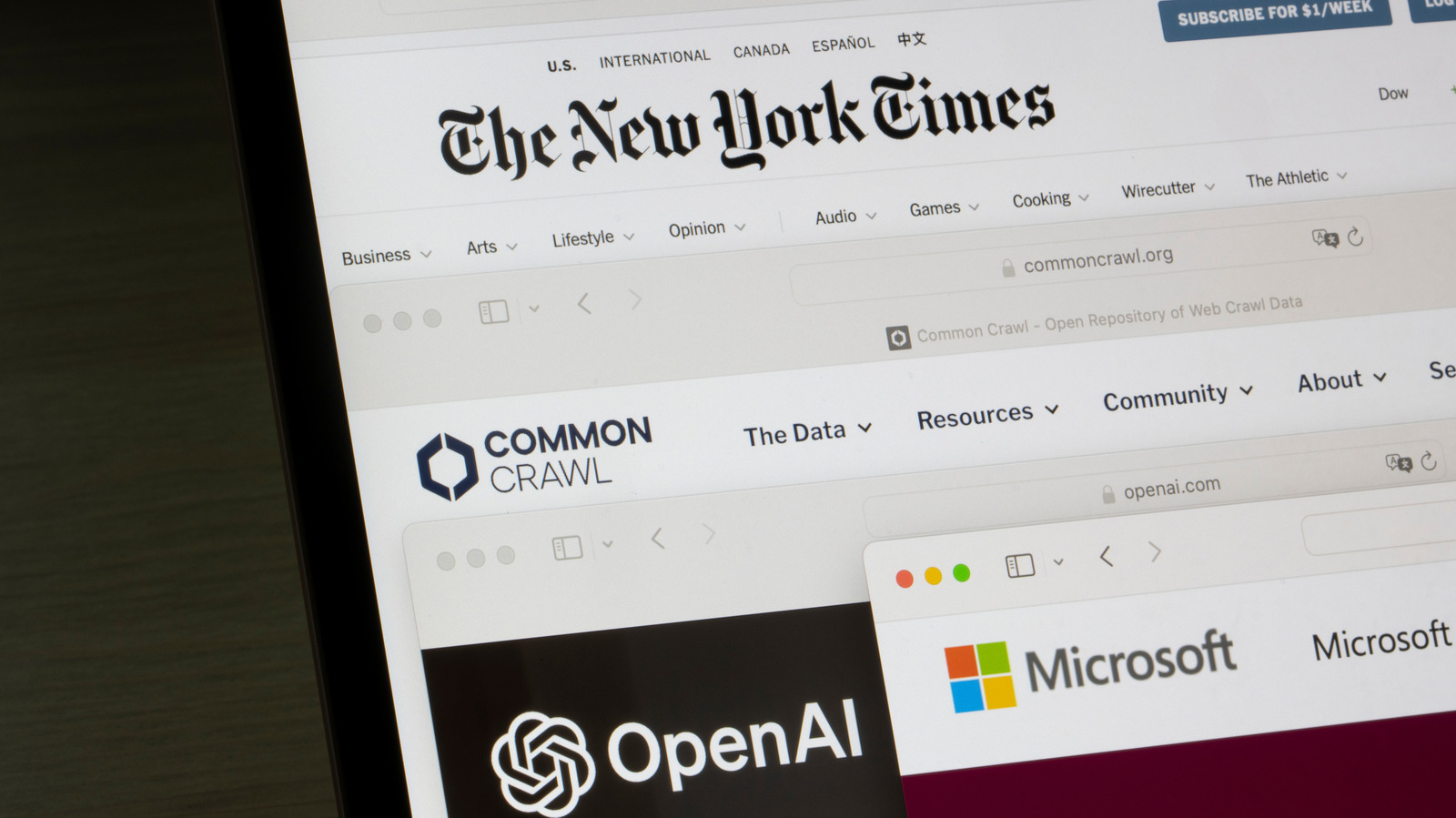
The legal defense of generative artificial intelligence companies in U.S. courts largely depends on the doctrine of “fair use,” the principle that copying copyrighted material to train AI is a transformative process that does not substitute for the original work. But newly unsealed court documents show that executives and scientists at Microsoft and OpenAI privately worried that their technology posed a direct threat to the financial survival of the publishing industry.
The materials emerged from the high-stakes copyright infringement lawsuit filed against OpenAI and Microsoft in late 2023. Made public as heavily redacted snippets without their full surrounding context, the internal communications describe data-harvesting practices in language that closely mirrors the allegations made by the publishers suing the companies.
The market-substitution question is central to U.S. copyright law. Under Section 107 of the Copyright Act, federal courts assess fair use through four distinct factors. The fourth factor—the effect of the use upon the potential market for or value of the copyrighted work—often becomes the ultimate battleground. If an AI product directly substitutes for the original work, it severely weakens the developer’s fair use defense.


Microsoft’s Director of Applied Science, Dr. Brent Hecht, described the massive, uncompensated scraping of news articles used to train large language models, or LLMs, as potentially the “largest theft of labor in human history.” He also warned of a “doom loop” for content creators, describing advanced AI models as “a product that destroys its supply chain” by diverting the audiences and revenues publishers need to continue producing journalism.
At OpenAI, the creator of ChatGPT, Nick Turley, an executive at the San Francisco-based startup, wrote that the scraping of news content posed an “existential threat to publishers.” In a statement crucial to the ongoing legal battle, Turley acknowledged that conversational AI systems are “largely substitutive” to traditional journalism.
OpenAI’s own technical staff also questioned whether search attribution or source links would offset the damage to publishers. In 2023, an OpenAI software engineer warned colleagues: “no matter how prominently we show the links, users won’t click.” Microsoft has publicly distanced itself from those internal assessments. Microsoft spokesperson Alex Haurek defended the company’s proprietary technology, which is deeply integrated with OpenAI’s models, saying, “Microsoft’s position is set out in its court filings, which explain why these transformative uses are consistent with copyright law and why Copilot is not a substitute for publishers’ journalism.”
The filings describe methods used to build training datasets for ChatGPT and other models, including efforts by OpenAI and its partners to bypass the digital paywalls publishers use to protect subscription-based reporting. When an employee notified OpenAI President Greg Brockman about a new paywall-bypassing technique, Brockman reportedly replied, “ah nice.”
Developers also compiled training datasets by scraping millions of documents from the internet while systematically stripping out copyright notices. That practice could create additional liability under the Digital Millennium Copyright Act, or DMCA, which prohibits the removal of copyright management information. An internal Microsoft document from 2023 predicted that “millions of people around the world will soon consider large models ‘hoovering up’ all their work to be an astonishing theft of unprecedented proportions.”
The lawsuit was filed in December 2023 in the U.S. District Court for the Southern District of New York by *The New York Times* and five other writers. The plaintiffs contend that technology companies built multi-billion dollar businesses by unlawfully copying and exploiting millions of copyrighted articles without authorization or compensation. The case is widely regarded as a watershed moment for the future of intellectual property.
Other legal challenges have been brought against OpenAI, Meta, Stability AI, and Anthropic by visual artists, music publishers, and prominent authors represented by the Authors Guild, including George R.R. Martin and John Grisham. Several federal judges have dismissed peripheral claims in those cases, noting that the law surrounding AI training remains highly unsettled, but they have consistently allowed the core copyright infringement claims to proceed to discovery and trial.
The legal pressure has produced a strategic split within the media industry. *The New York Times* and some independent authors have chosen to litigate, while other major publishers have pursued immediate revenue through licensing agreements. OpenAI has negotiated licensing partnerships worth tens of millions of dollars with News Corp, owner of *The Wall Street Journal*; Axel Springer, owner of *Politico* and *Bild*; the Associated Press; Reddit; and Dotdash Meredith.
Those agreements allow OpenAI to legally train its models on current and archival publisher data, creating a commercial framework that contrasts with the unauthorized scraping practices described in the newly unsealed court documents.










One Comment