NBA Power Rankings 2026-27: Thunder Lead, Spurs Surge
San Antonio vaults to No. 2 behind Wembanyama while Houston and Utah emerge as prime candidates to beat their preseason projections.
The Oklahoma City Thunder enter the 2026-27 NBA regular season as the clear class of professional basketball, holding a commanding +8.1 power rating that separates them from every other franchise in the league. But the defining story of this preseason hierarchy is not the defending powerhouse sitting at the top — it is the San Antonio Spurs vaulting into second place at +7.4, signaling a dramatic shift in the Western Conference balance of power.
Power ratings translate team strength into point-spread values relative to a neutral court. A team rated at +8.1 is mathematically projected to defeat an average NBA opponent by just over eight points on a neutral floor. When applying these figures to actual games, home-court advantage must be factored in separately. Unlike the NFL, where home-field value typically sits around 1.5 to 2 points, NBA home-court advantage historically commands roughly 3 points due to crowd proximity, travel fatigue across time zones, and familiar shooting backgrounds.
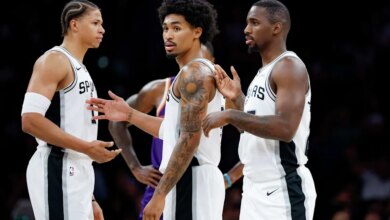
San Antonio’s ascent to the No. 2 spot reflects the rapid maturation of Victor Wembanyama, whose two-way dominance has shortened the traditional rebuilding timeline. The Spurs’ leap past established contenders like the Boston Celtics (+4.8) underscores how quickly elite defensive anchors can alter championship markets. Boston remains the Eastern Conference benchmark, but the gap between the Celtics and the surging Detroit Pistons (+3.9) and New York Knicks (+3.9) suggests a far more congested playoff race in the East than recent seasons have offered.

Detroit’s presence in the top four marks one of the most aggressive preseason evaluations in the league. After years of lottery positioning, the Pistons are now priced as legitimate threats, a projection fueled by roster continuity and the development of their young core. Historically, teams making jumps of this magnitude either validate their metrics early or regress violently once opponents adjust their scouting reports by December.
The Houston Rockets (+3.7) represent perhaps the safest bet to exceed their current valuation. Houston operated as a top-tier market team last season before center Steven Adams suffered a season-ending injury. Adams’ return restores a rebounding engine that ranked first in the NBA, a metric directly tied to perimeter success. Dominant offensive rebounding forces defenses to collapse the paint, generating high-quality catch-and-shoot three-point opportunities. With Fred VanVleet back in the rotation and veteran defender Marcus Smart added to the roster, Houston possesses the structural pieces to push well beyond a 47.5-win projection and challenge for the Southwest Division title.
Conversely, the Denver Nuggets (+2.4) face mounting pressure that their current rating may not fully capture. Nikola Jokic continues to shoulder an unprecedented offensive load, but his efficiency notably declined during the second half of last season and throughout the playoffs, with drops in both three-point accuracy and rim finishing. Defensive limitations remain a persistent issue. Compounding the strain, Aaron Gordon has shown signs of athletic decline, Jamal Murray’s consistency fluctuates, and the departure of Peyton Watson thins the wing rotation. When a team relies so heavily on one player’s historic production, any marginal drop-off cascades through the entire depth chart.
Portland (+0.3 minus, ranking 19th) faces a different type of friction. The Trail Blazers built their recent identity on intense ball pressure, transition offense, and drawing fouls. However, the NBA’s renewed officiating emphasis on penalizing illegal screens and offensive push-offs threatens to neutralize Portland’s physical style. Adding Ja Morant and welcoming back Damian Lillard injects star talent, but neither guard naturally fits a system predicated on relentless defensive disruption. New head coach Micah Nori inherits a roster requiring schematic compromise rather than seamless integration.
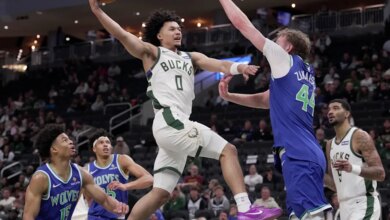
The most extreme outlier sits at the bottom of the board. The Milwaukee Bucks (-6.8) and Sacramento Kings (-7.5) occupy the lowest tiers, but the Brooklyn Nets (-6.0) present a unique strategic situation driven entirely by draft mechanics. Brooklyn owes its upcoming first-round pick to the Houston Rockets. Under current NBA draft lottery rules, landing the No. 1 overall pick carries long-term asset implications that extend into the following year’s draft rights. Finishing among the league’s worst records alters those probabilities significantly. This structural incentive creates conditions where trading veterans like Michael Porter Jr. or Julius Randle becomes financially rational, regardless of public statements regarding competitive intent. Tanking in the modern NBA is rarely announced; it is engineered through minutes distribution and trade deadlines.
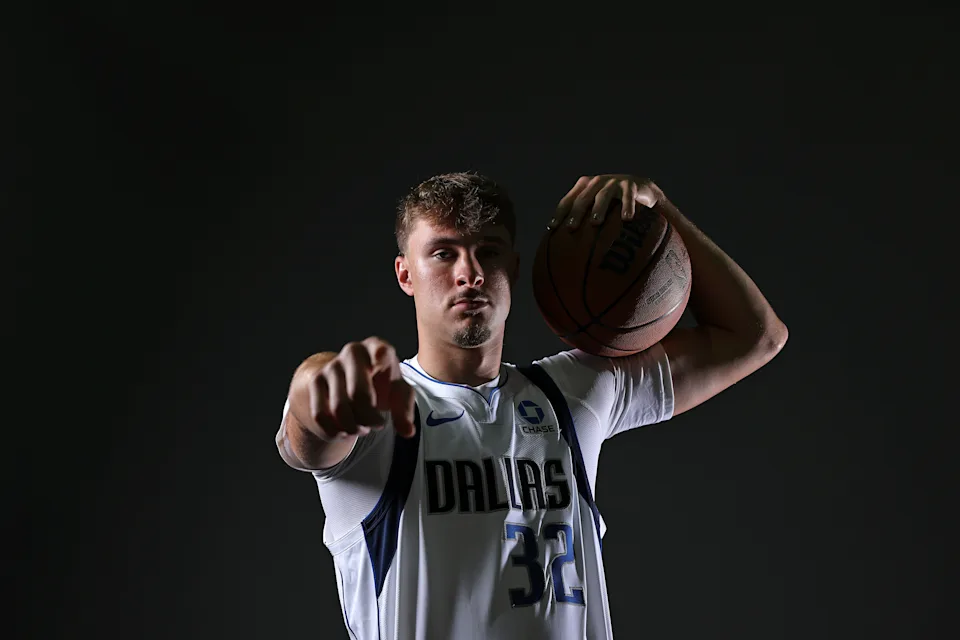
Utah (-1.4) and Dallas (-2.5) currently sit below the league-average line but possess volatile upside. The Jazz have transitioned out of their multi-year rebuild under head coach Will Hardy, shifting focus toward integrating their accumulated young talent into a cohesive rotation. Dallas remains difficult to project accurately. Rookie Cooper Flagg, photographed at Mavericks Media Day on Sept. 25, 2026, carries expectations ranging from immediate All-NBA contributor to developmental prospect. Combined with Kyrie Irving’s return timeline, Derrick Lively’s ongoing recovery, and Dusty May replacing Jason Kidd as head coach, the Mavericks operate as the league’s widest variable.
The Philadelphia 76ers (+2.9), Cleveland Cavaliers (+2.8), and Minnesota Timberwolves (+2.6) form a dense middle tier where health will dictate seeding more than raw talent. Behind them, franchises like the Los Angeles Lakers (+2.2) and Golden State Warriors (+0.2) continue to rely on aging stars whose availability dictates nightly spreads.
Opening-week point spreads across major sportsbooks are already reflecting these baseline ratings, with oddsmakers adjusting lines sharply based on late injury reports and rotation leaks ahead of Tuesday’s tipoffs.