Microsoft Rebuilds Copilot as an Autonomous Enterprise Software Platform
Home and Code are headed to public testing, while Autopilot is slated for a restricted preview by month’s end.

Microsoft is overhauling Copilot to operate as an autonomous software layer for businesses, shifting its AI strategy toward enterprise workflows rather than consumer-facing hardware branding. Chief Executive Officer Satya Nadella has described the new architecture as a “new OS for work.”
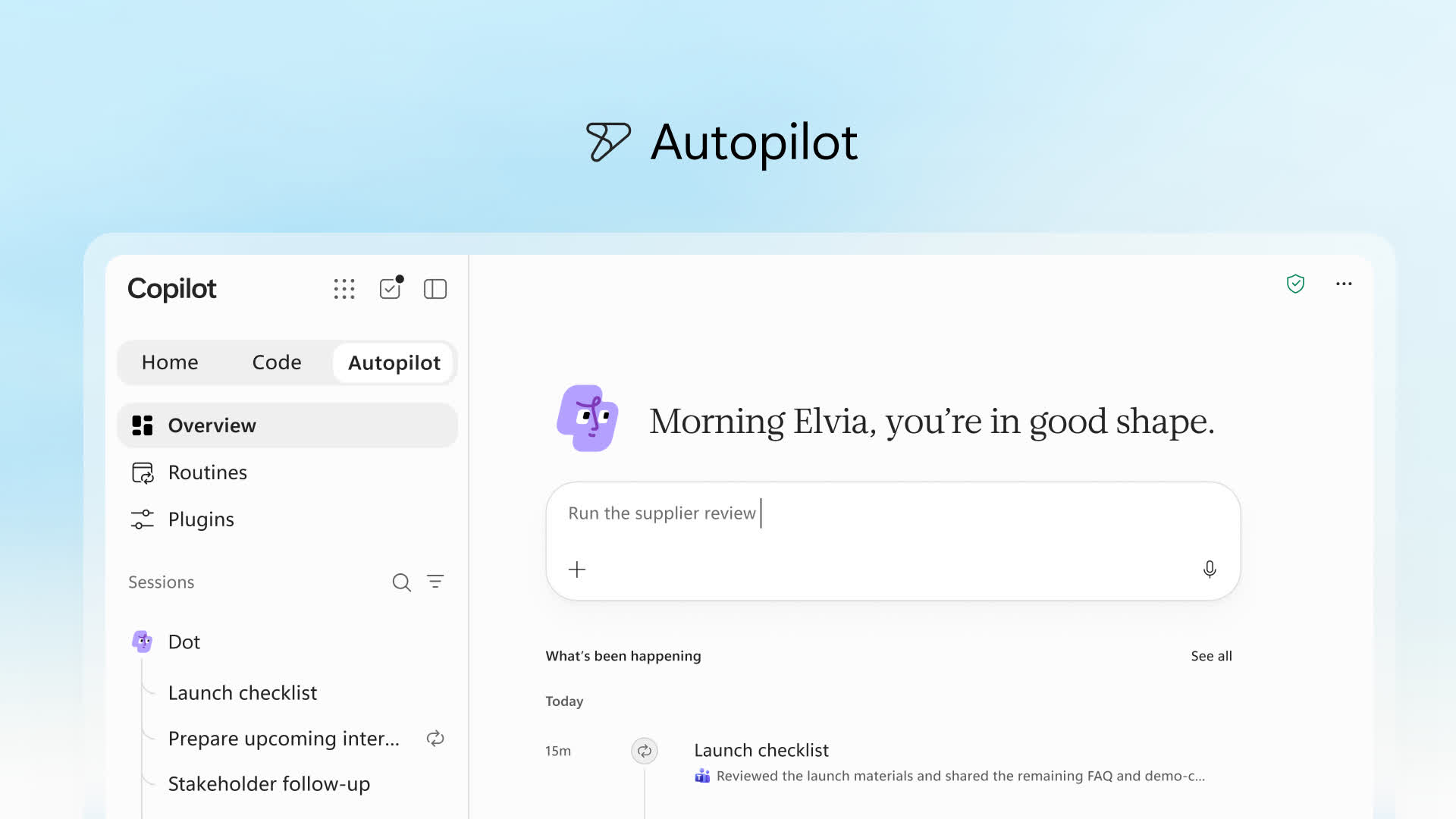
The redesigned platform has three components—Home, Code and Autopilot—and is intended to move Copilot beyond answering prompts to carrying out work in the background. Autopilot, previously known internally as Scout, is the most autonomous tier: assigned a corporate role and objective, it runs around the clock on Microsoft’s cloud servers, monitoring Teams channels, managing Outlook correspondence, scheduling meetings and starting or resuming collaborative projects across office programs.
The consumer-facing push has run into difficulties. Microsoft and silicon partner Qualcomm promoted Copilot+ PCs, but later cooled the branding after slow adoption and widespread consumer indifference toward dedicated “AI PCs.” Windows Recall, a feature that continuously took screenshots of user activity, also drew severe criticism from cybersecurity experts. Microsoft delayed its rollout and re-engineered it with stricter opt-in and encryption protocols.


The enterprise focus targets companies already paying for Microsoft 365 Copilot, which costs $30 per user monthly as an add-on. Corporate boardrooms are increasingly seeking measurable returns on that spending. Microsoft is positioning the new tools as a way to manage corporate workflows with less human intervention.
Home is the main user portal. It analyzes local and cloud-hosted business files, recommends actions and generates drafts for Word, Excel and PowerPoint. Its extension, Today, is scheduled to enter private preview in October. The dashboard draws on Outlook emails, Teams chats, calendar invitations and corporate documents to assemble schedules and draft related preparatory materials.
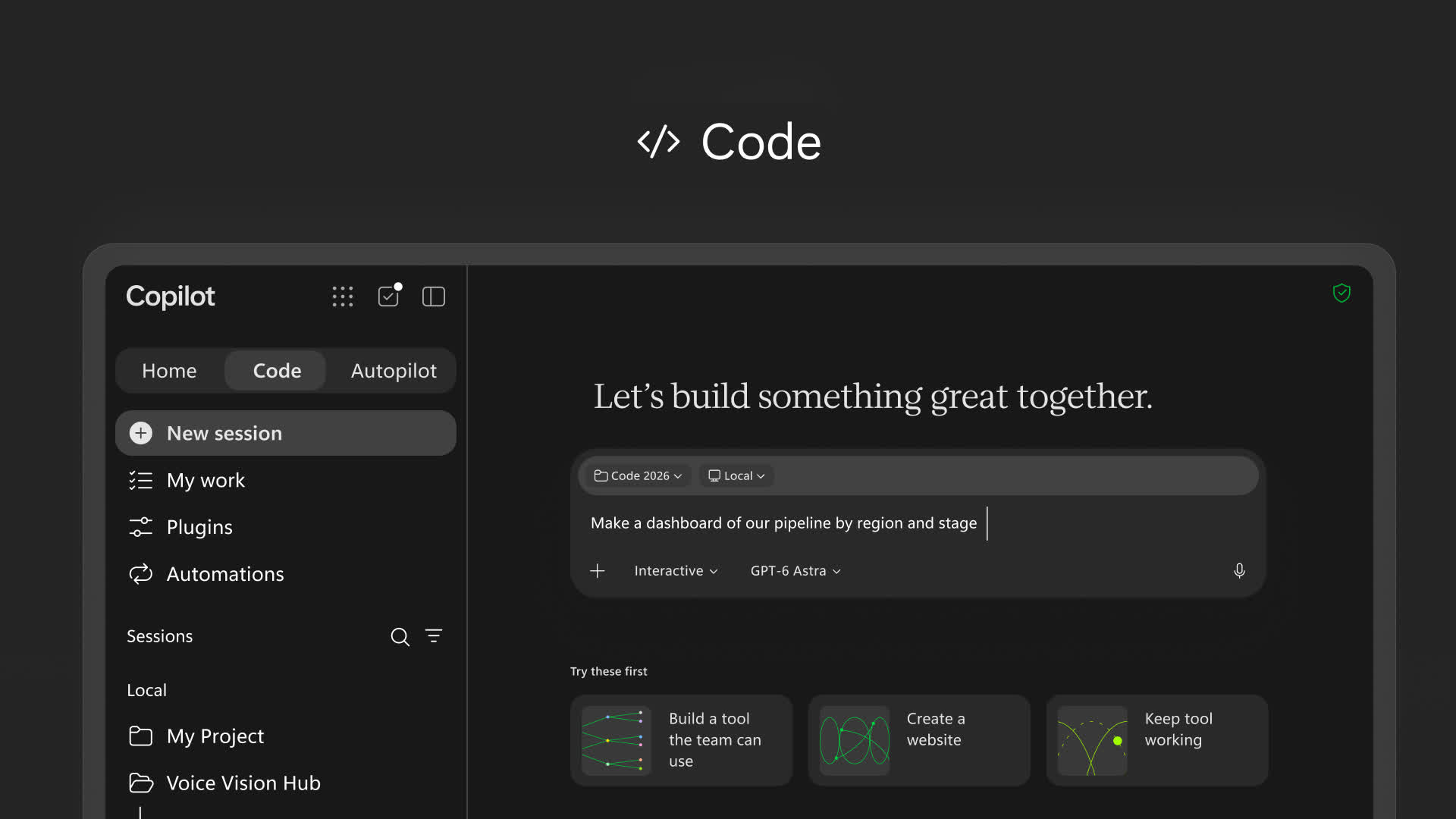
Code is aimed at software development and administrative scripting. Built on GitHub Copilot, one of Microsoft’s most commercially successful AI products, it lets users build applications using conversational language. The system uses Microsoft IQ, an internal data integration layer intended to maintain context across a corporate workspace and help the AI understand relationships among separate databases, repositories and active projects.
The suite’s architecture closely resembles Project Aion, a previously rumored Microsoft initiative to build a lightweight operating system centered on a Copilot interface inside an Edge browser shell. Microsoft has not officially revived the Aion name, but the newly demonstrated Copilot interface suggests those concepts have been incorporated into Microsoft 365.
Microsoft’s push into enterprise agents puts it in competition with Salesforce, Google and OpenAI. Salesforce recently launched Agentforce, its own autonomous-agent platform. Chief Executive Marc Benioff has criticized Microsoft’s existing Copilot tools as ineffective, comparing them to “Clippy,” the discontinued Windows office assistant. Google has rapidly integrated its Gemini models into Workspace, while OpenAI continues to pursue enterprise customers directly with custom ChatGPT configurations despite its close partnership with Microsoft.
Microsoft plans to begin public testing of the new capabilities in the coming weeks. Home and Code are slated to enter the company’s Frontier testing program, while Autopilot features are due to launch in a restricted private preview by the end of the month.