

Microsoft and Nvidia Push AI PCs Toward Petaflop-Scale Local Computing
Microsoft and Nvidia target high-performance AI processing on local PC hardware
Microsoft Chief Executive Officer Satya Nadella and Pavan Davuluri, who oversees Microsoft’s unified Windows and Surface hardware division, are scheduled to lead a Microsoft event in San Francisco on Oct. 7. Nvidia Chief Executive Officer Jensen Huang will join them on stage.
The presentation begins at 10:00 a.m. Pacific Time, or 1:00 p.m. Eastern Time, and marks Microsoft’s first major Windows-focused gathering since May 2024. Its agenda is structured around the company’s long-term hardware and software roadmap for the Windows ecosystem, the Surface device line, Nvidia’s RTX Spark architecture, and the wider PC industry.



The companies are preparing to showcase next-generation silicon and systems in California as personal computing shifts toward high-performance local artificial intelligence processing. Nvidia’s expanding role in personal computer architecture will be highlighted by the joint appearance of Huang with Microsoft’s top executives.
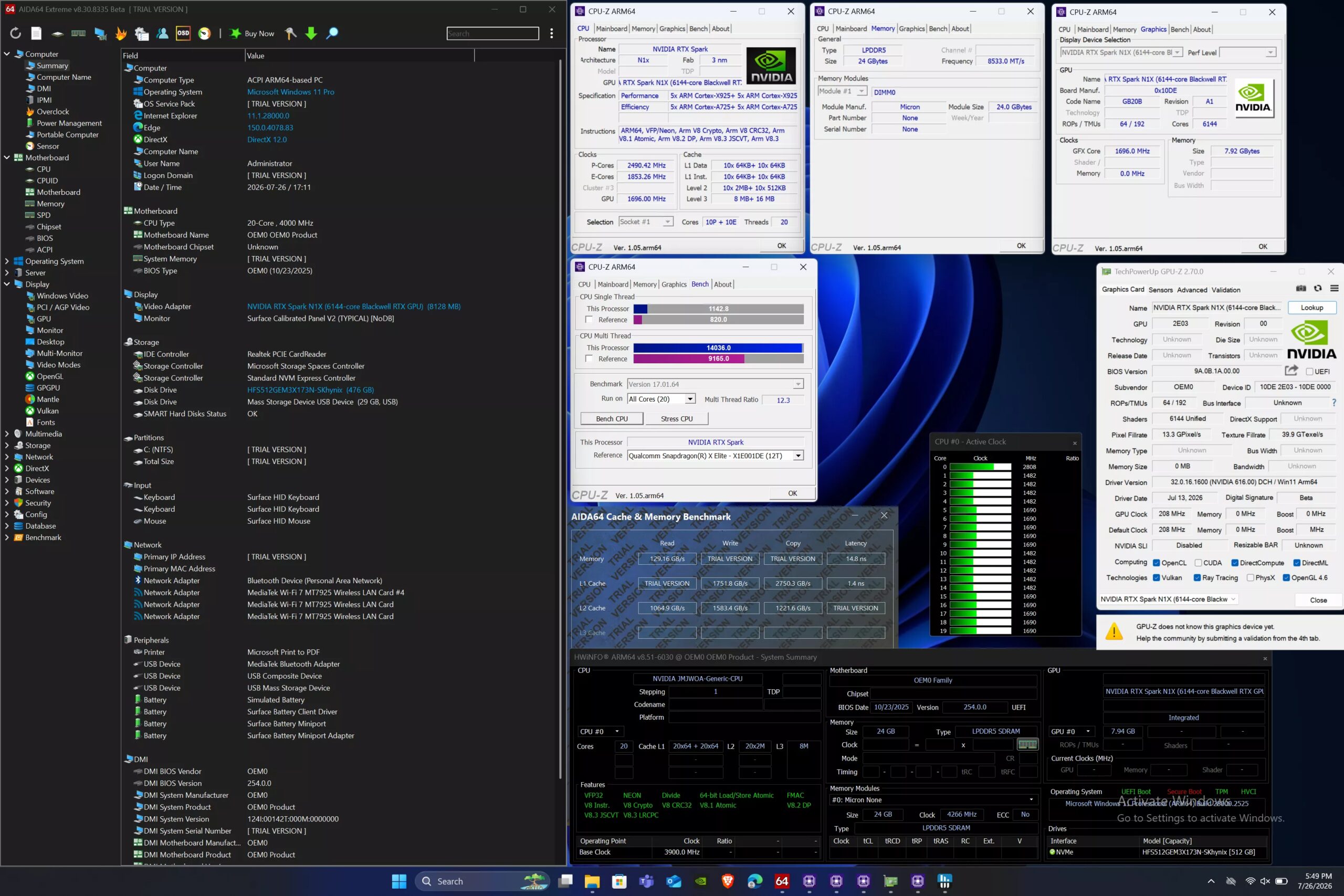
Microsoft’s hardware presentation is expected to include the Surface Laptop Ultra, a high-end mobile workstation designed to execute complex machine learning workloads directly on the device instead of relying on remote data centers. Built on Nvidia’s RTX Spark platform, the laptop is engineered to deliver up to one petaflop of AI compute performance.
The system can be configured with up to 128 gigabytes of unified memory. By pairing that high-bandwidth unified memory with petaflop-scale GPU acceleration, Microsoft is targeting local execution of large language models, generative image synthesis, and specialized developer frameworks.
The Surface Laptop Ultra remains in pre-release status. Microsoft has not published official pricing or a global release date, and final commercial availability remains contingent on pending regulatory approvals.
The focus on local hardware follows Microsoft’s initial “Copilot+ PC” initiative, which the company unveiled at its Redmond, Washington headquarters in May 2024. That strategy centered primarily on high-efficiency, Arm-based silicon developed with Qualcomm Inc.
Those processors used Snapdragon X series chips equipped with dedicated Neural Processing Units, or NPUs, capable of delivering at least 40 trillion operations per second (TOPS). The first Copilot+ PCs were aimed at thin-and-light consumer laptops optimized for day-long battery life and lighter local tasks, including real-time audio translation and basic image generation.
The Nvidia collaboration is aimed at a substantially higher compute tier. Running AI operations on local hardware offers enterprise and developer environments reduced latency, protection against internet outages, eliminated cloud processing fees, and stricter data privacy controls that prevent sensitive telemetry from leaving the physical device.
The Oct. 7 gathering takes place as the broader PC market undergoes a sustained transition toward dedicated AI hardware acceleration. Chipmakers including Intel Corp. and AMD Inc. are also rolling out processors with expanded AI capabilities.
Microsoft has not disclosed whether the San Francisco program will introduce additional Surface models or unveil upcoming Windows operating system updates beyond the demonstration of local compute applications.





One Comment