Grand Soleil Plus 80 LC Debuts With Hybrid Power and Telescopic Keel
The 80-foot sailing yacht integrates Torqeedo hybrid propulsion, a telescopic keel, and centralized hydraulics for short-handed ocean cruising.
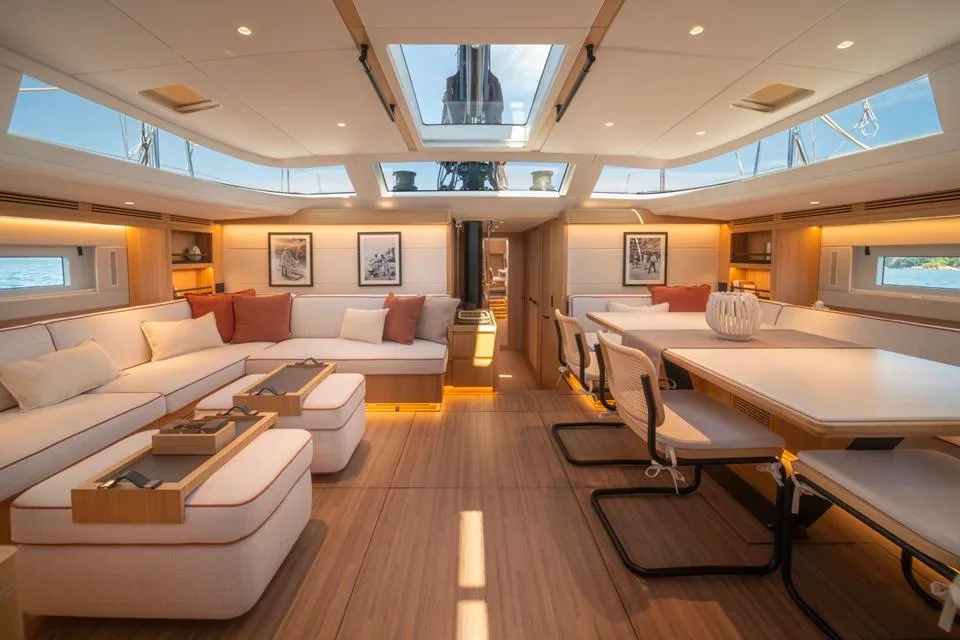
Cantiere del Pardo has unveiled the Grand Soleil Plus 80 Long Cruise, an 80-foot sailing yacht engineered around a centralized hydraulic architecture and a Torqeedo hybrid propulsion system. The vessel debuted at the Genoa Boat Show, positioning itself in a segment of the luxury marine market where owners increasingly demand motor-yacht amenities without sacrificing wind-driven performance.
The Italian shipyard built the GS Plus 80 LC entirely in-house, from hull lamination through launch. Maintaining production under one roof allows Cantiere del Pardo to integrate complex mechanical systems directly into the composite structure during manufacturing rather than retrofitting them later, a critical requirement for a vessel carrying this density of automated equipment.



Naval architect Matteo Polli designed the hull lines with a focus on lowering the center of gravity. On an 80-foot monohull, weight distribution dictates whether the vessel tracks predictably or requires constant helm correction. Polli engineered the layout to maintain hydrodynamic stability across varying load states, ensuring consistent handling whether fuel tanks, water reserves, and provisions are fully stocked for an ocean crossing or depleted during coastal cruising. A telescopic keel further enhances this versatility, allowing the yacht to access shallow anchorages that typically restrict vessels of this displacement while maintaining deep-draft stability when deployed offshore.
Deck operations rely on a single integrated hydraulic network. Rather than utilizing separate electric motors or manual winches for different functions, the system powers all winches, mast adjustments, sail plan controls, and the telescopic keel mechanism from one central source. This consolidation reduces mechanical complexity above deck, clears space for cockpit seating, and enables push-button sail handling. For a yacht approaching superyacht dimensions, such automation is necessary to operate the vessel safely with a limited professional crew or experienced owners.

Below the waterline, the energy architecture departs from traditional diesel-direct setups. Torqeedo supplied a hybrid platform combining propulsion and hotel load management. Two 40 kWh battery packs deliver 80 kWh of total storage capacity, driving the electric propulsion motors while simultaneously supplying onboard domestic power through converters and inverters. When configured for long-range autonomy, twin 45 kW generators recharge the banks underway. A dedicated secondary battery pack isolates essential navigation and safety services from the primary consumption loop, preventing a drained house bank from compromising critical systems.
This electrification trend mirrors broader shifts in the 70-to-90-foot sailing yacht category, where silent harbor maneuvering and zero-emission anchoring have become competitive necessities rather than experimental novelties. Unlike smaller daysailers adopting outboard-style electric pods, integrating high-capacity lithium banks into an 80-foot bluewater cruiser requires balancing substantial battery mass against Polli’s strict center-of-gravity parameters.

Nauta Design handled the exterior styling, interior architecture, and spatial layout. The Milan-based firm faced the specific challenge of compressing the volume expectations of a 100-foot superyacht into an 80-foot hull. Nauta CEO Massimo Gino noted the team optimized freeboard heights and cabin dimensions to accommodate full-size galleys, expansive sail lockers, and owner suites without raising the topside profile enough to compromise windage or aesthetic proportions. The collaboration between Nauta and Cantiere del Pardo spans decades, originating with earlier Grand Soleil racing models before evolving into the current luxury cruising lineup.

The GS Plus 80 LC enters a market historically dominated by Northern European semi-custom builders like Oyster Yachts and Southern Wind, both of which produce 80-foot composite sloops targeting similar transoceanic buyers. However, the Grand Soleil distinguishes itself through its fully integrated hydraulic deck package and the standardized Torqeedo hybrid architecture, features often treated as expensive custom options by competing yards.

Cantiere del Pardo continues to expand the Plus line following the Genoa debut, with the first hull now undergoing sea trials off the Italian coast.