L’Oréal Pushes 20% of Ad Spend to AI as Search Evolves
The beauty giant is standardizing product data and testing ads inside AI chatbots as consumer search habits shift away from traditional results pages.

L’Oréal now directs nearly one-fifth of its total marketing investment through artificial intelligence systems, a structural shift that is forcing the world’s largest beauty company to rebuild how brands are discovered online.
The Paris-based consumer goods giant, which generated over $44 billion in revenue last year across brands including Maybelline, Lancôme, and CeraVe, has moved beyond using generative tools for content creation. The company is actively testing advertising placements inside Google’s AI Overviews and working directly with OpenAI, Amazon, and Alibaba to ensure its products surface when consumers ask large language models for recommendations.
That pivot reflects a broader disruption in digital commerce. Traditional search engine optimization relied on keyword matching and backlink authority to push a brand to the top of a list of blue links. Generative-engine optimization, or GEO, requires companies to structure product data so AI systems can parse scientific claims, ingredient lists, and contextual use cases as authoritative answers. A sunscreen listed merely as SPF 50 in a database behaves differently in an AI query than one described by the specific outdoor conditions where a consumer would apply it.


Rather than compressing the path to purchase, conversational AI is lengthening it. Internal tracking at L’Oréal shows that product searches taking shoppers a few minutes on traditional search engines now stretch to roughly 11 minutes as users engage in back-and-forth dialogue with AI interfaces. With more than a billion people globally already using these platforms to plan travel, events, and daily routines, the extended engagement window demands a higher volume of credible, structured information from brands.
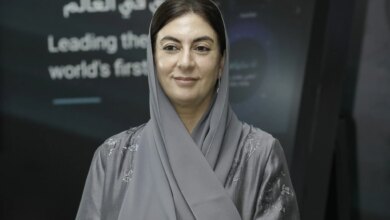
Managing this transition required dismantling long-standing corporate silos. Chief Digital and Marketing Officer Asmita Dubey, who joined the company after starting her career in Indian advertising in 1997, merged the marketing, data, and IT departments into unified teams tasked with evaluating the company’s underlying technology architecture. The integration addresses the complexity of coordinating hundreds of external agencies, each deploying different software-as-a-service tools for customer relationship management, media buying, and analytics.
Standardizing advertising accounts and product catalogs across Meta and Alphabet platforms became a prerequisite for AI readiness. Without uniform data pipes, machine learning models cannot accurately measure return on investment or serve dynamic creative at scale.
L’Oréal built an internal intelligence platform that allows employees to query decades of accumulated beauty research conversationally. Product formulation and development teams now rely heavily on these datasets, while creative departments use generative models for image, text, and video production. Return-on-investment measurement across the organization is already driven primarily by machine learning.
To prevent leadership from treating the technology as an abstract concept, the company recently required its 20 most senior executives to build an advertising campaign from start to finish using only AI tools. The mandate was designed to expose decision-makers to the practical friction and capabilities of the systems reshaping their industry.
Dubey, whose academic background is in mathematics and statistics, first shifted toward data-driven media planning when desktop computing entered agency workflows in the late 1990s. She subsequently managed the company’s transitions through e-commerce, programmatic search, TikTok, and social listening before the current generative wave.
L’Oréal’s technology integration accelerated significantly following its 2018 acquisition of ModiFace, a Canadian augmented reality company. That deal anchored the brand’s virtual try-on infrastructure, which now processes millions of shade-matching interactions monthly and serves as a foundational data layer feeding newer predictive AI models.