Scimplify Raises $25M to Build AI Chemical Supply Chains
Hitachi Ventures led the all-equity round as the startup targets U.S. expansion and rare earth material production.
Bengaluru-based startup Scimplify has secured $25 million in new equity funding as U.S. and allied manufacturers accelerate efforts to source specialty chemicals and critical materials outside China. The all-equity round was led by Hitachi Ventures, with industrial customers Henkel and Teknor Apex joining as first-time investors. Existing backers Accel India, Bertelsmann India Investments, Omnivore, and 3one4 Capital also participated.
A person familiar with the transaction said the investment values the company at $250 million, a sharp increase from the $150 million valuation established during its $40 million Series B round in March 2025. Total equity funding now stands at $80 million.
The capital arrives as Western governments intensify supply chain security mandates. The U.S. CHIPS and Science Act and recent Department of Defense directives have pushed electronics and defense contractors to eliminate single-country dependencies for advanced precursors. Unlike commodity chemicals produced in massive continuous volumes, specialty chemicals are manufactured in smaller, highly customized batches requiring precise formulations. This complexity historically made shifting production away from entrenched Chinese suppliers prohibitively slow and expensive.
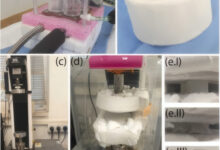

Scimplify attempts to collapse that timeline using a proprietary platform called Scinode. Rather than operating heavy manufacturing plants itself, the company functions as an asset-light orchestrator. Its in-house scientists and engineers develop chemical synthesis routes at research facilities in Bengaluru and Hyderabad. Scinode then deploys specialized artificial intelligence agents to match those processes with qualified external factories, track regulatory compliance, and monitor quality control parameters across a network exceeding 500 partner facilities.
Co-founder Sachin Santhosh stated that this architecture has reduced the cycle from receiving customer specifications to delivering finished materials to roughly two months, compressing an industry standard that typically spans 12 to 18 months. That speed addresses a critical bottleneck: while computational chemistry tools have rapidly accelerated molecular discovery in laboratories, scaling those discoveries into commercially certified production runs remains a persistent hurdle for the global materials sector.
Approximately 90% of Scimplify’s manufacturing currently occurs within India, leveraging the country’s established pharmaceutical and agrochemical infrastructure. The company plans to deploy about $7.5 million from the new round to build out a U.S. manufacturing network over the next year, alongside an expansion into Japan. Another $2 million is earmarked for further development of the Scinode platform.
The geographic pivot reflects a broader shift in the company’s revenue base. Customers outside India now generate more than half of total revenue, compared to less than 5% eighteen months ago. The U.S. market alone has seen its annualized revenue run rate climb sixfold over the past year to approximately $60 million, representing roughly 30% of overall business.
Total annualized revenue has reached $200 million, tripling year-over-year across a client base exceeding 1,000 companies in more than 40 countries. The firm targets $400 million in annualized revenue over the next twelve months. Financially, Scimplify has recorded positive earnings before interest, taxes, depreciation, and amortization for the past two months and expects to achieve net profitability this month.
Growth is increasingly driven by strategic sectors rather than traditional industrial applications. Energy, electronics, and defense now account for 45% to 50% of revenue, up from under 15% a year prior. The surge aligns with rising global demand for advanced thermal management compounds, semiconductor-grade solvents, and battery electrolytes required for artificial intelligence data centers and grid-scale energy storage.
To address specific vulnerabilities in these sectors, Scimplify is developing processes to extract tungsten derivatives from scrap material and is actively working on rare earth elements. Both categories remain overwhelmingly controlled by Chinese mining and refining operations, leaving Western aerospace, defense, and electronics manufacturers exposed to export restrictions.
Current customers include Japanese electronics manufacturer TDK, German chemicals group BASF, and investor Hitachi. Santhosh cited ongoing work with TDK as evidence of the platform’s ability to shorten delivery timelines for highly specific electronic materials.
Scimplify employs approximately 340 people, including around 70 scientists. While the majority of the workforce remains in India, the company maintains local teams in the U.S., Japan, Indonesia, and the United Arab Emirates to support its expanding international client roster.