FBI Arrests OpenAI Employee Over Hidden Recording Device
The encrypted device was found during a routine sweep by OpenAI's technical surveillance countermeasures team.

A Saudi national working at OpenAI is in federal custody after the FBI charged him with planting a sophisticated listening device inside one of the artificial intelligence company’s San Francisco conference rooms. The arrest exposes vulnerabilities in physical security protocols at frontier AI labs, where proprietary model weights and unreleased product roadmaps represent some of the most heavily guarded intellectual property in the technology sector.
OpenAI’s internal technical surveillance countermeasures team discovered the hardware on Sept. 30 during a routine sweep. Federal investigators said the device was plugged into a USB port on the back of a conference room television and concealed behind a small piece of toilet paper. Rather than a simple audio recorder, authorities described a system equipped with advanced encryption, real-time audio monitoring capabilities, and a dedicated data transfer mechanism designed specifically to evade standard electronic sweeps.
The sophistication of the hardware distinguishes this incident from typical corporate espionage cases involving disgruntled employees or careless contractors. Physical bugs capable of encrypted exfiltration are generally associated with state-sponsored intelligence operations or highly organized industrial espionage networks. While the FBI has not publicly attributed the device to any foreign government, the suspect’s citizenship and employment inside a company that builds critical infrastructure for U.S. defense and intelligence agencies elevates the investigation beyond a standard workplace privacy violation.

Silicon Valley companies have historically prioritized cybersecurity over physical counterintelligence. However, as generative AI models become central to national security and global economic competitiveness, firms like OpenAI, Anthropic, and Google DeepMind are increasingly adopting security architectures resembling those of defense contractors. Technical surveillance countermeasures teams—commonly known as TSCM units—are specialized groups trained to detect covert listening devices, wiretaps, and hidden cameras. Their routine deployment inside commercial tech offices reflects a broader industry shift toward treating AI development facilities as high-security environments.
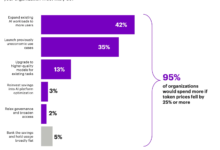
The breach occurred against a backdrop of mounting financial pressure for leading AI developers. Recent analysis by Wells Fargo indicates that combined revenue growth for OpenAI and Anthropic is decelerating even as overall token usage continues to climb. Analysts attribute the slowdown to plateauing token costs, as enterprise customers increasingly route standard workloads to cheaper, commoditized models rather than paying premium rates for frontier systems. Both companies are reportedly preparing for initial public offerings, making any disruption to their operational security or growth narratives particularly sensitive for prospective investors.
Corporate espionage targeting AI laboratories has accelerated globally as the gap between leading models narrows. Unlike traditional software theft, which often targets source code, modern AI espionage frequently focuses on training methodologies, dataset curation strategies, and unreleased benchmark results. A compromised conference room at a frontier lab could yield strategic insights worth billions of dollars to competitors or foreign governments seeking to bypass years of research and development.
The suspect was taken into custody Tuesday following an investigation initiated immediately after OpenAI reported the discovery to federal authorities. The FBI has not yet disclosed whether the device successfully transmitted data before its detection, what specific meetings took place in the targeted room, or whether additional suspects are being sought.