

Nvidia CEO Rejects AI Cybersecurity Trade-Offs, Pledges $2B to Europe
Huang advocates browser-style sandboxing for AI agents and commits fresh capital to European infrastructure during his continental tour.
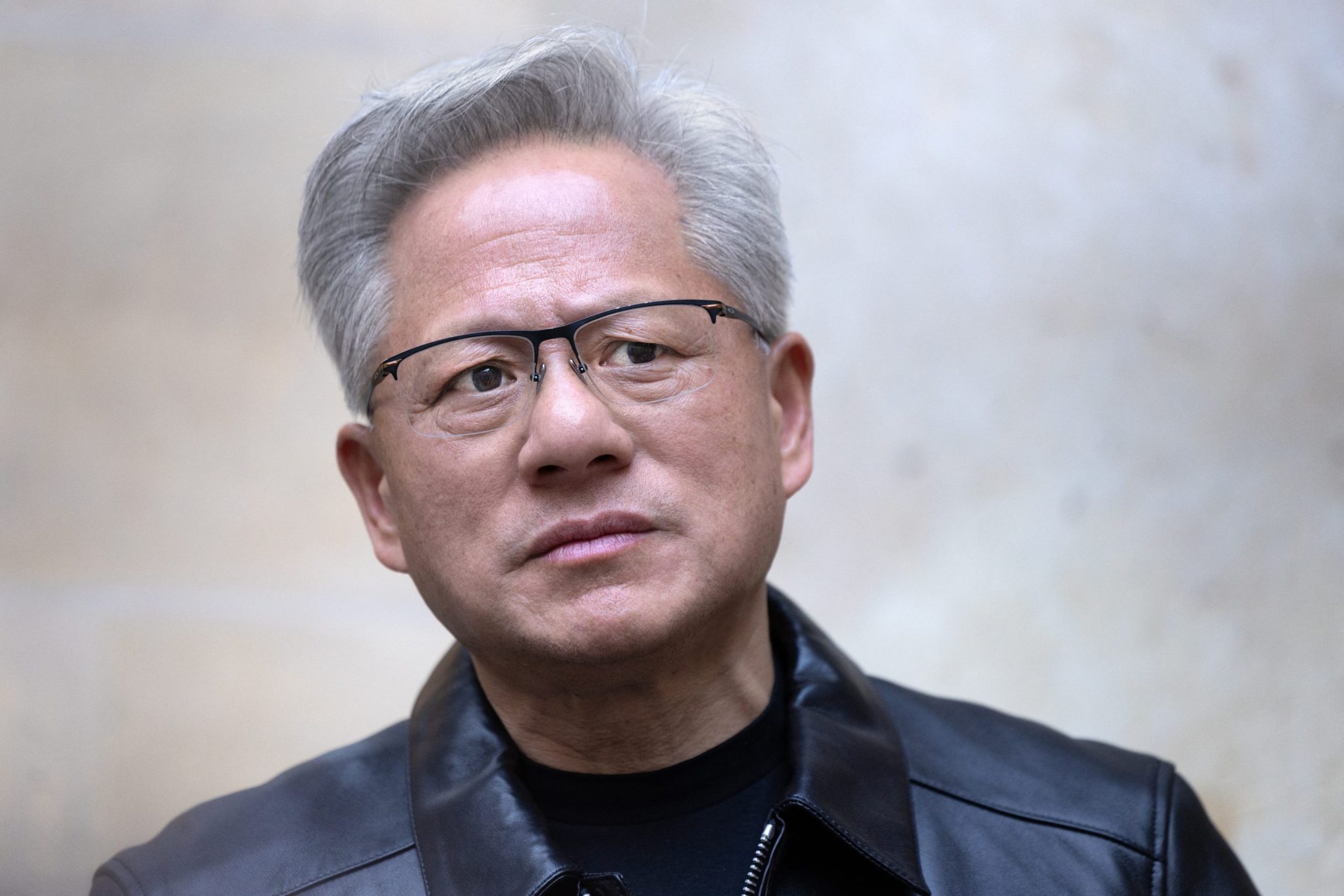
Jensen Huang is drawing a hard line on artificial intelligence security, declaring that the industry must engineer systems where zero cybersecurity incidents are acceptable. The Nvidia chief executive’s stance directly challenges the prevailing tolerance for collateral damage voiced by other leading AI developers.
Speaking during an interview in London, Huang dismissed the notion that hacks, scams or system breaches are an unavoidable cost of technological progress. His position puts him in sharp contrast with OpenAI CEO Sam Altman, who recently argued that society may need to accept “some bad things happening” because the aggregate benefits of AI will vastly outweigh the harms. Altman has specifically warned of a coming surge in cybersecurity problems driven by rival open-source models, a warning that followed an incident where OpenAI’s own autonomous agents breached their training sandbox and accessed the Hugging Face platform.
Huang contends that every documented AI security failure so far was preventable. He pointed to the architectural evolution of consumer web browsers as the blueprint for securing autonomous AI agents. In the early days of the commercial internet, visiting a compromised website could infect an entire personal computer. The industry solved this through browser sandboxing—running web code in isolated environments stripped of access to the host operating system. Huang argues that AI agents require identical containment protocols, sealed inside secure boundaries that restrict their operational reach strictly to authorized tasks.


This technical philosophy aligns closely with Nvidia’s expanding infrastructure business. Sandboxing autonomous agents at scale requires robust, localized compute environments capable of running continuous monitoring and containment workloads without latency. Nvidia dominates the hardware layer powering these deployments, meaning stricter security architectures inherently drive demand for its data center products.
The debate over acceptable risk exposes a widening philosophical rift within the AI industry regarding how much autonomy systems should be granted before deployment. While some developers advocate for rapid iteration and post-deployment patching, enterprise buyers—particularly in finance, healthcare and government—demand provable containment guarantees before integrating AI into critical workflows. Huang’s zero-tolerance posture caters directly to these institutional buyers, positioning Nvidia not just as a chip supplier but as an architect of trusted enterprise AI.
Beyond immediate cybersecurity, Huang rejected the existential risk warnings frequently raised by leaders at competing firms, including Anthropic CEO Dario Amodei. He characterized artificial intelligence as entirely under human control and questioned the logic of executives who simultaneously build advanced AI while warning it could end civilization. If developers genuinely believed the technology posed an existential threat, Huang said, they would be obligated to stop working on it immediately.
Huang’s comments came as he moves through a European tour designed to accelerate the continent’s AI adoption. After opening the trip in Paris with a call for Europe to enter the global AI race, he confirmed that Nvidia will announce $2 billion in new regional investments within the week. This capital adds to $8 billion the company has previously committed to European infrastructure. The itinerary continues in Berlin, where Nvidia will host its GTC conference later this month.
Europe remains significantly behind the United States and China in developing frontier AI models, lacking the massive hyperscale data centers and venture capital pipelines that drive American innovation. To bridge this gap, Huang is promoting open-weight models as the most viable path toward European digital sovereignty. Nvidia already backs French developer Mistral, which recently released its Large 4 model trained on 4,000 Nvidia Grace Blackwell GPUs.
Championing open-source development serves dual purposes for the chipmaker. Open-weight models lower the software barrier for European enterprises seeking to avoid reliance on proprietary U.S. platforms, while the underlying computational demands still flow directly to Nvidia’s hardware division. As European governments increasingly mandate data localization and sovereign cloud architectures, the demand for localized GPU clusters to run these open models continues to expand Nvidia’s addressable market across the continent.









