Hyundai’s 50,000-Robot Pledge Anchors Boston Dynamics’ Scale Push
Parent company Hyundai guarantees massive deployment volumes while supplying actuators at cost to slash humanoid manufacturing expenses.
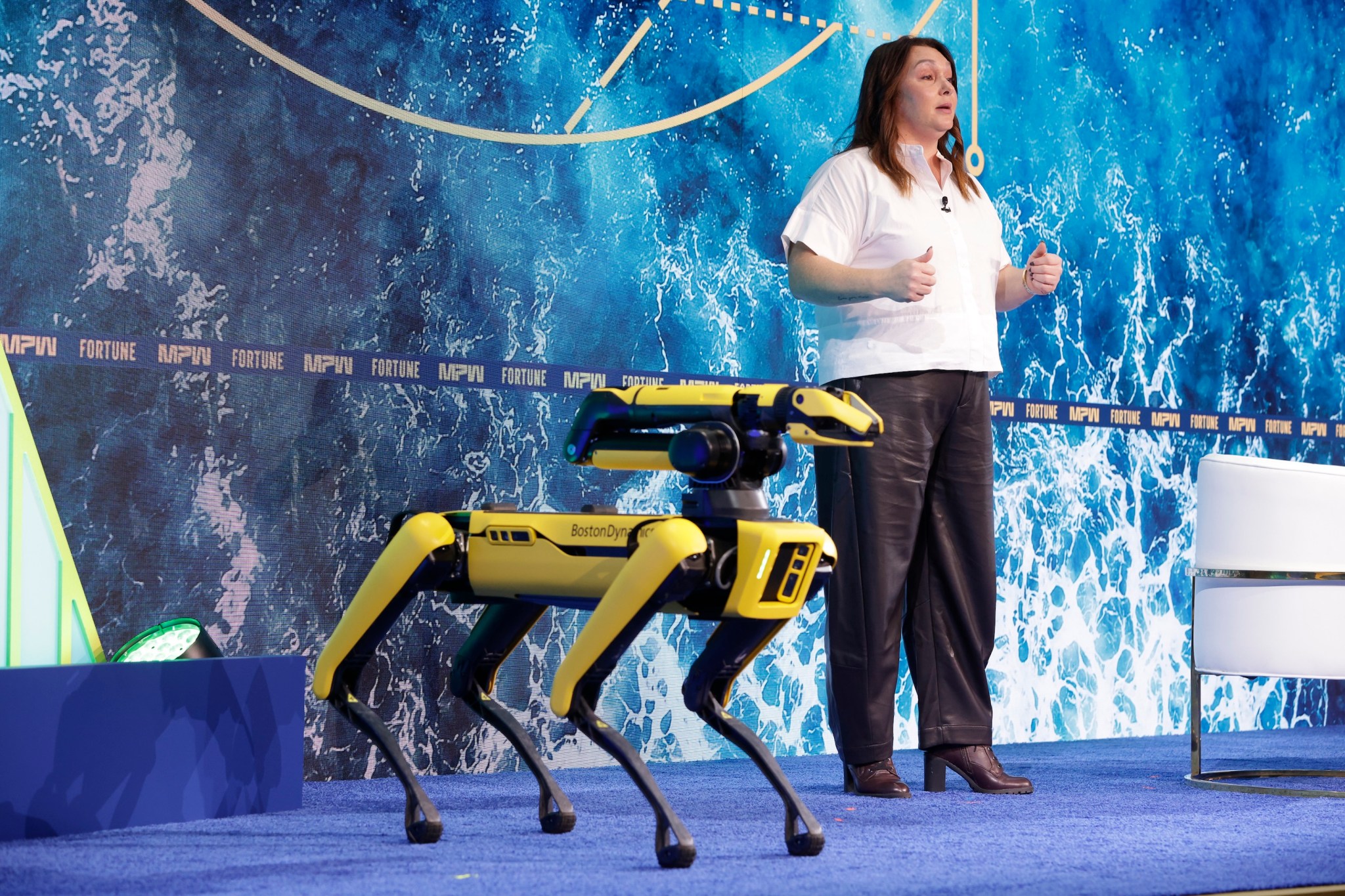
Boston Dynamics secured a commitment from parent company Hyundai to deploy roughly 50,000 robots across Hyundai Motor and Kia manufacturing plants, establishing a guaranteed industrial customer base before its humanoid Atlas enters broader commercial distribution. The deployment volume provides the production certainty required to drive down unit costs for machines that currently remain prohibitively expensive for most buyers.
The agreement surfaced during remarks by Amanda McMaster, who served as Boston Dynamics’ interim chief executive from February until Oct. 7, when Rohit Prasad assumed the role. Speaking at the Fortune Most Powerful Women Summit last week, McMaster outlined how the Waltham, Massachusetts-based robotics firm is pivoting from viral engineering demonstrations toward repeatable enterprise sales, according to Fortune.
Actuators account for approximately 70% of the bill of materials on an Atlas robot. Hyundai Mobis will manufacture those components at cost, McMaster said. That supply chain integration represents the core mechanism for achieving the price reductions necessary to move humanoids out of research labs and onto factory floors globally.


Commercial traction currently rests on Spot, the company’s quadruped platform. Base units sell for about $100,000, with prices reaching $300,000 depending on sensor payloads and attachments. Intel ranks among the largest purchasers, deploying the machines for inspections in semiconductor fabrication plants. Spot also operates in food and beverage production facilities and public safety environments. Customers navigate facility data collected by the robots through Orbit, a software platform McMaster compared to a searchable Google Street View for industrial sites.
McMaster reorganized the entire company two weeks into her interim tenure. “We have been very slow to make it,” she said, describing the decision to overhaul operations immediately rather than wait. She spent six years as chief financial officer before stepping into the top job, building out service infrastructure and sales leadership during a period when inbound demand threatened to plateau without outbound prospecting.
Prasad inherits that commercial architecture alongside the Hyundai manufacturing pipeline. A former Amazon senior vice president who led Alexa and artificial general intelligence initiatives, he faces the task of integrating advanced AI models with physical hardware capable of surviving unstructured industrial environments.
The push to scale arrives as the broader technology sector accelerates automation investments. Anthropic reported Oct. 16 that AI agents directed by its employees logged six times as many working hours as the staff themselves by August. Junior technical roles at the five-year-old company fell from 27% to 9% of new hires, with managers prioritizing autonomy over narrow expertise.
Executive turnover continues to reshape leadership rosters across industries this month. Jennifer Hamann, executive vice president and chief financial officer of Union Pacific (NYSE: UNP), will retire in early 2027 after 35 years with the railroad, having become the first woman to hold the finance post in January 2020. At Emergent BioSolutions (NYSE: EBS), Frank Vargo was appointed interim CFO effective Jan. 1, 2027, succeeding Richard S. Lindahl, who retires Dec. 31 but remains as a senior executive advisor through March 31.