How U.S. Universities Are Changing AI Rules, Degrees and Student Assessments
Purdue requires AI coursework, while New College students must defend AI-assisted senior theses before faculty.

U.S. universities are moving from bans on generative artificial intelligence toward rules for its use in coursework, new ways to verify students’ understanding and, in some cases, mandatory AI instruction. The changes are also reaching campus administration as institutions adopt automated tools and employers shift the skills they seek in college graduates.
Purdue University in West Lafayette, Indiana, has made AI literacy a core graduation requirement for incoming freshman cohorts. Students across undergraduate majors must take coursework on both the practical applications and ethical considerations of generative computing systems.
Universities are also using machine learning algorithms and automated systems in recruitment pipelines, targeted student marketing, human resource administration and enrollment data processing, aiming to reduce operational costs and administrative overhead. New College of Florida President Richard Corcoran said AI implementation in these areas has improved institutional efficiency.
At New College, a public liberal arts honors institution in Sarasota, undergraduates may use AI applications to research and draft their mandatory senior theses. They must then defend their work orally before a panel of three faculty members, a requirement intended to test independent comprehension.

Corcoran served as Florida’s Commissioner of Education from 2019 to 2022 and Speaker of the Florida House of Representatives from 2016 to 2018. He said AI software can help students compile research and produce preliminary drafts, but that assessment must establish whether they understand the work themselves.
“AI can help you draft that document,” Corcoran said. “It cannot help you defend it standing before three professors.”
The policy shift follows the initial bans many universities enacted after advanced large language models became publicly available in late 2022. Academic leaders are now developing structured frameworks to define how AI tools can be legally incorporated into research and drafting, alongside verification measures designed to preserve students’ critical thinking and analytical abilities.
Employers’ growing use of generative software to automate entry-level technical tasks—including basic computer programming, data entry, routine copy drafting and preliminary document analysis—is also changing hiring standards for college graduates.
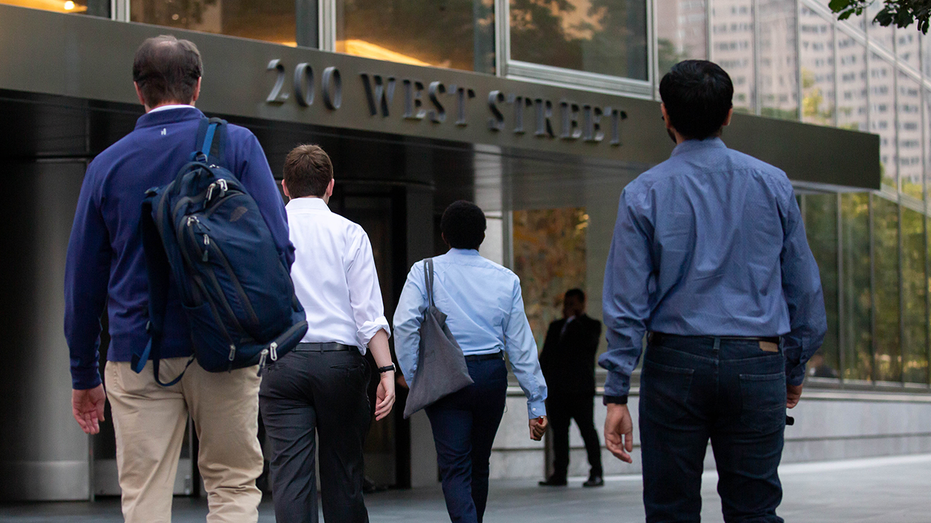
Corporate recruiters and higher education boards are placing greater emphasis on interpersonal communication, creative problem-solving and verbal reasoning. Higher education officials say curriculum designs are being modified to give students both technical familiarity with emerging software and foundational critical thinking skills that automated systems cannot replicate.