Germany’s Solar Panels Hold €4.8 Billion in Raw Materials as Recycling Capacity Outpaces Waste Returns
Recycling facilities operate at less than 20% utilization despite €4.8 billion in recoverable silver and aluminum embedded in national solar infrastructure
Photovoltaic modules currently installed across Germany represent a strategic reserve of critical minerals worth approximately €4.8 billion ($5.4 billion), according to new analysis by the Fraunhofer Center for Silicon Photovoltaics. The assessment, commissioned by the German Mineral Resources Agency (DERA), identifies 5.35 million metric tons of material stock embedded in the national solar fleet as of late 2023, positioning decommissioned panels as a significant domestic source of silver, aluminum, and silicon.
The economic case for recovery is driven primarily by precious metals and base alloys rather than the semiconductor material itself. The existing installed base contains an estimated 3,900 tons of silver and 663,000 tons of aluminum. Silver remains the most strategically sensitive component; the global photovoltaic sector consumed 19.3% of total silver production in 2023 alone. Recovering this metal from end-of-life modules could buffer supply chains against volatility in primary mining output, though current industrial processes prioritize bulk materials over high-value trace elements.
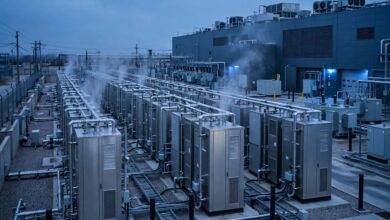
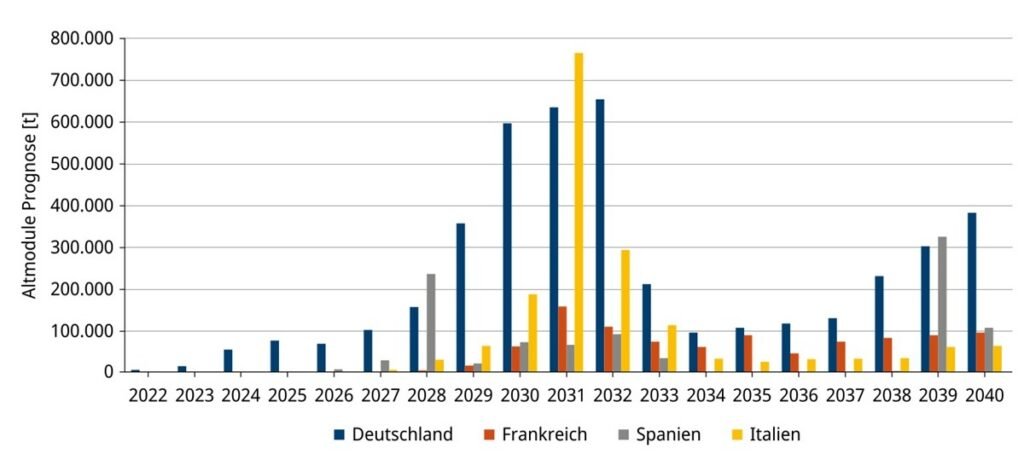
Despite the theoretical value, a logistical disconnect has emerged between available recycling infrastructure and actual waste streams. German facilities possessed over 50,000 tons of processing capacity for crystalline silicon modules in 2024, yet only 9,300 tons of decommissioned panels entered initial processing. This utilization gap contradicts earlier projections that anticipated a surge in waste volumes approaching 600,000 tons annually by 2030.

Researchers attribute the shortfall to several market distortions, including the export of used functional modules to secondary markets outside the European Union. This reuse pathway extends product lifecycles but removes feedstock from domestic recycling loops, complicating capacity planning for processors who invested based on linear depreciation models. The study advises against further immediate infrastructure expansion, recommending instead that new capacity be calibrated to verified return flows rather than installed-base forecasts.
Technical recovery rates for crystalline silicon modules are already mature. Industrial-scale operations in Germany achieve material recycling rates near 85% and overall recovery rates exceeding 95%. Glass, aluminum, and copper are routinely extracted, while silver requires additional refining steps. Silicon wafers, despite comprising 208,000 tons of the national stock, are generally not recovered due to contamination levels and processing costs; they are typically downcycled or thermally treated alongside plastic encapsulants.
Thin-film technologies present a different recovery profile. Cadmium telluride (CdTe) and CIGS modules contain indium, gallium, selenium, and tellurium—materials classified as critical by the EU. However, these technologies constitute a minor fraction of Germany’s installed capacity compared to dominant crystalline silicon architectures, limiting their near-term impact on aggregate recycling economics.
Long-term modeling suggests Germany will require approximately 300,000 tons of annual recycling capacity by 2040 to manage eventual decommissioning waves. To bridge the interim period of low returns without creating stranded assets, the report recommends establishing interim storage protocols for decommissioned modules. This approach would allow processors to smooth out feedstock variability while preserving the optionality of future capacity additions aligned with actual market maturation.