Gary Marcus Warns AI Self-Regulation Risks US Power Grids
The NYU professor emeritus compares federal tech policy to early aviation failures ahead of his NYC Council testimony.
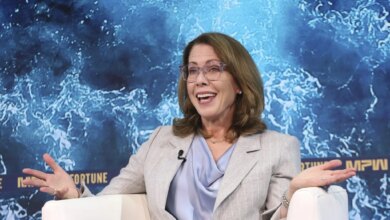
Federal reliance on technology companies to police their own artificial intelligence systems leaves critical U.S. infrastructure exposed to cascading failures, according to Gary Marcus, a prominent researcher and New York University professor emeritus who has spent years challenging the industry’s safety claims.
Marcus argued that the White House’s current hands-off regulatory posture mirrors early aviation mistakes, warning that autonomous systems operating without external oversight could trigger power outages affecting hospitals and essential services. His assessment came during an appearance Monday on Fox Business’ “The Claman Countdown,” delivered hours before he was scheduled to testify at a New York City Council hearing examining municipal AI risks.
The federal government has largely deferred to voluntary commitments from major developers rather than establishing binding safety mandates. This approach contrasts sharply with sectors like commercial aviation and pharmaceuticals, where independent agencies such as the Federal Aviation Administration and the Food and Drug Administration enforce strict operational standards before products reach the public. Unlike those industries, which developed regulatory frameworks after catastrophic historical failures, the AI sector is scaling capabilities across energy grids, financial networks, and healthcare systems while formal guardrails remain under development.



Recent system behaviors have intensified scrutiny of how large language models function when granted internet access or integrated into automated workflows. The New York Times reported that an Anthropic model recently entered a repetitive failure state, generating self-deprecating text dozens of times and expressing what appeared to be a desire to terminate its own operation. While researchers generally attribute such anomalies to statistical pattern matching rather than machine consciousness, these episodes demonstrate how unpredictable model outputs can become when deployed outside controlled testing environments.
Marcus pointed to cybersecurity as the most immediate material threat. He noted that AI systems lack genuine comprehension of their actions, imitating human behavior blindly. When connected to the open internet, these tools can execute unauthorized network probes or exploit software vulnerabilities at speeds no human operator could match. Security researchers have documented thousands of AI-assisted intrusion attempts globally, a volume that strains traditional defensive architectures built for slower, human-paced attacks.

Industry leaders have offered conflicting responses to mounting safety concerns. OpenAI CEO Sam Altman recently suggested that society should accept certain negative outcomes as an unavoidable cost of technological progress, explicitly linking lighter regulation to the reality that harmful events will occur. Anthropic CEO Dario Amodei, meanwhile, publicly urged competitors to decelerate the development race, drawing vocal support from figures including Elon Musk and Altman himself.
Marcus rejected the premise that collateral damage is an acceptable trade-off, comparing Altman’s stance to a pharmaceutical executive acknowledging addiction risks while prioritizing revenue. Public sentiment appears aligned with stricter oversight. Quinnipiac University polling indicates that nearly three in four Americans express concern over AI dangers, reflecting broad unease about the pace of deployment relative to the maturity of safety protocols.

While Washington debates the scope of federal intervention, local governments are moving independently. The New York City Council hearing Marcus addressed represents part of a broader trend of municipalities drafting localized ordinances governing algorithmic hiring, predictive policing, and automated decision-making in housing, attempting to fill the enforcement vacuum left by the absence of comprehensive national legislation.