Washington Deploys 1974 Trade Law to Enforce Global Tariffs Over Forced Labor Standards
Sweeping 10% to 12.5% import duties take effect against more than 60 economies as foreign partners and domestic industries clash over enforcement claims.
The Trump administration has enacted new double-digit tariffs hitting more than 60 economies worldwide, turning to a decades-old statute to impose import penalties on trade partners accused of failing to curb forced labor.
The newly applied duties—set at either 10% or 12.5%—affect nations that collectively account for 99% of U.S. imports. The measure replaces an expiring temporary 10% global baseline duty, which itself was instituted after the Supreme Court invalidated a prior broad tariff policy in February. Under U.S. constitutional law, authority over foreign commerce and tariffs primarily rests with Congress under Article I, Section 8, prompting presidential administrations to increasingly rely on statutory delegations like trade remedies to adjust import duties executive-side.
To bypass legislative authorization, officials invoked Section 301 of the Trade Act of 1974. The statute gives the executive branch broad latitude to penalize foreign practices deemed discriminatory or unreasonable. Historically, Section 301 served as a primary instrument during trade disputes in the 1980s and was heavily deployed during President Donald Trump’s first term to place duties on Chinese technology and manufacturing sectors, as well as foreign shipbuilding practices.
Barry Appleton, a law professor and co-director of New York Law School’s Center for International Law, noted that using Section 301 allows the executive branch to establish permanent trade penalties without seeking congressional approval, characterising the strategy as an effort to route around Capitol Hill.
The policy launch follows a four-month investigation by the Office of the United States Trade Representative (USTR), during which officials reviewed more than 2,100 public submission files, hosted two public hearing rounds, and held confidential discussions with affected trading partners. However, the administration provided minimal methodology explaining how specific tariff rates were calculated or how enforcement deficits were quantified across vastly different trade partners.
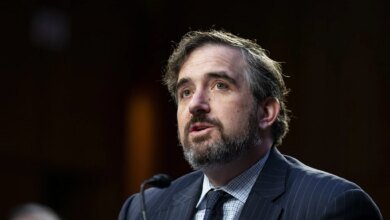
The lack of public criteria drew criticism from trade policy analysts. Scott Lincicome, vice president for general economics and trade policy at the Cato Institute, questioned the rationale of targeting developed economies with established labor standards, such as Norway, Switzerland, or members of the European Union, arguing there was little substantive evidence justifying the classifications.
Trading partners swiftly denounced the decision. Brazil, which was hit with a 12.5% penalty, labeled the action arbitrary and accused Washington of misusing global human rights objectives to justify trade restrictions. Australian Trade Minister Don Farrell also rejected the rationale behind his country’s 12.5% rate, defending Australia’s statutory record under its national modern slavery framework.
Former U.S. trade official Patrick Childress, now a partner at Holland & Knight, pointed out that even if affected countries adjust their domestic regulations, removing the Section 301 tariffs will require satisfying Washington’s subjective standards, leaving little prospect for immediate broad relief.
Domestic industries remain split over the trade action. While retail advocates called for structured enforcement assistance rather than broad duties, American manufacturers raised concerns over carve-outs. The National Council of Textile Organizations criticized exceptions granted to Bangladesh, Cambodia, Indonesia, and Malaysia based on their purchases of American cotton and raw textiles.
Kim Glas, chief executive of the textile trade group, emphasized that the domestic industry—which employs 453,000 workers—has suffered plant closures across 41 facilities over the past two years due to unfair global labor practices, warning that trade loopholes could undermine domestic producers.
Efforts to restrict forced labor in U.S. supply chains trace back to the Tariff Act of 1930, which prohibited imports made with forced labor but contained a major exception allowing goods if domestic supply failed to meet market demand. Congress closed that exception through the Trade Facilitation and Trade Enforcement Act of 2016, later strengthening restrictions through the Uyghur Forced Labor Prevention Act of 2021, which established a legal presumption against goods originating from China’s Xinjiang region.
Despite these statutory frameworks, illicit goods have repeatedly entered consumer markets. Past investigations revealed forced labor within Southeast Asian commercial fishing fleets serving major U.S. grocery chains in 2015, as well as widespread labor exploitation across the $65 billion global palm oil supply chain in 2020, impacting major consumer brand conglomerates like Unilever, L’Oreal, Nestlé, and Procter & Gamble.
At recent administrative hearings, industry groups including the National Retail Federation, represented by Jonathan Gold, argued that tackling global forced labor effectively requires clear, transparent enforcement benchmarks alongside technical assistance, rather than relying strictly on unilateral duty increases.