Data Explains Why Claims That Miami Is Pricier Than New York Are Misleading
Regional economic metrics reveal why surging South Florida inflation does not mean Miami real estate has surpassed Manhattan.
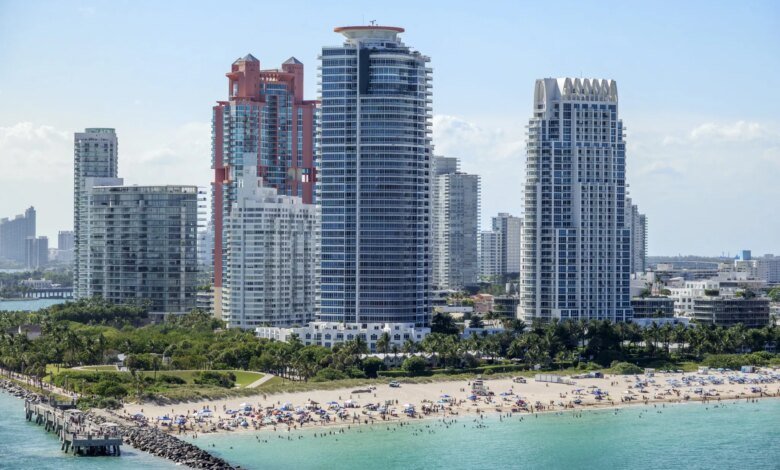
A recent wave of headlines stemming from Bureau of Economic Analysis (BEA) data suggested that Miami has surpassed New York City as an expensive place to live. However, economic indicators and real estate figures demonstrate that while South Florida is experiencing severe local affordability pressures, it has far from overtaken Manhattan in actual property value.
The distinction relies on how cost-of-living metrics operate. Rather than evaluating absolute prices, economic benchmarks weigh regional costs against local earnings. Because South Florida’s consumer price index has surged 36% since 2019—the highest increase of any U.S. metro region besides Tampa—local household budgets face severe strain from rising property insurance, transportation demands, tuition, and daily expenses. In contrast, higher local earnings baseline figures in New York absorb inflationary pressure differently, even though absolute price tags remain substantially higher.
According to Federal Reserve Bank of St. Louis figures, Manhattan recorded a median listing price of $1,489 per square foot in May 2026. By comparison, Miami-Dade County logged $465 per square foot during the same period. Even South Florida’s most exclusive territory presents lower property figures than Manhattan on average; Q1 2026 figures from real estate appraisal firm Miller Samuel show Fisher Island at $2,391 per square foot, remaining below Manhattan’s overall condominium benchmark of $2,431 per square foot.
The underlying dynamic is primarily about wage-relative purchasing power, according to Michelle Griffith, a real estate broker at Douglas Elliman. While local residents in South Florida face genuine affordability challenges across rent and everyday services, high entry barriers continue to set Manhattan apart.
Labor figures further illustrate the structural variance between the two regional economies. Over the 12 months through December 2025, the Bureau of Economic Analysis measures regional purchasing power and employment snapshots indicate that New York’s metropolitan area added 86,800 jobs, according to NYCEDC data. Bureau of Labor Statistics figures show Miami added 42,600 jobs over the same window. Because Miami operates on a smaller population base of 6.4 million compared to Greater New York’s nearly 20 million, Miami achieved a higher per-capita growth rate—adding roughly 6.7 jobs per 1,000 residents against New York’s 4.4—yet New York continues to generate double the total number of positions.
Major financial institutions reflect this dual strategy rather than a departure from New York. J.P. Morgan expanded its Florida operations to roughly 16,400 employees, but maintains its primary anchor in New York, where it employs over 20,000 people and recently opened a $3 billion, 2.5-million-square-foot flagship headquarters designed for 14,000 workers.
Luxury real estate activity in Manhattan also continues unabated. Data from the Olshan Luxury Market Report showed 27 contracts signed at $4 million or above during the week of July 13 to 19 alone. Industry experts emphasize that while South Florida remains an attractive secondary market or retirement destination, Manhattan retains fundamental advantages tied to concentrated corporate headquarters, diverse industries, and long-term asset security.