Nuclear Regulatory Commission Moves to Retire Decades-Old Radiation Safety Standard
Proposed regulatory overhaul would replace the ALARA philosophy with a structured graded framework as Washington seeks to accelerate nuclear development.
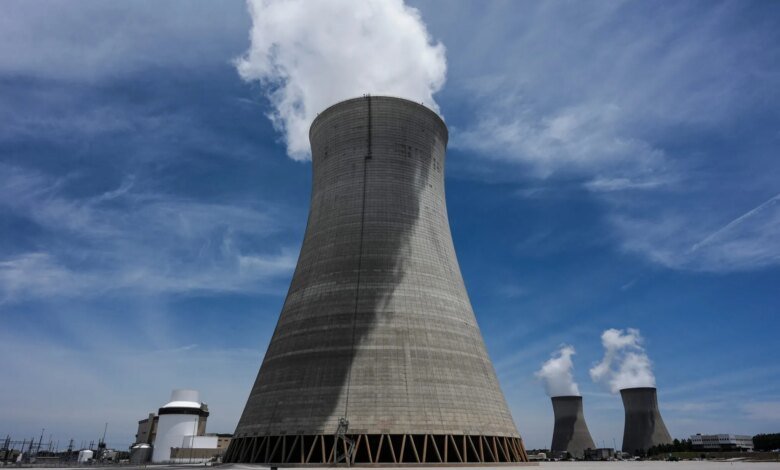
United States nuclear regulators are preparing to dismantle a half-century-old safety policy that has governed radiation exposure across power generation, medical diagnostics, and academic research, marking one of the most substantial regulatory shifts in domestic nuclear history.
Under a newly drafted rule change, the U.S. Nuclear Regulatory Commission (NRC) plans to discard the long-standing “as low as reasonably achievable” standard—universally known as ALARA—in favor of a risk-informed “graded approach.” While absolute legal exposure caps will remain unchanged, the regulatory philosophy that forced nuclear facilities to actively drive radiation exposure as far below those caps as practical will no longer be mandated.
The proposed overhaul coincides with an ambitious federal push by President Donald Trump to quadruple domestic nuclear energy capacity. Rapid expansion is being driven by burgeoning electricity demand from artificial intelligence infrastructure and large-scale data centers. Following an executive order directing agencies to institute “science-based radiation limits,” the Department of Energy has already phased out ALARA within its facilities. The NRC expects to formally finalize its updated framework in the coming months.
Historically, American radiation protection has rested on two complementary pillars: fixed upper dose limits to shield workers and surrounding communities from health risks like cancer, and the ALARA directive to keep actual exposure far below those limits. Under the scientific framework known as the linear no-threshold model, any level of ionizing radiation exposure is assumed to carry a proportional biological risk, making ALARA a globally recognized benchmark adopted by international oversight bodies.
Under the NRC’s proposed framework, facilities will follow escalating safety protocols tied directly to proximity to exposure caps. The agency is also proposing to adjust calculated radionuclide emission benchmarks at nuclear plant property lines from 10 millirem per year to 25 millirem per year. Currently, statutory limits cap general public exposure from artificial sources at 100 millirem annually—roughly equivalent to ten chest X-rays—while background radiation from natural sources like radon and cosmic rays contributes an average of 300 millirem per year to the typical American.
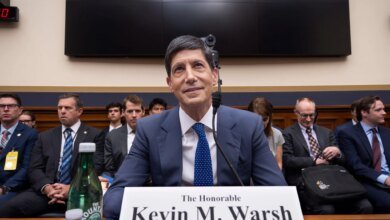
NRC Chairman Ho Nieh defended the decision, maintaining that the commission is not weakening safety protections but rather eliminating regulatory ambiguity. Nieh indicated that while the existing fleet of traditional light-water reactors will see minimal operational changes, developers of next-generation small modular reactors will gain crucial regulatory certainty to expedite construction timelines.
Nuclear industry representatives have echoed the regulatory agency’s stance. Doug True, chief nuclear officer at the Nuclear Energy Institute, stated that commercial utilities will naturally continue minimizing worker exposure due to the steep financial and operational costs associated with working in higher-radiation zones. Similarly, nuclear energy consultant Justin Friedman noted that ALARA frequently introduced shifting regulatory benchmarks, whereas a clearer risk framework allows scientists to make more practical decisions regarding manageable operational risks.
However, nuclear safety advocates and health physics experts have raised concerns regarding potential vulnerabilities. Edwin Lyman, director of nuclear power safety at the Union of Concerned Scientists, warned that altering boundary emission calculations could permit higher localized doses while remaining technically compliant. Lyman argued that ALARA became a political target due to misunderstandings about its cost-benefit flexibility, cautioning against discarding a proven protection mechanism.
Academic experts also express nuanced concerns about the practical transition. Katy Huff, former assistant secretary for nuclear energy and current department chair at the University of Wisconsin-Madison, noted that while regulatory clarity is beneficial, many in the field anticipated a refinement of ALARA rather than its total replacement.
Operational health physicists emphasize that managing radiation risks involves complex trade-offs. Kathryn Higley, president of the National Council on Radiation Protection and Measurements and professor emeritus at Oregon State University, pointed out that rigid ALARA requirements sometimes force workers to wear heavy protective gear that increases physical fatigue and heat stress, potentially presenting greater immediate harm than a minor radiation increment. However, Higley warned that retaining the current adult occupational limit of 5 rem (5,000 millirem) per year without ALARA creates a potential rift with international standards, where the International Commission on Radiological Protection recommends a stricter cap of 2 rem annually.