Supreme Court Is Conservative but Not a Presidential ‘Puppet,’ Justice Kagan Asserts
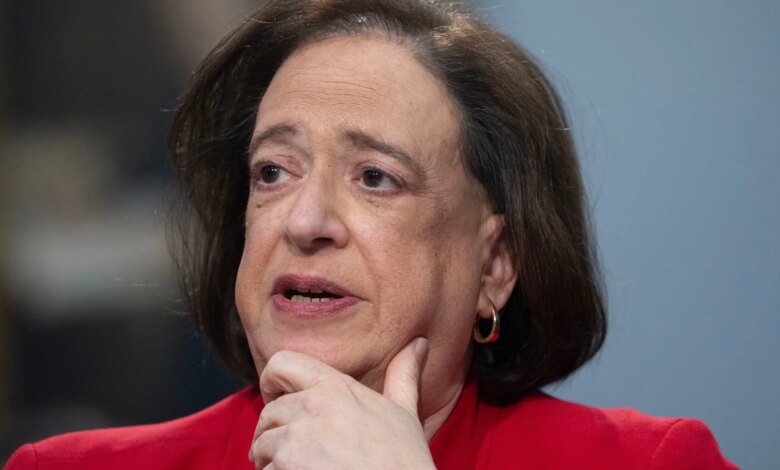
U.S. Supreme Court Justice Elena Kagan rejected assertions that the nation’s highest tribunal operates as a political rubber stamp for President Donald Trump, while openly acknowledging the court’s deep conservative tilt and decisions she views as fundamentally flawed.
Speaking to an audience of federal judges and legal professionals at the 9th U.S. Circuit judicial conference in Bellevue, Washington, on Thursday, Kagan argued that the court has repeatedly demonstrated its institutional independence by checking executive authority on high-stakes constitutional questions.
Addressing public skepticism that has pushed trust in the judiciary to historic lows, Kagan conceded that the current court frequently advances conservative legal doctrines she strongly opposes. However, she firmly dismissed claims that the bench acts at the direction of the White House, pointing to landmark rulings where the court invalidated major executive actions—including decisions blocking sweeping presidential tariffs and preserving birthright citizenship guaranteed under the 14th Amendment.
While the administration has secured favorable rulings on federal regulatory powers and immigration enforcement, Kagan emphasized that judicial deference stops when executive claims breach constitutional bounds. The remarks highlight an ongoing effort by members of the bench to defend the court’s legitimacy amid unprecedented scrutiny over its partisan alignment and public standing, which Gallup polls indicate remains near historic lows.
Beyond judicial doctrine, Kagan addressed the internal debate surrounding the court’s ethics framework. Following a series of high-profile disclosures in recent years regarding unreported luxury travel and gifts provided to justices by wealthy benefactors, the justices promulgated an official code of conduct in late 2023. However, the framework continues to face criticism for lacking an external compliance mechanism.
Kagan renewed her call for an independent panel composed of retired federal judges to review and enforce ethics standards. While confirming that justices take the guidelines seriously, she acknowledged that consensus remains elusive within the court regarding how—or whether—binding enforcement should be implemented.
The liberal justice also offered a rare window into courtroom dynamics during a historic moment last term when Donald Trump became the first sitting commander-in-chief to personally attend oral arguments before the U.S. Supreme Court. Trump observed proceedings regarding his administration’s executive action on birthright citizenship from a side section typically reserved for visiting members of Congress.
Kagan described the president’s presence as largely unremarkable for the justices on the bench, noting that proceedings skipped traditional ceremonial traditions like executive fanfares. Trump departed approximately halfway through the session as opposing counsel began oral presentations. Reflecting on her prior tenure as U.S. Solicitor General under President Barack Obama, Kagan remarked on the stark contrast between executive protocol elsewhere and the strict neutrality maintained inside the Supreme Court chamber.