Bipartisan Push for CREATE AI Act Aims to Democratize Compute Power
Legislation seeks to codify the NAIRR to compete with global AI investments.
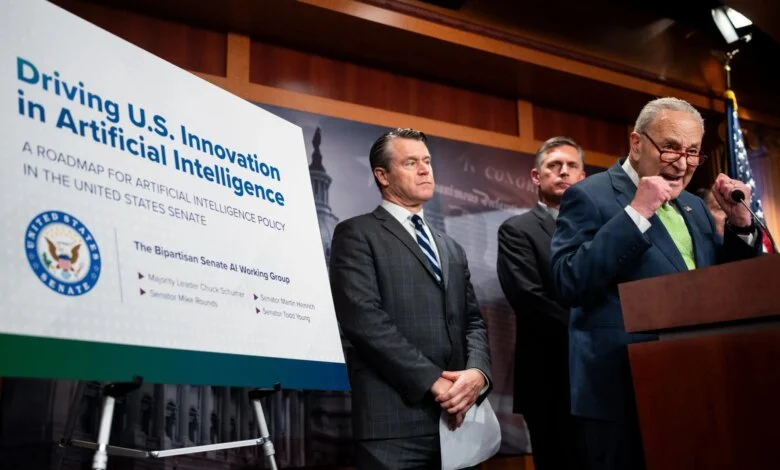
The U.S. Senate is moving to codify a permanent alternative to the private sector’s dominance over artificial intelligence development. The reintroduced Creating Resources for Every American to Experiment with Artificial Intelligence Act, known as the CREATE AI Act, seeks to formalize the National Artificial Intelligence Research Resource (NAIRR) within the National Science Foundation.
The legislation arrives as Capitol Hill grapples with more than 300 AI-related bills. However, proponents argue this specific measure is critical for maintaining national competitiveness by providing researchers, startups, and nonprofits with the supercomputing power typically reserved for the world’s largest technology firms.
A pilot version of the NAIRR has been operational since early 2024. According to official records, the program has already supported more than 600 AI research projects spanning all 50 states. By transitioning this from a temporary initiative to a permanent federal fixture, the bill aims to remove the cost barriers that currently prevent academic and public-sector technologists from competing with industry giants.
The move reflects a rare bipartisan consensus in a divided Congress. The Senate version is led by Senators Todd Young (R-Ind.), Martin Heinrich (D-N.M.), Mike Rounds (R-S.D.), and Cory Booker (D-N.J.), while a companion bill in the House continues to attract support from both sides of the aisle.
This shift toward state-supported infrastructure mirrors aggressive moves by global rivals. China is currently scaling its AI research capabilities through a state-directed National Integrated Computing Network. Similarly, the United Kingdom has pledged up to £2 billion through 2030 for its own research resources, and the European Union has initiated the InvestAI program to mobilize €200 billion for public-private infrastructure.
Without a permanent domestic equivalent, American university researchers and small businesses remain reliant on commercial clouds. The cost of compute time on these platforms often exceeds the budgets of non-commercial entities, creating a bottleneck that limits the scope of AI safety testing and long-term innovation.
Unlike more contentious regulatory proposals, the CREATE AI Act focuses on infrastructure rather than compliance. It does not impose new mandates on the private sector but instead builds a public-sector “stack” intended to accelerate energy optimization and hardware development.