Spent SpaceX Falcon 9 Rocket Booster Set to Collide with the Moon in August
Astronomers prepare to observe the artificial impact near the Einstein Crater as the drifting booster ends its journey.
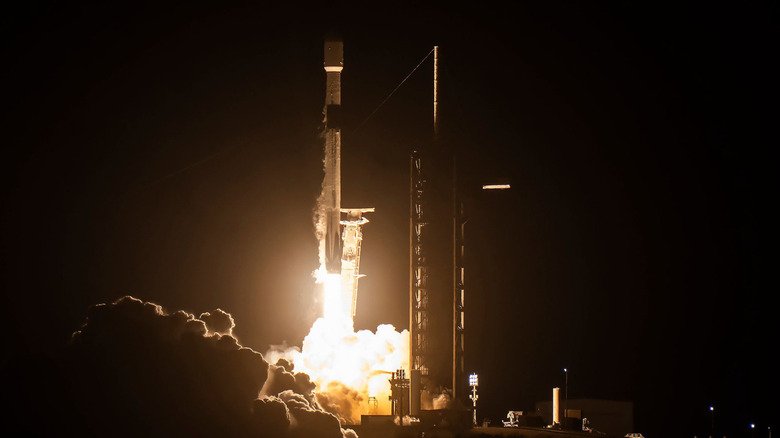
A discarded SpaceX Falcon 9 rocket booster is on a direct collision course with the lunar surface, with scientists predicting a high-speed impact in early August. The event offers a rare opportunity for astronomers on Earth to observe an artificial celestial impact in real time.
According to orbital calculations, the rocket’s upper stage is projected to slam into the moon near the Einstein Crater on August 5 at approximately 2:35 AM ET. The spent booster, which weighs roughly 4,000 kilograms and measures 39 feet long by 13 feet wide, is traveling at an estimated speed of 5,400 mph (8,690 km/h).
The trajectory was first identified by Bill Gray, an astronomer and the developer of the Project Pluto astronomical software. By processing orbital tracking data through a physics simulator, Gray and his team mapped out the booster’s final path, confirming the upcoming lunar impact.
The hardware tracing back to this event originated from the Firefly Blue Ghost mission, which launched on January 15, 2025. During that flight, the Falcon 9 successfully deployed Firefly Aerospace’s Blue Ghost lunar lander alongside the Hakuto-R lander, developed by the Japanese private space company ispace. Having exhausted its fuel reserves during the deployment phase, the upper stage was left with insufficient propellant to perform a controlled deorbit back into Earth’s atmosphere, leaving it to drift through cislunar space.
Despite its high velocity, researchers note that the booster’s impact will not cause severe structural damage to the moon. Because the upper stage is essentially a hollow metal cylinder, its physical effect will be significantly milder than that of a solid, natural meteoroid of a similar size moving at typical cosmic speeds.
Nevertheless, the collision is of significant interest to the scientific community. It provides a controlled scenario to analyze how dust and debris plumes behave during lunar impacts. Observations could also yield valuable data on the long-term hazards associated with human-made space debris in the cislunar environment.
This is not the first time a discarded rocket stage has struck the moon. In March 2022, a spent booster—later identified by scientists as part of a Chinese Chang’e mission—crashed into the lunar far side, leaving a double crater. Unlike that event, which occurred out of view of Earth, the upcoming August 5 impact will occur on the visible side of the moon, making it accessible to ground-based telescopes.
Visibility will depend heavily on geographic location and local lighting conditions. Astronomers in South America and low-to-mid latitude regions of North America, particularly those away from the West Coast, will have the best vantage points, provided they have clear, dark skies and the moon is positioned high in the night sky at the moment of impact.