Colorado Mandates Automakers Manage EV Battery Lifecycle to Secure Mineral Supply Chains
New legislation shifts the burden of battery disposal to manufacturers and sets aggressive mineral recovery targets.

Colorado has enacted a landmark law shifting the burden of electric vehicle (EV) battery disposal from local scrapyards to the manufacturers themselves. The legislation, known as SB26-003, establishes a comprehensive framework for the collection and processing of lithium-ion batteries, marking one of the most aggressive state-level attempts to manage the environmental impact of the burgeoning electric transport sector.
Under the new regulations signed into law this June, automakers are now legally responsible for establishing a statewide system to recover and recycle unwanted EV batteries. This policy, often referred to as Extended Producer Responsibility (EPR), ensures that if a battery reaches the end of its life at a salvage yard or dealership, the manufacturer must facilitate its proper management. To enforce this transition, Colorado will officially ban the disposal of EV batteries in landfills starting in July 2029.
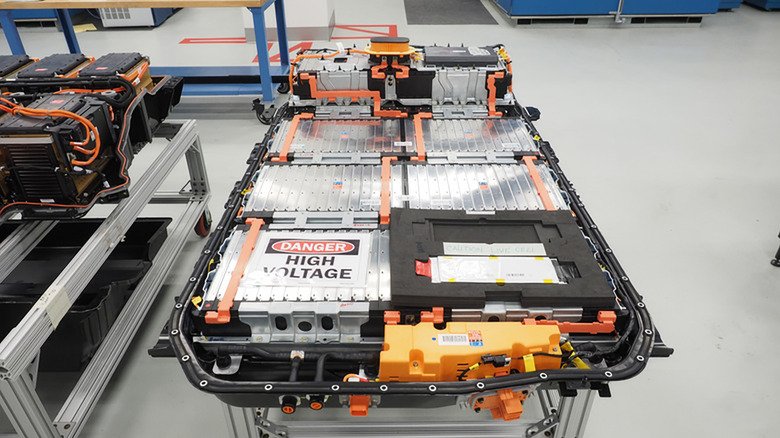
The logistical challenge of recycling EV batteries is significant. Unlike standard lead-acid car batteries, EV power packs are massive, often weighing over 1,000 pounds. Their size and hazardous chemical composition make them expensive to transport and difficult to store safely. For small businesses like Stadium Auto Parts in Commerce City, the accumulation of these units represents a major financial and safety liability. Without a clear path to a recycler, scrapyards are often forced to choose between costly long-distance shipping or indefinite storage.
Colorado currently has more than 200,000 electric vehicles on its roads, a number expected to grow as federal and state incentives continue to drive adoption. While EVs offer lower lifetime carbon emissions compared to internal combustion engines, the production of their batteries is resource-intensive, requiring vast amounts of water and energy. The mining of critical minerals also carries significant geopolitical and environmental costs.
To mitigate these impacts, the Colorado General Assembly included specific mineral recovery mandates in the bill. By 2031, recyclers operating within the state must recover at least 90 percent of the cobalt and nickel from processed batteries, along with 50 percent of the lithium. The target for lithium recovery is set to rise to 80 percent by 2035. These benchmarks aim to create a “circular economy” where materials are reused rather than extracted from new mines.
While New Jersey has passed similar legislation, Colorado’s law is unique for its specific percentage-based recovery targets. This approach mirrors elements of the European Union’s Battery Regulation, which was adopted in 2023 to ensure that batteries placed on the European market are sustainable throughout their entire life cycle. However, industry analysts note that Colorado’s version was crafted with input from automakers, resulting in a framework that is generally viewed as more flexible than the European model.
The International Energy Agency (IEA) has projected that by 2050, recycled minerals could satisfy 20 to 30 percent of the global demand for lithium, nickel, and cobalt. State Senator Lisa Cutter, a co-sponsor of the bill, emphasized that the state must plan for the waste generated by new technologies. She noted that since there is no automated solution for waste management, the responsibility must fall on those who produce the products.
The law received broad support from a coalition of environmental advocates and automotive recyclers. By placing the onus on manufacturers, the state aims to insulate local governments and small businesses from the fluctuating costs of the global recycling market. As automakers shift toward different battery chemistries, such as lithium iron phosphate (LFP), which can be less profitable to recycle than nickel-based alternatives, these mandates ensure that the infrastructure for mineral recovery remains intact regardless of market shifts.