Sony Bridges Cinema Gap with New FX5 Camera Featuring 16-Bit RAW and Triple Base ISO
The new compact full-frame camera introduces 16-bit X-OCN RAW, open gate recording, and triple base ISO to Sony's mid-tier lineup.
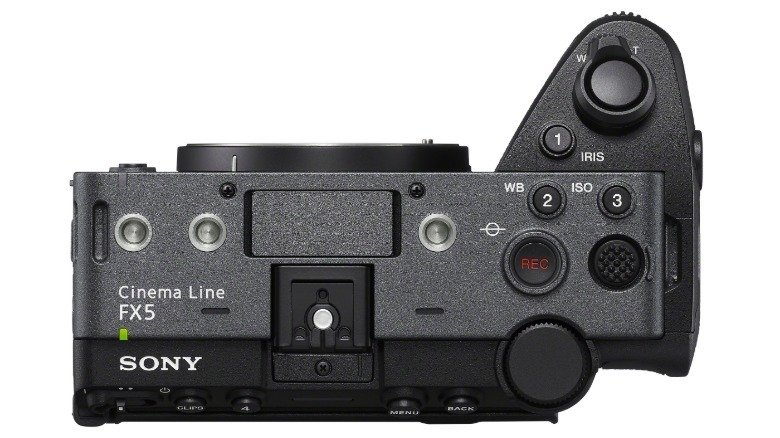
Sony has expanded its professional filmmaking ecosystem with the introduction of the FX5, a compact full-frame cinema camera designed to slot directly between the popular FX3 and the larger FX6. The new model brings high-end production capabilities—including open gate recording and 16-bit RAW video—to a more portable form factor, signaling a potential shift in what creators can expect from future consumer mirrorless cameras.
Priced at $4,898 for the body only, the FX5 is scheduled to begin shipping in mid-August. Sony is also offering a package that includes an XLR audio handle for $5,498, with the handle available separately for $798. The camera represents a significant step in the democratization of high-tier cinema features, many of which were previously reserved for top-tier studio cameras like the Sony Venice.
At the heart of the FX5 is a newly developed 16.6-megapixel fully stacked full-frame sensor. To maximize the sensor’s capabilities, Sony has integrated its proprietary X-OCN (Extended tonal range original camera negative) codec. This format allows the camera to record 16-bit linear RAW video directly to dual CFexpress Type A card slots. According to Sony, this delivers approximately 280 trillion colors—a massive increase in color data compared to the 12-bit Apple ProRes RAW or Canon C-RAW formats commonly used in this segment. The camera supports high-speed capture rates, including 5K at 60 frames per second (fps), 4.5K at 120 fps, and 4K at 240 fps.
In response to the growing demand for multi-platform content delivery, the FX5 introduces open gate recording in a 3:2 aspect ratio. This feature utilizes the entire surface area of the sensor, allowing filmmakers to crop footage into horizontal, square, or vertical formats during post-production without losing significant resolution. This capability is highly sought after by modern production houses tasked with delivering both traditional cinema cuts and vertical assets for social media platforms. Sony has also included an anamorphic de-squeeze function and promised a major firmware update by August 2027 that will add 4K 240p RAW functionality, Open Gate 3:2 XAVC-I recording, and a vertical-optimized user interface.
Departing from the traditional dual-native ISO setups found in most modern cinema cameras, the FX5 features a triple base ISO system with ratings of 800, 4000, and 12800. This design is engineered to maintain clean shadows, sharp details, and low noise levels across varying lighting conditions, making it particularly useful for independent filmmakers shooting in low-light environments. For projects requiring maximum dynamic range, a Dual Gain mode extends the camera’s latitude to a claimed 16 stops, though utilizing this mode increases the sensor’s rolling shutter effect.
While in-body image stabilization (IBIS) is frequently omitted from dedicated cinema rigs to prevent sensor movement on heavy stabilizing equipment, Sony has equipped the FX5 with a 5-axis stabilization system. This is complemented by an electronic Dynamic Active mode designed to smooth out handheld footage. Recognizing the diverse needs of professional camera operators, Sony is offering a specialized, irreversible service to physically lock the sensor in place for productions that require absolute sensor rigidity.
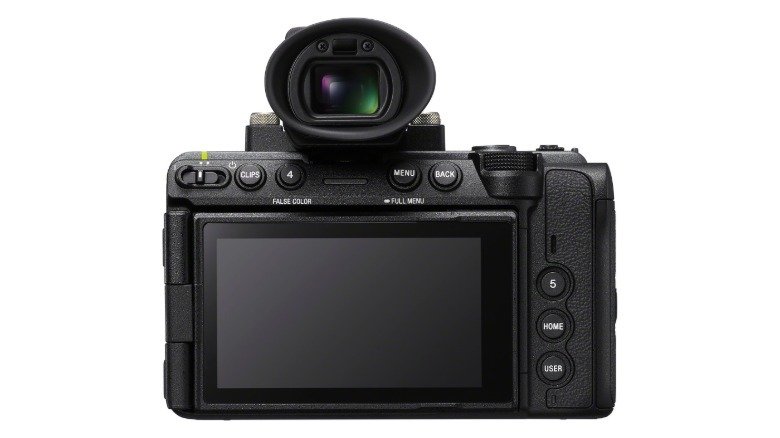
Physically, the FX5 weighs 1.62 pounds and shares a compact footprint with the FX3, making it highly suitable for gimbal and drone operations. The exterior is outfitted with multiple quarter-inch mounting points for accessories, alongside physical manual controls reminiscent of traditional cinema cameras. Monitoring is handled via a removable, 2,500-nit OLED electronic viewfinder with 3.68 million dots, alongside a 3.5-inch four-axis articulating rear LCD screen boasting 2.76 million dots of resolution.
Connectivity options are extensive, featuring full-sized HDMI, ethernet, tri-band Wi-Fi, dedicated microphone and headphone jacks, and dual hybrid card slots that accept both CFexpress Type A and SDXC UHS-II media. Power is supplied by Sony’s new NPSA100 battery, first introduced with the Alpha 7R VI, which provides up to 130 minutes of continuous recording time per charge.