Satsuma Shareholders Force Bitcoin Liquidation and LSE Delisting in Blow to Corporate Crypto Model
An overwhelming majority of investors overrule the board to wind down the UK-listed Bitcoin treasury company after a 99% stock collapse.
Shareholders of Satsuma Technology have voted overwhelmingly to liquidate the company’s entire Bitcoin treasury and shut down operations, bringing a swift and decisive end to one of the United Kingdom’s most high-profile corporate cryptocurrency experiments.
According to a regulatory filing on Monday, more than 90% of votes cast supported resolutions to sell the company’s remaining 668 BTC—valued at approximately $43.5 million—and cancel its listing on the London Stock Exchange. The decision marks a major defeat for the company’s management, with shareholders directly overruling four of the board’s six directors who had lobbied to keep the investment vehicle alive.
The liquidation marks the collapse of a digital asset treasury (DAT) strategy that was initiated less than a year ago. The corporate model of using Bitcoin as a primary treasury reserve asset gained significant traction globally in 2024 and 2025, as firms sought to emulate the treasury strategies of major international software firms by holding digital assets on their balance sheets rather than cash.
The Rise and Rapid Decline
Satsuma’s journey began as TAO Alpha, a small artificial intelligence firm, before it pivoted to digital assets. In August 2025, the company rebranded and appointed Mark Moss, a prominent American Bitcoin commentator with a substantial online following, as its Chief Bitcoin Strategist to guide its corporate treasury acquisition program.
To fund the transition, Satsuma raised £163.6 million ($218 million) through the issuance of convertible notes. This debt-raising round attracted prominent institutional backing, led by ParaFi Capital alongside participation from Pantera Capital, Digital Currency Group, and Kraken. Notably, some investors chose to contribute 1,097 BTC directly—then valued at approximately $97 million—in lieu of cash.
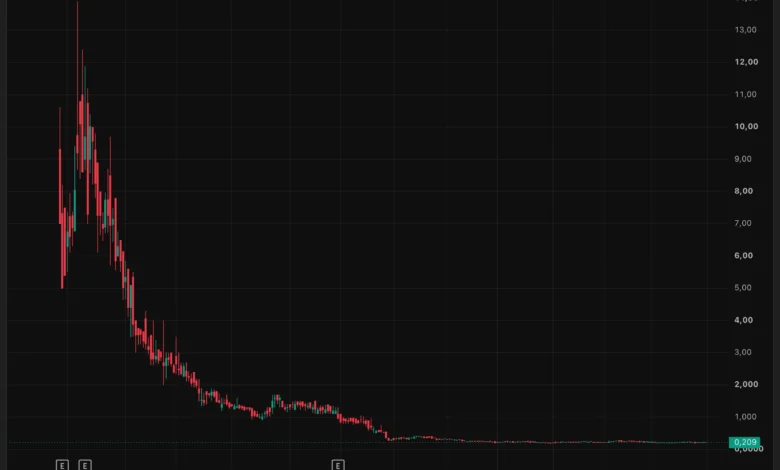
The company’s valuation peaked in June 2025, with shares reaching approximately £14, representing a market capitalization of £66 million. Although Bitcoin subsequently surged to an all-time high of $126,000 in October 2025, a subsequent market downturn dragged down both the cryptocurrency and Satsuma’s equity valuation.
By December 2025, Satsuma was forced to sell 579 BTC for £40 million to secure the liquidity needed to repay convertible noteholders who declined to convert their debt into equity. The company’s financial health continued to deteriorate into early 2026, marked by the departure of its Chief Financial Officer in February and its Chief Executive Officer in March.
By April 2026, Satsuma’s share price had plunged by more than 99% from its June 2025 peak, trading at fractions of a penny. This severe discount created an arbitrage gap: the company’s total market capitalization fell significantly below the net asset value of the Bitcoin held on its balance sheet. Under these conditions, holding the stock became economically disadvantageous compared to holding the underlying cryptocurrency directly.
The Shareholder Revolt
Faced with a persistent valuation discount, Pantera Capital, which held a 6.7% stake in Satsuma, began publicly advocating for a complete liquidation of the company’s assets. A coalition of shareholders representing more than 20% of the company’s outstanding capital subsequently forced the liquidation resolutions onto the ballot.
The board of directors split over the proposal. Four directors argued that Satsuma remained a viable publicly traded vehicle for UK investors seeking exposure to Bitcoin. However, two directors sided with the activist shareholders, who ultimately secured the supermajority required to initiate the wind-down.
The return of capital will be executed through a “B Share Scheme,” a standard corporate mechanism under UK law used to return capital to shareholders. Satsuma estimates it will return between £26.8 million and £30 million to investors after accounting for wind-down costs of approximately £2.7 million, which include legal fees, employee severance, delisting expenses, and run-off insurance policies.
When combined with the £40 million generated from the December asset sale, the total capital recovered by the company stands between £66 million and £70 million, compared to the £163.6 million originally raised. Because convertible noteholders hold preferential claims over common equity holders in a corporate wind-down, ordinary shareholders are expected to receive substantially lower payouts.
Satsuma’s exit leaves The Smarter Web Company, which holds 2,878 BTC, as the largest remaining UK-listed Bitcoin treasury firm. The Smarter Web Company has given no indication of plans to alter its current strategy.
The capital return process is subject to approval by the High Court of Justice, with hearings scheduled for August and September 2026. Satsuma expects its shares to be formally delisted from the London Stock Exchange by mid-September, with final payments distributed to shareholders by the end of that month.