Xiaomi Expands Automotive Ambitions with Skynomad Range-Extended Crossover Series
The tech giant targets the family SUV market with the N70 and N90 range-extended electric crossovers.
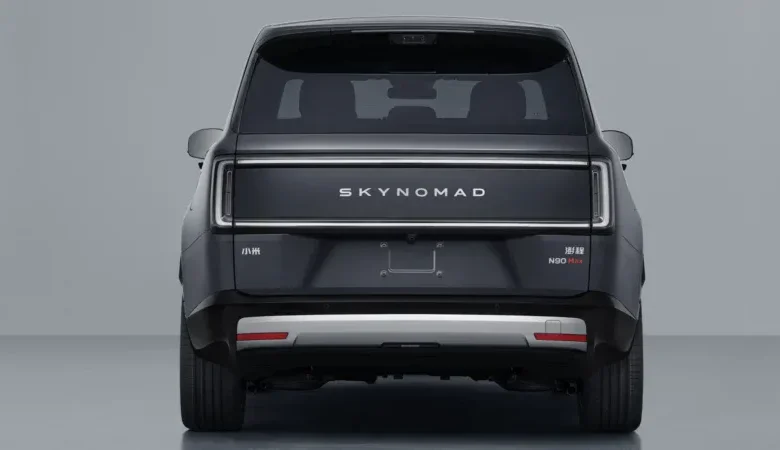
Following its highly publicized entry into the electric vehicle market, Chinese tech giant Xiaomi is rapidly diversifying its automotive portfolio. The brand is shifting its focus toward the highly lucrative and practical segment of range-extended electric vehicles (EREVs) with its upcoming Skynomad crossover series. Positioned to address the range anxiety that still plagues pure battery-electric vehicles in many regions, the Skynomad lineup leverages a sophisticated gasoline-powered generator to deliver impressive driving ranges, including a pure electric range of up to 505 kilometers (314 miles) on China’s CLTC cycle.
This impressive electric-only range is achieved via a substantial 76-kilowatt-hour battery pack, showcasing Xiaomi’s commitment to offering usable, daily-driver EV capability even before the onboard gasoline engine needs to fire up. The Skynomad series will initially consist of two closely related models: the five-passenger N70 and the larger, three-row, six-passenger N90. While both vehicles share a highly cohesive family design language, they cater to distinct family hauling needs. According to official homologation images published by China’s Ministry of Industry and Information Technology, the two crossovers are visually similar, with styling variations limited to overall scale, seating configurations, and unique wheel designs.
The Engineering Behind the Range-Extender Powertrain
Unlike traditional plug-in hybrids, which can drive the wheels using either gasoline or electricity, the Skynomad series operates strictly as series hybrids. Under the hood sits a 1.5-liter gasoline engine producing 150 horsepower. Manufactured by Harbin Dongan, a subsidiary of Chinese automotive giant Changan, this engine has no physical connection to the drive axles. Instead, its sole purpose is to spin a high-efficiency generator, creating electricity to either power the drive motors directly or replenish the battery pack on the fly.
This setup allows the vehicles to drive with the smooth, instantaneous torque characteristic of pure electric vehicles while retaining the quick-refueling convenience of a traditional internal combustion engine. When the battery is fully depleted, the system still manages respectable efficiency. The N70 post-depletion fuel consumption is rated between 6.1 and 6.26 liters per 100 kilometers (approximately 37.5 to 38.5 mpg), while the larger N90 consumes slightly more at 6.28 liters per 100 kilometers (around 37.4 mpg). Xiaomi has not yet disclosed the capacity of the fuel tank, which will ultimately dictate the vehicles’ total combined range.
Skynomad N70: The Versatile Five-Seater
The smaller of the two siblings, the Skynomad N70, is a substantial midsize crossover. It measures 4.96 meters (195.3 inches) in length, 1.998 meters (78.7 inches) in width, and 1.785 meters (70.3 inches) in height, riding on a generous 2.95-meter (116.1-inch) wheelbase.
Xiaomi will offer the N70 in two distinct mechanical configurations. The entry-level model features a rear-wheel-drive layout powered by a single rear-mounted electric motor generating 282 horsepower. This base trim is paired with a 52-kWh lithium iron phosphate (LFP) battery pack supplied by Sunwoda, which delivers a pure electric range of 270 kilometers (168 miles) under the more stringent WLTC testing standard.
For buyers demanding all-weather traction and more performance, the all-wheel-drive version of the N70 adds a 134-horsepower electric motor to the front axle, bumping total system output to a robust 416 horsepower. This high-spec variant swaps out the LFP pack for a larger, high-energy-density 76-kWh NMC ternary battery manufactured by CALB. Despite weighing a hefty 400 kilograms (882 pounds), this advanced battery pack allows the AWD N70 to achieve a pure electric range of 370 to 380 kilometers (230 to 236 miles) on the WLTC cycle, depending on the specific drivetrain calibration.
Skynomad N90: The Flagship Six-Seater
For larger families, the Skynomad N90 stretches the platform to accommodate three rows of seating in a highly comfortable 2+2+2 configuration. The N90 commands a larger road presence, measuring 5.285 meters (208.1 inches) long, 1.998 meters (78.7 inches) wide, and standing slightly taller at 1.825 meters (71.9 inches).
To cope with its increased mass, the N90 bypasses the entry-level rear-wheel-drive setup entirely. It comes standard with the dual-motor all-wheel-drive powertrain, delivering the same combined 416 horsepower as the premium N70. Utilizing the heavy-duty 76-kWh NMC ternary battery, the N90 delivers a highly competitive WLTC-rated pure electric range of 363 kilometers (226 miles).
The highly anticipated Skynomad N90 is scheduled to make its first public appearance at the 29th Chengdu International Motor Show on August 21, 2026. This debut will mark a crucial milestone for Xiaomi as it seeks to establish itself not just as a niche electric sedan maker, but as a mainstream powerhouse capable of competing directly with established family-SUV giants in the rapidly evolving Chinese new-energy vehicle market.